
Many hospital procurement requests start with a simple question: "Should we buy ABS or steel beds?" This question feels direct, but it often leads to comparing quotes for two completely different products. The real issue is that most hospital beds are not one or the other; they are a mix of materials.
A buyer might see one quote for a "steel bed" at $450 and another for an "ABS bed" at $520. The decision seems to be about saving $70 per bed. But this comparison is often misleading. The "steel bed" likely has ABS components, and the "ABS bed" is built on a steel frame.
Neither ABS nor steel is universally better for all parts of a hospital bed. The right choice depends on 1) the specific component being considered (e.g., headboard, side rails, frame), 2) the cleaning intensity and chemical agents used in the intended department, and 3) the balance between upfront purchase price and long-term maintenance costs.
The real question is not about the whole bed, but about matching the right material specification to each key component. A thoughtful supplier should ask about your department's use case before recommending a material. This conversation helps you avoid buying a bed that looks good on the quote but fails to perform in your specific hospital environment.
Why Is "ABS vs. Steel" Not the Right Question for a Hospital Bed?
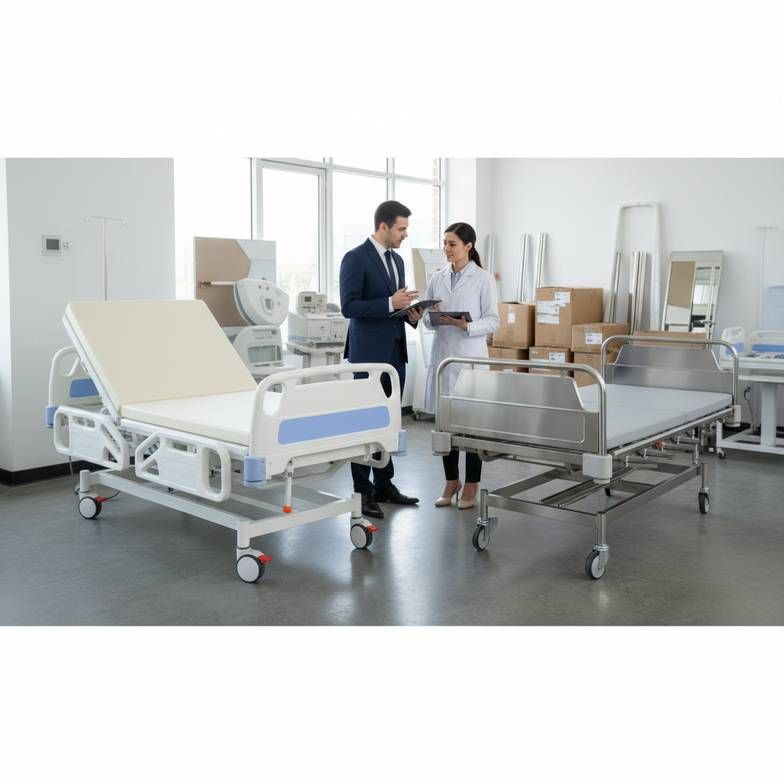
Assuming "ABS bed" and "steel bed" are two distinct categories is a common mistake. In reality, almost all modern hospital beds are hybrids. The main chassis or frame is almost always made of steel for the necessary structural strength and load-bearing capacity.
The real decision between ABS and steel happens at the component level:
- Head and Footboards: These panels are frequently made from either ABS or steel.
- Side Rails: These can be made from steel, ABS, or a combination.
Framing the question as "ABS vs. steel" for the entire bed oversimplifies the product and can lead to a poor purchasing decision. A better approach is to think about the bed in terms of its parts and their functions. This allows you to specify a bed that is optimized for both cost and performance in your facility.
How Do Department Needs Affect the Material Choice for Bed Components?
A single bed specification rarely works for an entire hospital. The operational reality of an Intensive Care Unit (ICU) is vastly different from that of a general ward or a long-term care facility. These differences should directly influence your material choices.
- ICU or High-Acuity Wards: These areas have high bed turnover and require frequent, aggressive cleaning with powerful disinfectants. For headboards and side rails in this environment, seamless, non-porous ABS is often a good fit. It has no paint to chip and fewer crevices, which simplifies thorough cleaning between patients.
- General Wards or Lower-Acuity Areas: In departments with less intense cleaning protocols, a well-finished, powder-coated steel component can be a very practical and cost-effective choice. The key is the quality of the finish. A thick, well-applied coating will resist chipping and last for years.
Before deciding, it's a good idea to map out which departments have the most demanding cleaning requirements. This helps you allocate your budget where material performance matters most.
What Are the Real Trade-Offs for Headboards, Side Rails, and Frames?
Breaking the bed down into its main parts helps clarify the material trade-offs. The "best" material for the headboard is not necessarily the best for the side rails.
The following table provides a component-level comparison to help guide your specification.
| Bed Component | Material Considerations | What to Confirm with Your Supplier |
|---|---|---|
| Head/Footboards | ABS: Seamless, easy to clean, good impact resistance, and can be molded into ergonomic shapes. Steel: Can be lower cost, but paint may chip over time, and designs with seams or joints can be harder to clean. | For ABS: Is it virgin or recycled material? What is the panel thickness? For Steel: What is the coating process (e.g., electrostatic powder coating) and its thickness? Are welds smooth? |
| Side Rails | ABS: Can be smooth, have fewer pinch points, and feel warmer to the touch for patients. Steel: Very strong, but the coating is a key potential failure point. Chips can lead to rust, which is difficult to clean and compromises the hygienic integrity of the surface. | Is the design smooth and free of hard-to-clean crevices? Can the supplier specify the steel coating's resistance to chipping and common hospital disinfectants? |
| Bed Frame/Chassis | Steel: Provides the necessary structural strength and load capacity. It is the overwhelmingly common choice for the main structure. | What is the steel grade and tube wall thickness? Are welds ground smooth before coating to prevent future rust points and improve cleanability? |
How Does Material Finish Affect Long-Term Cleaning and Maintenance Costs?
Focusing only on the initial purchase price ignores the total cost of ownership. A low-cost steel component with a thin paint finish might save you money upfront, but it can create costs down the line.
Consider these long-term factors:
- Chipping and Rust: A small chip in the powder coating on a steel side rail, especially around a weld, can expose the metal underneath. In a hospital environment with moisture and cleaning agents, this spot can begin to rust, looking unprofessional and creating a rough surface that is difficult to clean effectively. The cost to repair this is often more than the initial savings.
- Cleaning Labor: A seamless ABS headboard can be wiped down in seconds. A steel-tube headboard with multiple joints and crevices takes longer for staff to clean effectively. Over thousands of bed turnovers, this extra labor time adds up to a real operational cost.
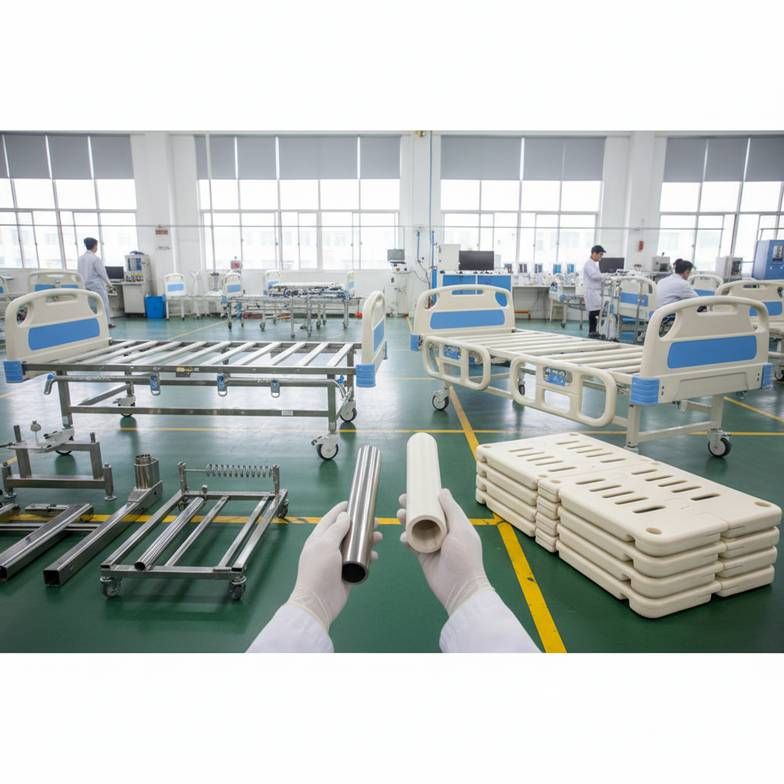
- Material Quality: Not all ABS or steel finishes are equal. A quote for an "ABS panel" could mean a thin, brittle sheet or a thick, durable, virgin-grade molding. A "powder-coated steel" part, for example, could have a robust finish of a certain thickness (e.g., 80 microns) or a thinner layer (e.g., 40 microns) that is more likely to fail.
When a supplier provides a quote, you should ask for the specifications on the finish. A serious supplier should be able to tell you the thickness of their ABS panels or the type and thickness of their powder coating. This detail is often a better indicator of quality than the material's name alone.
What Specifications Should You Confirm Before Comparing Quotations?
To get quotations that you can compare on a true like-for-like basis, you need to provide suppliers with a clear set of requirements. Vague requests for "100 hospital beds" will result in vague and incomparable offers.
Before sending your next Request for Quotation (RFQ), confirm these points for each type of bed you need:
- Specify Materials by Component: Instead of asking for an "ABS bed," ask for a bed with a "steel frame, ABS head/footboards, and powder-coated steel side rails" (or your desired combination).
- Ask for Finish Details: For steel parts, ask for the coating type (e.g., electrostatic powder coating) and thickness. For ABS parts, ask for the panel thickness.
- Describe the Use Case: Inform the supplier which department the beds are for (e.g., "General Ward" or "ICU"). This helps them understand the performance requirements.
- Request Design Clarification: Ask if the design is seamless and easy to clean. This is especially important for components like side rails and headboards.
By defining your needs at this level of detail, you shift the conversation from a simple price war to a more practical discussion about finding the right product for your facility's long-term needs.
How to Prepare Your Hospital Bed Inquiry
Before you request a quotation, preparing the following details will help you receive a clear, comparable, and useful offer. It allows a supplier to recommend the most suitable and cost-effective solution for your project.
- List of Components: Specify your material preference for head/footboards and side rails for each bed model.
- Department & Quantity: Note how many beds are for each department (e.g., 50 for General Ward, 10 for ICU).
- Cleaning Protocols: If possible, list the primary chemical disinfectants your facility uses. This helps confirm long-term material compatibility.
- Key Priorities: Mention if your main concern is upfront budget, long-term durability, ease of cleaning, or a balance of all three.
Sending this information with your inquiry makes the quotation process clearer and helps reduce surprises before a bulk order.
Written by
CareFurnex Team
CareFurnex Team shares practical knowledge about hospital beds, patient room furniture, medical trolleys, clinic furniture, and healthcare facility procurement for international B2B buyers.
Related Products
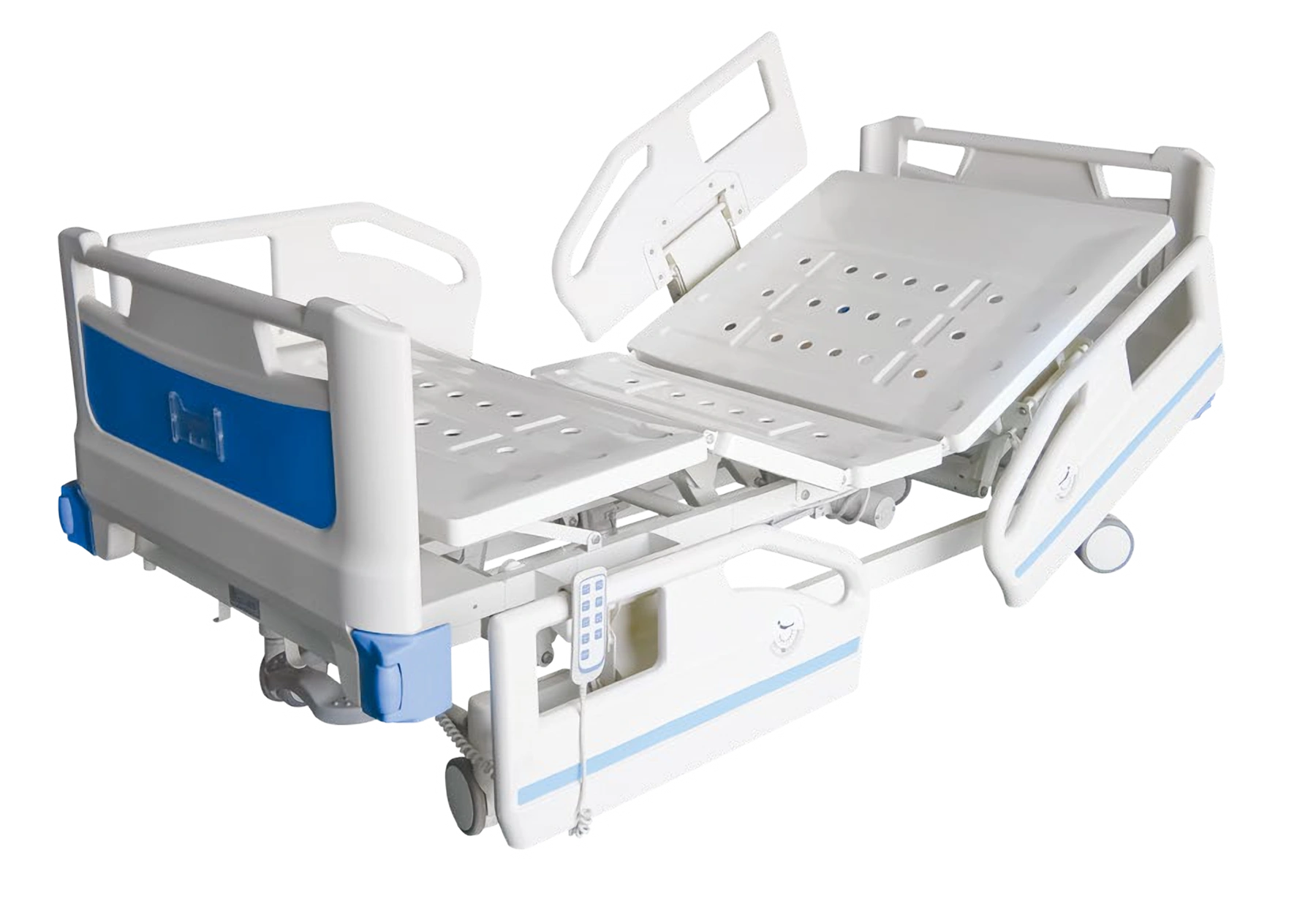
Hospital Beds
General-purpose patient beds for inpatient wards and standard hospital rooms.
View product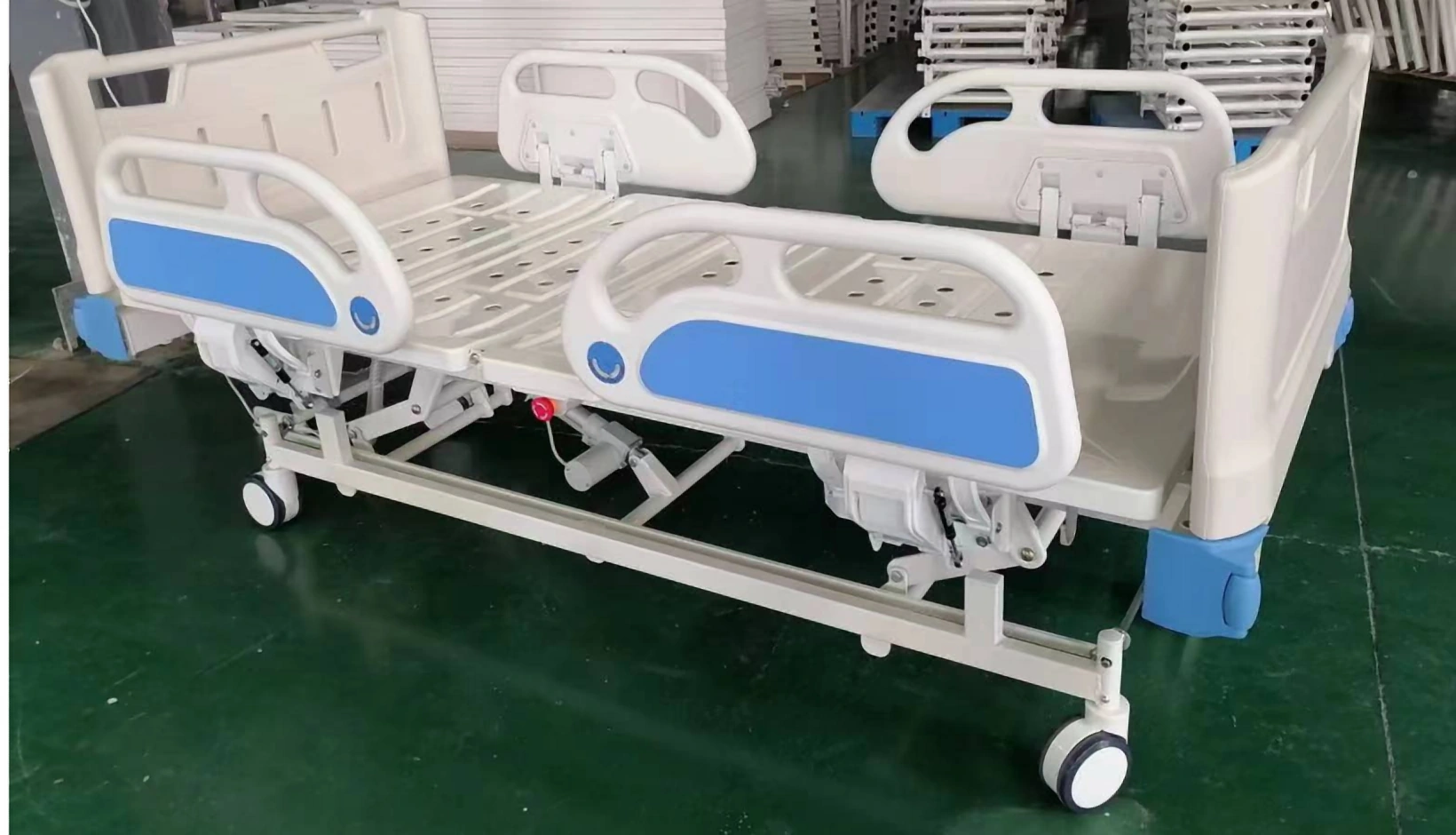
Electric Hospital Beds
Motorized multi-function beds with electric height, backrest, and leg adjustment options.
View product
Ward Furniture
Complete ward furniture options for patient rooms and hospital care areas.
View product