
Many buyers start by asking, "Which is more durable, ABS or stainless steel?" It seems like a logical first question. But after handling countless project orders, I've learned that the most important question is different: "What are the cleaning and sterilization rules for the department where this trolley will be used?" The answer to that question often makes the choice for you.
The decision isn't about which material is universally "better." It's about matching the material to a specific hospital environment.
For sterile processing areas like CSSD and operating rooms, choose stainless steel for its superior resistance to heat and harsh chemical sterilization. For general wards, clinics, and medication rounds where mobility and cost-effectiveness are key, choose ABS.
Let's walk through the practical factors we use to help buyers specify the right trolleys for their projects.
Which Material Is Right for Your Department's Workflow?
The first thing we ask before quoting a trolley order is: "Which department will this be used in?" A trolley for a central sterilization department has completely different requirements than one used for distributing medication in a general ward.
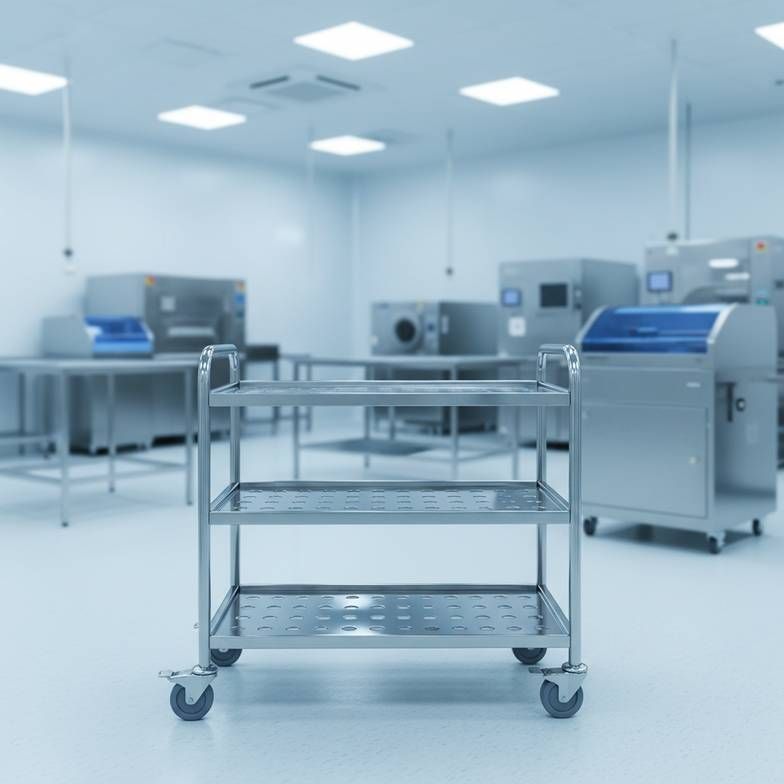
Stainless steel is the default choice for sterile environments. Its non-porous surface and ability to withstand high temperatures and aggressive chemicals make it suitable for areas like Operating Rooms (OR), Central Sterile Services Departments (CSSD), and other zones requiring high levels of cleaning and sterilization. The material itself is part of the sterile workflow.
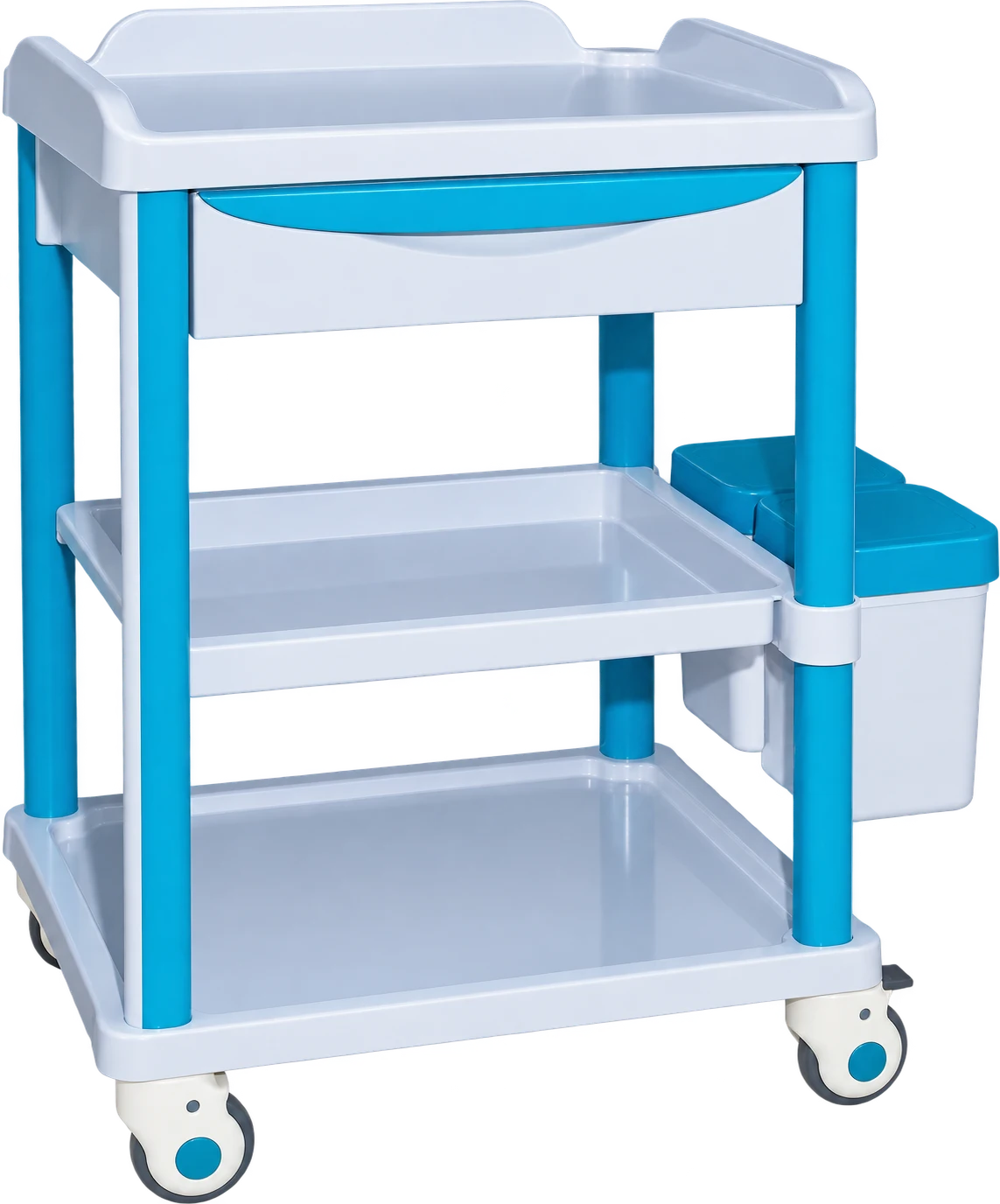
ABS (Acrylonitrile Butadiene Styrene) trolleys are excellent for general-purpose use. Think patient wards, clinics, treatment rooms, and medication rounds. They are lighter, often come in more user-friendly configurations with molded drawers and dividers, and present a less "industrial" look, which can be preferable in patient-facing areas.
A common mistake is for a buyer to request a "durable steel trolley" for a task like daily medication rounds. When we ask about the workflow—long hallways, frequent stops, the need for organized small drawers—they often realize a lighter, purpose-built ABS medication trolley is a much better functional fit for their staff. We don't just look at the material; we look at the job it has to do all day.
How Do They Compare for Cleaning and Sterilization?
This is the most critical point of comparison, and where a wrong choice can lead to material damage or challenges with your facility's cleaning standards.
Stainless steel can handle the most rigorous cleaning methods. It is generally resistant to a wide range of chemical disinfectants and compatible with processes like steam cleaning or autoclaving. This is why it's a common choice for any area where terminal sterilization of equipment is part of the protocol.
ABS plastic, while durable for general use, has limits. It's designed for surface wiping with standard hospital-grade disinfectants. However, aggressive solvents or prolonged exposure to certain chemicals can cause the plastic to stain, become brittle, or even crack over time. It is not designed for the high temperatures of autoclaving.
I've seen situations where a buyer purchased lower-cost ABS trolleys for an area that used a harsh chemical fogging system for disinfection, only to find the surfaces degrading within months. A responsible supplier will always ask about your cleaning protocols before confirming an ABS trolley order. If a supplier just says "yes, it's easy to clean" without asking what you use to clean it with, they are not thinking about the long-term life of the product in your facility.
Which Trolley Is More Durable in a Hospital Environment?
Durability isn't a single attribute. It's a trade-off between impact resistance, scratch resistance, and corrosion resistance.
Stainless steel is highly resistant to corrosion and staining, which is key for its longevity in wet or sterile environments. Its main vulnerability is denting. A sharp, heavy impact can leave a permanent dent in a steel panel. The real hidden risk, however, is the quality of the welds. Poorly finished welds can become the first point of rust and corrosion, which can create a hygiene concern. When evaluating a steel trolley, I look at the close-up photos of the joints and corners, not just the overall product shot.
ABS plastic is more resistant to denting than steel. It tends to absorb and flex under impact, making it quite resilient to the everyday bumps and scrapes of a busy hallway. Its weakness is deep scratches or cracking under extreme, sharp force. While it won't rust, the surface can show scuffs over time, and using the wrong cleaning agent is the fastest way to damage its long-term appearance.
Many buyers assume steel is simply "stronger," but they don't consider the failure mode. A dented steel trolley is still functional. A rusted weld is a potential problem. An ABS trolley that cracks from chemical exposure is also a failure. We always clarify the environment to ensure the chosen durability matches the actual risks the trolley will face.
What Are the Differences in Weight, Mobility, and Staff Ergonomics?
A trolley's weight has a direct impact on staff efficiency and satisfaction. This is a detail often missed when just comparing spec sheets online.
Stainless steel trolleys are significantly heavier. This isn't an issue for stationary use, but for a trolley that is moved constantly throughout a 12-hour shift, the weight adds up. To compensate, a heavy steel trolley absolutely must be paired with high-quality, smooth-rolling casters. Skimping on the casters for a steel trolley is a common procurement error that leads directly to staff complaints and difficulty maneuvering in tight spaces.
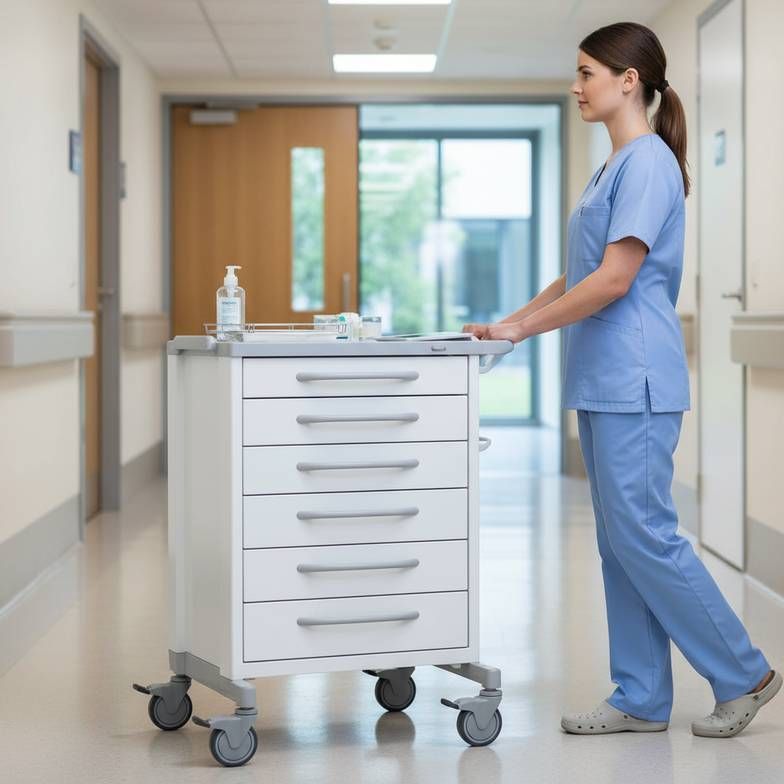
ABS trolleys are much lighter. This makes them inherently easier to push, pull, and navigate around obstacles. For nurses on long medication rounds or staff moving supplies between rooms, this reduced physical strain is a major ergonomic advantage. The lighter weight means that even standard-quality casters can provide good mobility.
When a buyer is evaluating options for a high-traffic area, I always encourage them to ask for the net weight of the trolleys. A photo looks the same, but the difference of a few kilograms can be felt by your staff every single day. The "best" trolley is one your team will actually use without frustration.
How Should You Evaluate the Total Cost Beyond the Unit Price?
Comparing unit prices between an ABS and a stainless steel trolley can be misleading. A smart procurement decision looks at the total cost of ownership over the expected life of the product.
The initial purchase price of an ABS trolley is typically lower than a comparable stainless steel model. For general-use areas where it is a suitable material, this makes it a very cost-effective choice.
A stainless steel trolley has a higher upfront cost. However, if it is being placed in a harsh environment like a CSSD where an ABS trolley would quickly fail, its longer lifespan makes it the cheaper option over time. Buying one steel trolley that lasts ten years is far better than buying three ABS trolleys that need to be replaced every three years due to chemical damage.
The most common financial mistake is buying based on the lowest quote without matching the material to the use case. A buyer might save money on an initial project budget by specifying ABS trolleys for the entire facility. But the hidden cost will appear later in the form of premature replacements for the trolleys used in sterile or high-sanitization areas. We always advise buyers to plan their procurement room by room, ensuring the material specification—and the cost—is appropriate for each one.
A Final Check Before You Choose
The right choice comes from understanding your operational reality. Before you confirm your next trolley order, step back from the product photos and unit prices. Ask yourself and your supplier these questions:
- Department & Workflow: Will this trolley be used in a sterile processing area (OR, CSSD) or a general ward/clinic?
- Cleaning Protocol: What specific chemicals and methods (wiping, steam, autoclave) will be used to clean this trolley? Have you confirmed the material is compatible?
- Mobility Needs: How far and how often will this trolley be moved during a typical shift? Is lighter weight a priority for staff?
- Durability Risks: Is the primary risk in the environment heavy impact (denting) or exposure to harsh chemicals and moisture (corrosion)?
- Long-Term Budget: Am I buying for the lowest initial cost, or am I investing in a product that will last for its intended lifespan in its specific environment?
Answering these questions will lead you to a much more reliable and cost-effective decision than simply asking which material is "stronger." A good supplier will help you walk through this logic, ensuring the products you receive are not just what you ordered, but what you actually need.
Written by
CareFurnex Team
CareFurnex Team shares practical knowledge about hospital beds, patient room furniture, medical trolleys, clinic furniture, and healthcare facility procurement for international B2B buyers.
Related Products
Medical Trolleys
Mobile carts for nursing rounds, treatment supplies, medicines, and clinical tools.
View product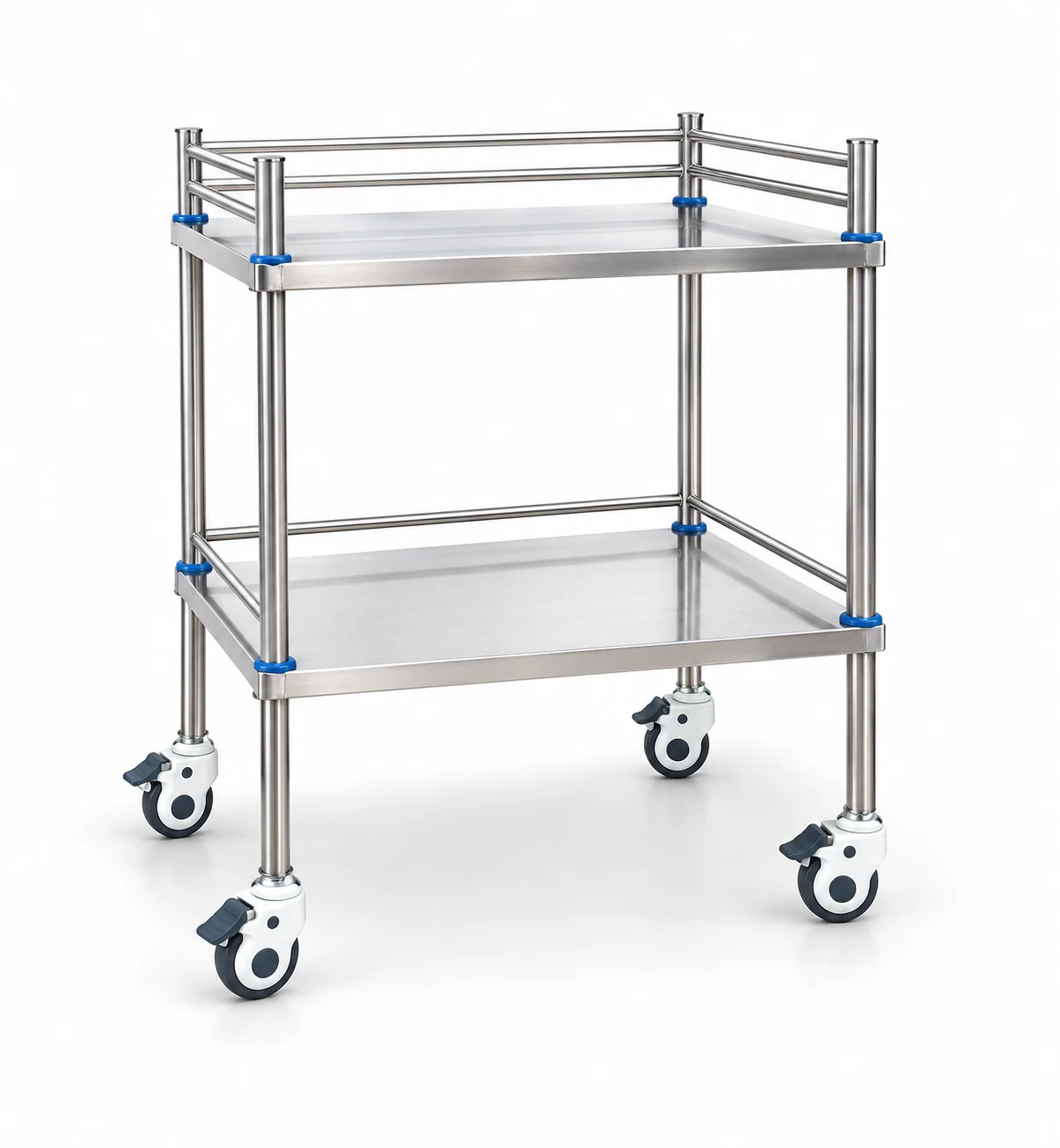
Stainless Steel Trolleys
Compare stainless steel trolleys by model, stated dimensions and configuration.
View productStainless Steel Medical Furniture
Durable stainless-steel carts, tables, instrument stands, and storage units for clinical spaces.
View product