
Many inquiries for medication carts start with a simple request: "I need a price for a 6-drawer cart." While this seems straightforward, this question misses the details that determine if the cart will be a useful tool or a daily frustration for nursing staff.
A medication cart for a fast-paced Emergency Room and one for a scheduled long-term care ward may look similar, but they solve different problems. One needs to support speed and immediate access for many users. The other prioritizes routine, security, and clear organization for specific patients. Choosing the right one has less to do with the cart's photo and more to do with its specific configuration.
A well-configured medication cart is based on your department's specific workflow, the physical dimensions of your medication packaging, and your facility's security and access control needs. The right combination of drawer heights, lock type, and internal dividers supports nursing efficiency and helps reduce medication management risks.
From a supplier's perspective, the difference between a successful order and a problematic one comes down to a few key questions asked before the quotation. When a buyer focuses only on the cart's photo and price, they often overlook the three elements that define its real-world function: the drawer layout, the lock mechanism, and the interior dividers. Getting these details right from the start makes the entire procurement process smoother.
Why Won't a 'Standard' Medication Cart Work for Every Department?
The term "medication cart" describes a category of products, not a single, standardized item. The configuration that works well in one clinical setting can create bottlenecks in another.
Consider these two scenarios:
- Emergency Room (ER): The workflow is unpredictable. Staff need rapid access to a wide range of supplies. A cart here might use a simple breakaway lock for immediate, tool-free access in a code situation. Drawers are often organized by supply type, not by patient.
- Long-Term Care Ward: The workflow is routine and scheduled. Medication is dispensed to specific patients at set times. Security and accountability are high priorities. The cart here might need an electronic lock with an audit trail to track access, and drawers organized with patient-specific bins.
Assuming a generic model will work everywhere can lead to purchasing a cart that hinders, rather than helps, your staff. The first step in configuration is to define the primary function of the cart within its intended department.
How Do I Choose the Right Drawer Layout for My Medication Inventory?
Buyers often focus on the total number of drawers. I would suggest focusing on the height of each drawer first. The most common reason a new cart fails to meet expectations is that the drawers are the wrong size for the medication it needs to hold.
A cart with six identical 3-inch drawers is not useful if your standard inventory includes 8-inch tall bottles of liquid medication or bulky IV bags. These items end up stored elsewhere, defeating the purpose of a mobile, centralized cart.
A more functional approach is to plan the drawer layout based on your actual inventory:
- Shallow Drawers (e.g., 3-inch / 7.6 cm): Ideal for unit-dose blister packs, syringes, and small vials.
- Medium Drawers (e.g., 6-inch / 15.2 cm): Good for small boxes, bundled supplies, and most standard medication bottles.
- Deep Drawers (e.g., 9-inch / 22.9 cm): Necessary for tall liquid bottles, IV solution bags, and bulkier items.

Before you request a quote, make a quick list of the common and tallest items that must be stored in the cart. This information allows a supplier to recommend a practical combination of drawer heights, preventing storage problems after delivery.
What Affects the Choice Between a Key, Keypad, or Electronic Lock?
Viewing the lock as just a security feature is an incomplete picture. The lock is a workflow tool, and the right choice is a trade-off between access speed, cost, user management, and the need for an audit trail.
- Key Locks (Single or Central): Simple and low-cost. However, managing and tracking physical keys can be difficult, especially with multiple shifts and users. A lost key can be a significant security issue.
- Breakaway Locks: Designed for emergency carts. A plastic tag secures the cart, allowing for a quick visual check that it is fully stocked. In an emergency, the lock can be broken open by hand for immediate access.
- Digital Keypad Locks: Offers keyless access for one or more users with a programmable code. This is faster than fumbling with a key but may not provide a record of who accessed the cart.
- Electronic Locks with Audit Trail: These systems provide a high level of control. They can be programmed to grant access to specific users and create a log of every opening—including user ID, date, and time. This feature helps support the strict access control and accountability protocols for managing controlled substances.
The right question to ask is not "is it secure?" but "how does it need to function for our staff and our compliance rules?" Clarify if you need to know who opened a drawer and when. This will determine if a simple keypad is sufficient or if an auditable electronic system is necessary.
How Do Bins and Dividers Help Reduce Medication Management Risks?
A cart with empty drawers is an opportunity for disorganization and error. The internal organization system—the bins and dividers—is a core feature that turns a simple box into an efficient dispensing tool.
A well-organized drawer layout helps staff in several ways:
- Find Medications Faster: Clear compartments reduce search time.
- Supports Clearer Identification: Separating look-alike/sound-alike medications helps staff distinguish items clearly, supporting efforts to reduce selection errors.
- Simplify Inventory Checks: It is much easier to see what needs to be restocked when every item has a designated spot.
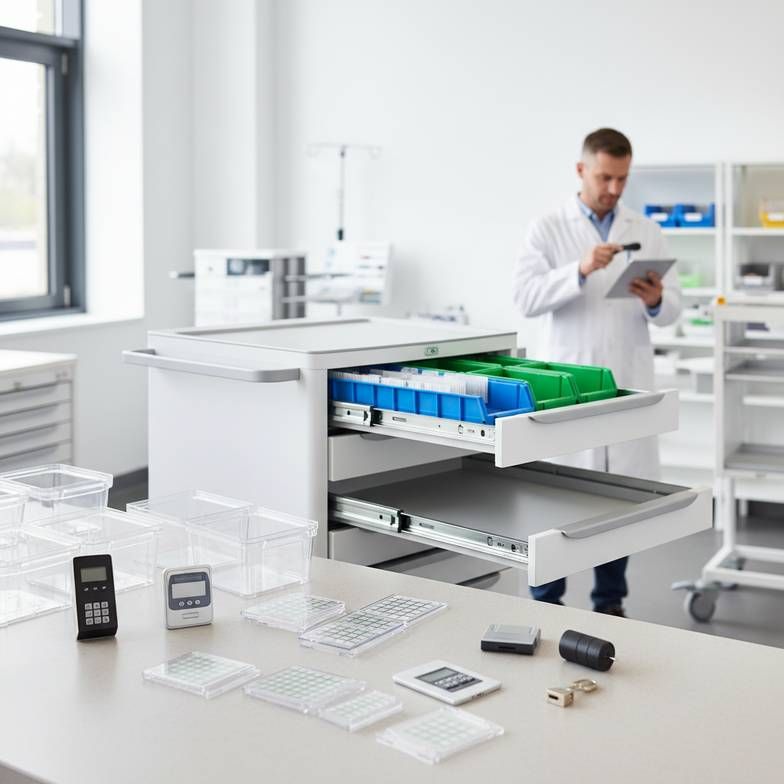
When reviewing a quotation, do not accept a vague line item like "includes dividers." A complete quotation should specify the quantity and type of dividers or bins included for each drawer. This is a detail that is often overlooked and can lead to extra costs and delays if the cart arrives without the necessary components to be put into service.
Checklist: What to Prepare Before Asking for a Medication Cart Quote
Sending a vague inquiry like "price for medication cart" will likely result in a series of incomparable quotes. A detailed request helps you receive accurate, useful proposals that you can compare on a true like-for-like basis.
Use this checklist to review supplier quotations and identify missing information. A quotation that addresses these points is more likely to come from a supplier who understands the practical needs of a healthcare facility.
| Quotation Item | What to Check | Why It Matters |
|---|---|---|
| Base Cart Model | Is the model number and base price clearly stated? | Confirms you are comparing the same core product. |
| Drawer Configuration | Does the quote itemize the quantity and height of each drawer (e.g., 2x 3", 3x 6", 1x 9")? | Confirms the cart can physically store your medication inventory. |
| Lock System | Is the specific lock type (e.g., Central Key, Keypad) listed as included or as a priced option? | Prevents misunderstanding the level of security and workflow support included. |
| Interior Organization | Does it specify the exact quantity of dividers and bins included for each drawer? | An empty drawer is not ready for use. This detail avoids hidden costs for accessories. |
| Accessories | Are items like an IV pole, waste bin, or sharps holder listed as included or as optional add-ons? | Clarifies the total scope of supply and avoids surprise costs. |
| Dimensions | Are the overall cart dimensions and internal drawer dimensions provided? | Confirms the cart fits your space and that your existing trays or bins will fit inside. |
| Packing & Shipping | Does the quote include estimated carton dimensions, gross weight, and total CBM? | This data is necessary for calculating landed cost and comparing freight charges. |
Preparing Your Inquiry
Before requesting a quotation, prepare a summary of your needs. A clear specification helps us provide an accurate and useful proposal that meets your operational requirements and budget.
For a helpful discussion, please send us your requirements, including:
- The department where the cart will be used (e.g., ICU, General Ward, Clinic).
- The types and approximate sizes of medication packaging it needs to hold.
- Your facility's security requirements for locks (e.g., simple key, keypad, or auditable electronic system).
- The number of carts needed for your project.
With these details, we can help you review the right configuration options and build a cart that works for your team from day one.
Written by
CareFurnex Team
CareFurnex Team shares practical knowledge about hospital beds, patient room furniture, medical trolleys, clinic furniture, and healthcare facility procurement for international B2B buyers.
Related Products
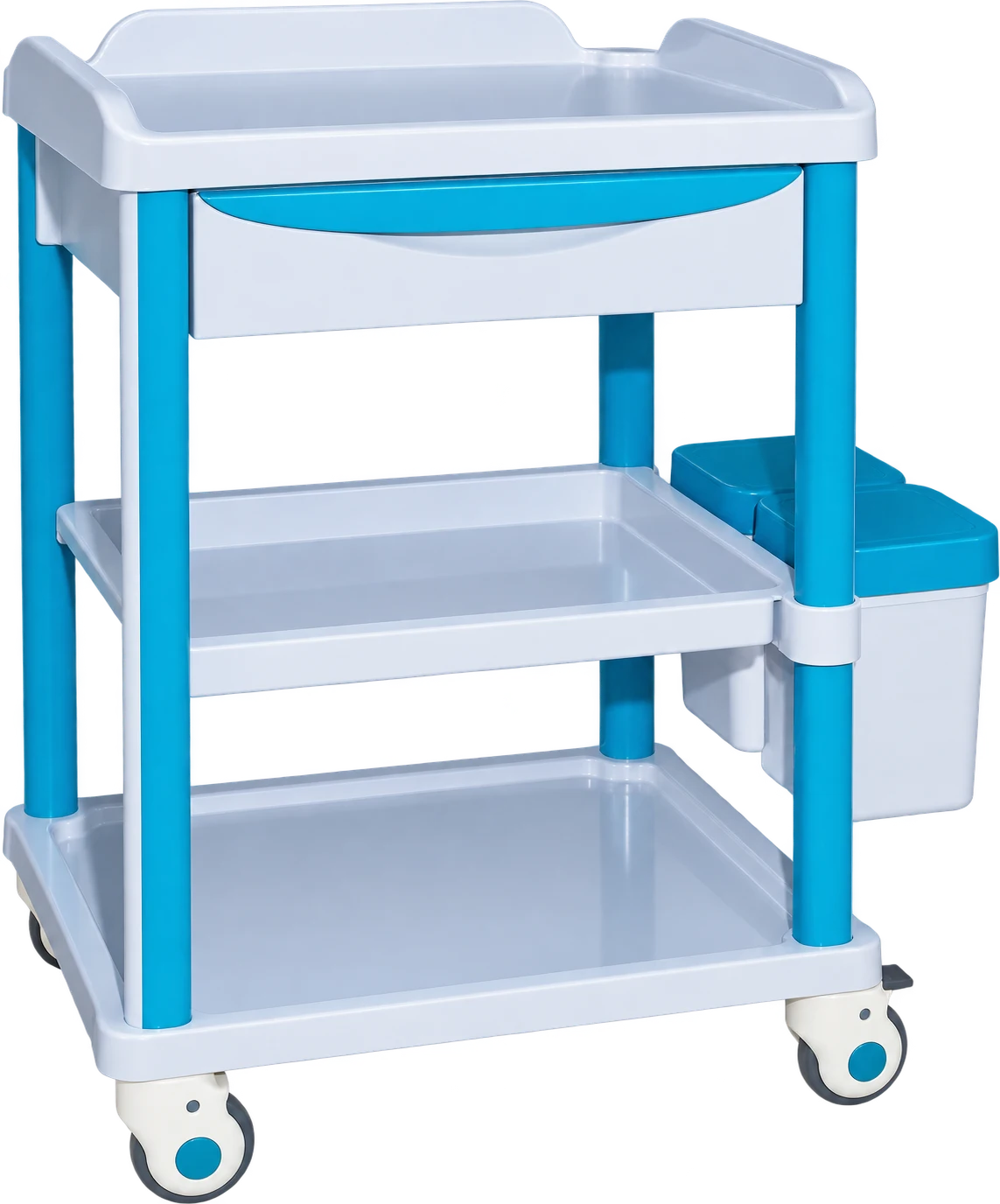
Medical Trolleys
Mobile carts for nursing rounds, treatment supplies, medicines, and clinical tools.
View productTreatment Carts
Compare treatment carts by model, stated dimensions and configuration.
View product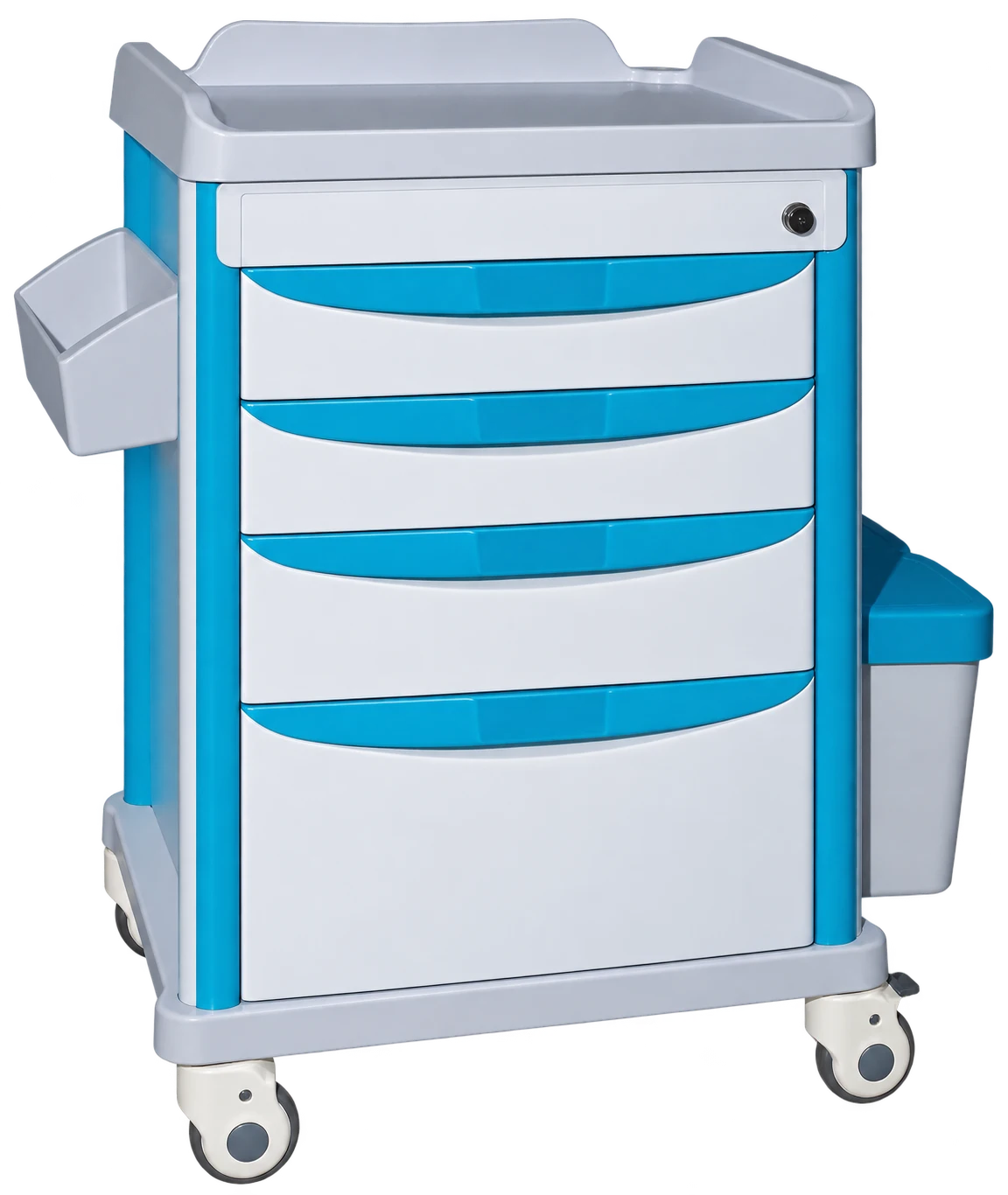
Medicine Carts
Compare medicine carts by model, stated dimensions and configuration.
View product