
Many hospital procurement plans start with the assumption that medical record trolleys are an obsolete expense in a digital-first world. This view often overlooks a practical question: what is your hospital's official procedure for when the Electronic Health Record (EHR) system goes down?
The answer to that question frequently reveals a clear, modern need for these trolleys. The risk is not in having paper, but in not having a plan for managing it when digital systems are unavailable. A buyer might ask for the price on a "basic record trolley," thinking it is a minor purchase. But the more useful starting point is to track the journey of a single, physically signed consent form. How it is moved, who accesses it, and how it is secured often defines the exact trolley configuration you actually need.
Medical record trolleys are still needed in hospitals to manage specific, non-digital workflows and operational risks. Their justification typically depends on your facility's official EHR downtime procedure, the process for handling physically signed documents like consent forms, and the unique documentation needs of departments such as long-term care or psychiatry.
The shift to EHR has not eliminated the medical record trolley; it has changed its job. It is no longer just for holding charts. Today, its value is measured by how well it supports a hospital's operational weak points: system downtime, Wi-Fi dead zones, and the persistent flow of essential paper forms that cannot be fully digitized. Viewing the trolley as a tool for operational resilience, rather than an outdated accessory, is helpful for making a sound procurement decision.
What operational risks does a 'paperless' assumption create in a hospital?
Assuming 100% EHR uptime and that all workflows are fully digital is a significant operational risk. This view ignores the practical realities of both planned system maintenance and unplanned outages. When the digital system is down, clinical staff still need access to patient information.
Without a formal plan and the right equipment, staff may resort to inefficient or unsecured methods. This could mean hand-carrying loose stacks of backup charts, creating a risk of misplaced documents or potential privacy issues. It can also contribute to delays in care as staff scramble to locate and distribute information.
A medical record trolley, used as part of a formal downtime procedure, helps manage this risk. It provides a designated, organized, and mobile hub for distributing pre-printed backup charts or "downtime kits" to the wards. This is not a step backward from digital; it is a useful component of a robust operational continuity plan that acknowledges the limitations of any complex IT system.
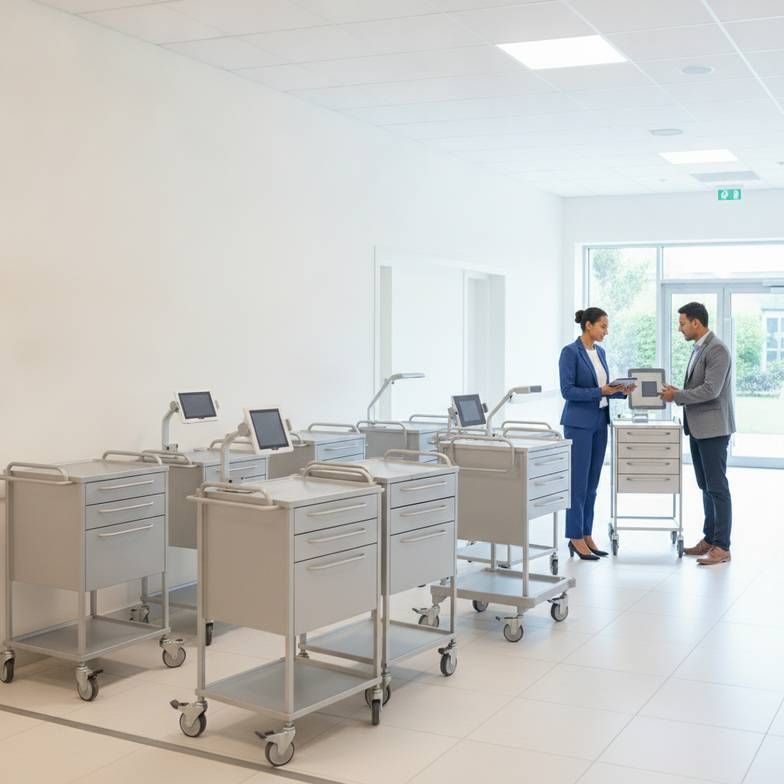
How can we assess our facility's real need for physical record transport?
Instead of guessing the need based on bed count, a better approach is to conduct a practical audit of your own facility's processes. This is not about selling a product; it is about diagnosing your real-world operational requirements.
I would start by reviewing your hospital's official EHR downtime protocol. Does it specify how physical backup charts are printed, organized, and distributed? The details of that procedure will tell you what kind of mobile storage you need, and how many.
Next, trace the journey of a physically signed document, like a patient consent form. Follow it from the moment the patient signs it at admissions to its final storage. Who moves it? How is it kept secure during transport? The answer often highlights the need for a lockable, mobile solution.
Finally, consult your IT department to identify known Wi-Fi "dead zones" or areas where EHR access on mobile devices is unreliable. These are locations where staff may already be using paper-based workarounds, and a proper trolley could make their work safer and more efficient.
Which departments are most likely to require record trolleys today?
The need for record trolleys is often concentrated in specific departments where paper documentation persists for clinical or practical reasons. Looking only at general medical or surgical wards can give you an incomplete picture.
I would recommend speaking directly with the heads of these specialized departments:
- Admissions/Registration: This department manages a high volume of physically signed consent forms and insurance documents that must be securely transported to wards or administrative offices.
- Long-Term Care/Geriatrics: These units often maintain detailed daily logs, care plans, and activity records that are more practical to manage in a physical format for frequent, at-a-glance updates.
- Psychiatry: Due to the sensitive nature of the information and specific documentation practices, handwritten notes and detailed observations on paper are still common. Secure, lockable transport is a primary concern.
- Clinical Research: Research protocols often require specific, separate documentation that must be kept apart from the standard hospital EHR, creating a distinct paper-based workflow.
These departments do not see trolleys as a backup system, but as a necessary tool for their daily work. Their specific needs should be a key part of your overall assessment.
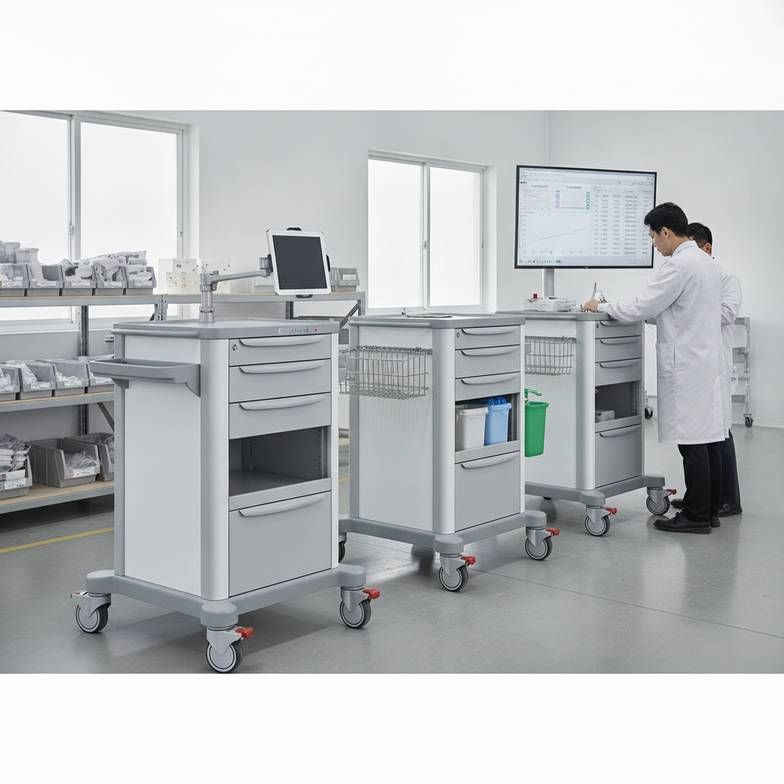
What makes a trolley suitable for EHR downtime vs. daily hybrid use?
A common mistake is believing any generic trolley will work. The specific workflow dictates the required features. A trolley that is perfect for one task may be unsuitable for another.
For EHR downtime, the trolley functions as an emergency response kit. Important requirements include:
- Mobility: Lightweight construction and durable casters for rapid deployment across long distances or different floor surfaces.
- Identification: Often brightly colored or clearly labeled as "Downtime Kit" for quick location in a storage area.
- Capacity: Sized to hold a pre-defined number of backup charts for a specific ward or unit. Security is often secondary to speed of access.
For daily hybrid use in a department like long-term care or admissions, the requirements are different:
- Durability: Built for constant use, with a sturdy frame and robust drawers.
- Security: Central or individual drawer locks are often useful to protect sensitive information throughout the day.
- Configuration: The internal layout should match the documents being used (e.g., A4 chart dividers, legal-size form holders). The top surface should be suitable for holding a tablet or laptop alongside paper.
Matching the trolley's configuration to its primary task is a practical step. A generic choice may fail to solve the actual operational problem, leading to frustrated staff and wasted budget.
How to Prepare Your Trolley Requirements for a Clear Quotation
After diagnosing your facility's specific needs, the final step is to translate those needs into a clear specification. This helps avoid vague quotations based on a generic product name.
Checklist: Diagnosing Your Facility's Need for Record Trolleys
Use this checklist to identify operational gaps and define your requirements before contacting a supplier.
- [ ] Review EHR Downtime Protocol:
- Does our official procedure require pre-printed patient charts?
- How are these charts organized and distributed to wards during an outage?
- Is there a designated, mobile "downtime kit"?
- [ ] Trace a Physical Consent Form:
- Follow the journey of a signed consent form from the patient to its final storage.
- Who is responsible for moving it? How is it transported securely?
- [ ] Interview Department Heads:
- Ask the heads of Psychiatry, Long-Term Care, and Clinical Research about their paper documentation processes.
- Do they have unique record-keeping or mobility needs not met by the EHR?
- [ ] Identify Hybrid Workflows:
- Observe nurses during rounds. Are they carrying printed lab summaries or other papers alongside tablets?
- How are miscellaneous physical documents (e.g., transfer summaries from other clinics) managed on the ward?
- [ ] Assess Physical Environment:
- Consult with IT to identify any known Wi-Fi "dead zones" where EHR access is unreliable.
- Consider the distance and floor surfaces between departments where documents are frequently moved.
Preparing Your Inquiry
Before requesting a quotation, we recommend preparing a brief summary of your needs. This helps us understand your operational context and recommend a suitable configuration. Consider preparing answers to these questions:
- Primary Task: What is the main job for the trolley? (e.g., EHR downtime kit, daily use in the psychiatry ward, admissions form transport).
- Document Types: What size and type of documents will it hold? (e.g., A4 hanging files, legal-size consent forms, small medication logs).
- Security: What level of security is required? (e.g., no lock, a central lock for all drawers, or individual locks for each drawer).
- Mobility: Where will the trolley be used? (e.g., within a single ward, or transported between different buildings).
Sending this information with your inquiry helps us provide a quotation that is a practical solution to your specific challenges, rather than just a price for a generic product.
Written by
CareFurnex Team
CareFurnex Team shares practical knowledge about hospital beds, patient room furniture, medical trolleys, clinic furniture, and healthcare facility procurement for international B2B buyers.
Related Products
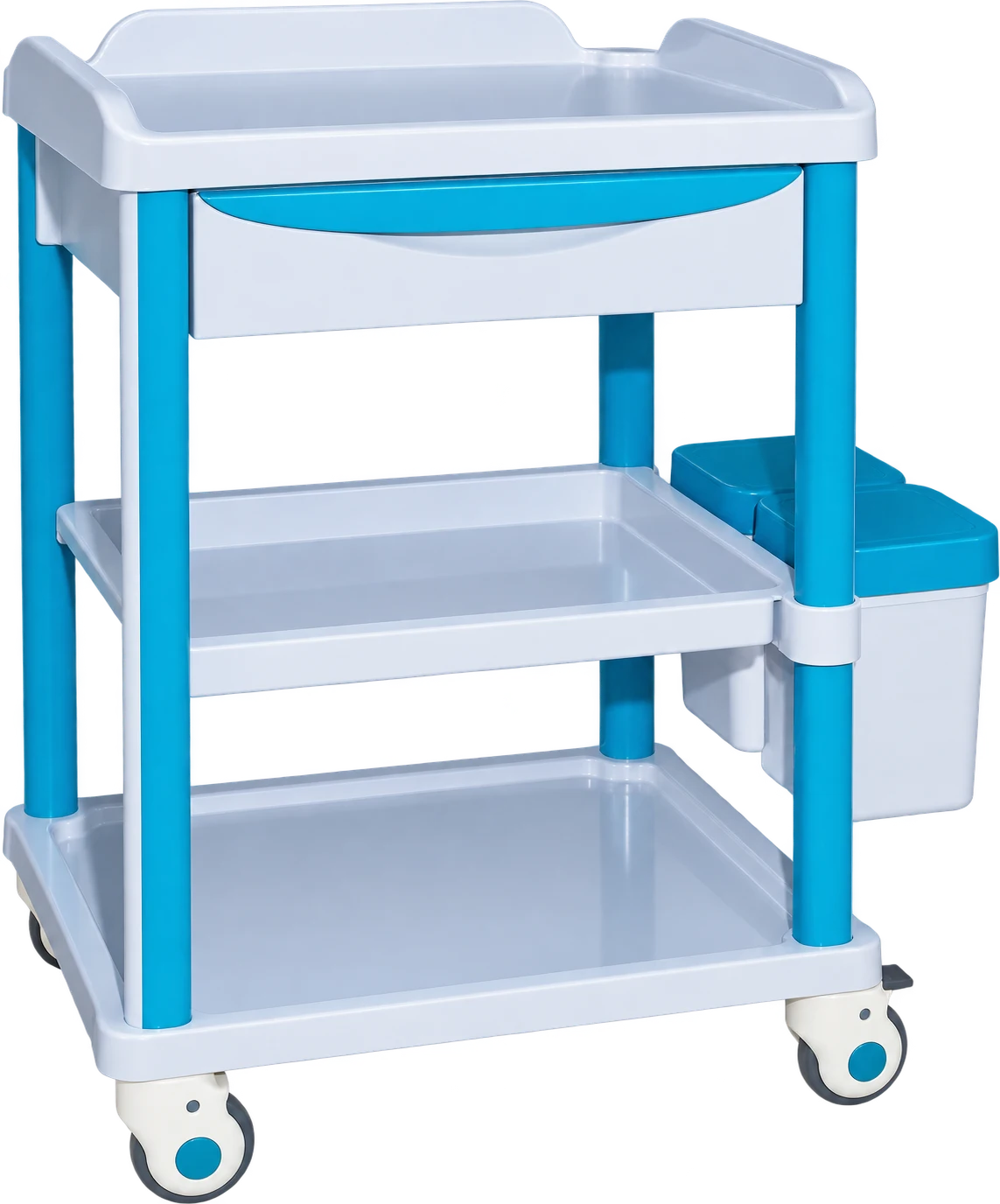
Medical Trolleys
Mobile carts for nursing rounds, treatment supplies, medicines, and clinical tools.
View product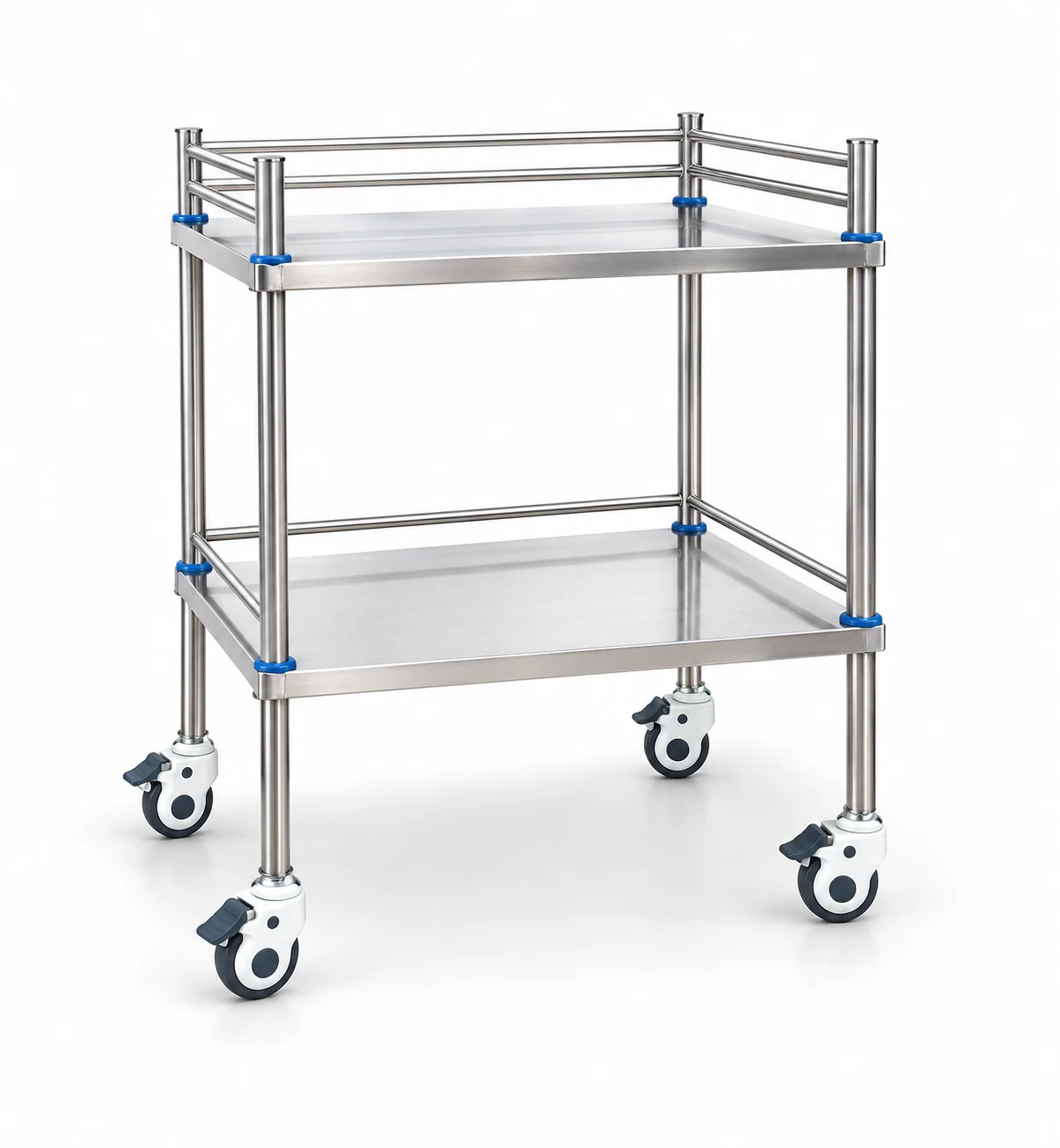
Stainless Steel Trolleys
Compare stainless steel trolleys by model, stated dimensions and configuration.
View product
Hospital Beds
General-purpose patient beds for inpatient wards and standard hospital rooms.
View product