
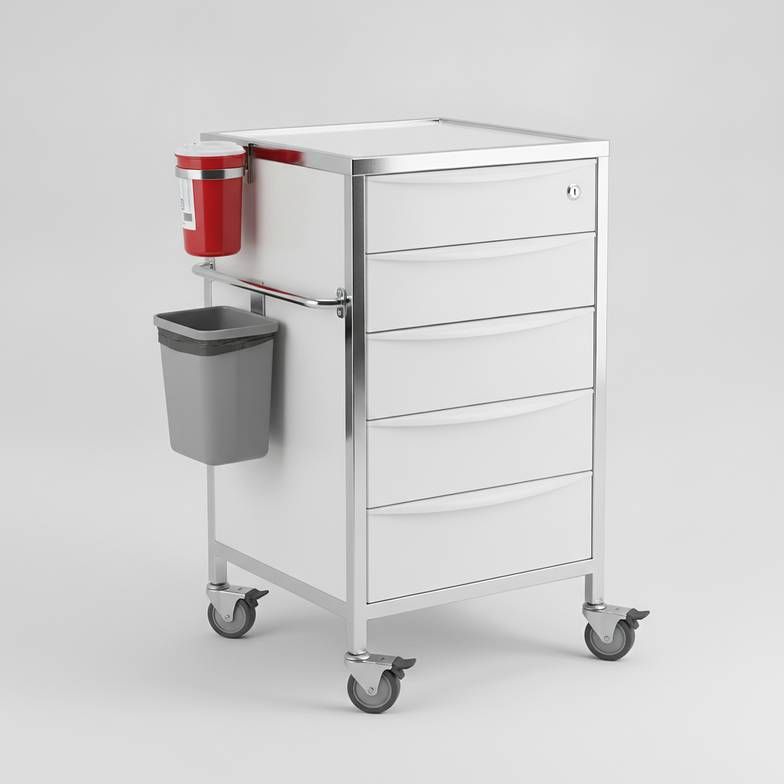
You're comparing two quotes for a "6-drawer locking cart." The photos look almost identical, but one price is noticeably lower. Choosing the cheaper option seems like an easy win for your budget, but this is the kind of decision that can lead to frustrated nurses complaining about noisy wheels, disorganized drawers, and a key system that disrupts their workflow.
The real difference between those two quotes is not the price; it's the hidden specifications that determine whether a cart helps or hinders daily work. The better question isn't "Which cart is cheapest?" but "Which cart's specifications match our ward's daily work?"
To select the right locking medication cart, start by matching its specifications to your ward's daily workflow. A practical approach is to confirm the lock system fits your security protocols, the drawer layout and dividers suit your medication packaging, and the casters are appropriate for your floor type and noise sensitivity.
These are practical planning principles to aid in equipment selection, not a substitute for your facility's specific clinical, security, or regulatory requirements. Always confirm final specifications with your project consultant, clinical leadership, and compliance team before placing an order.
Why Your Ward's Workflow Should Be Your Starting Point
Choosing a cart based on a catalog photo is like choosing a car without knowing if you'll be driving in the city or on a farm. The needs of a fast-paced surgical ward are very different from those of a quiet, long-term care unit.
A surgical ward may prioritize speed and easy access to accessories for rapid medication rounds. A long-term care unit might prioritize silent casters to avoid disturbing residents. Before looking at products, consider your specific environment:
- Pace and Traffic: How quickly do medication rounds need to happen? Is the cart navigating busy, crowded hallways?
- Noise Level: Is the ward a quiet environment where noisy casters would be a constant source of disruption?
- Security Protocol: How are keys or access codes managed during staff shift changes? Is a lost key a frequent problem?
Thinking through these workflow details first helps you build a list of requirements. This turns the selection process from a guess into a methodical choice.
How to Choose a Locking System That Fits Your Security Protocol
The "locking" part of the cart is a common starting point, but the best choice depends entirely on your team's existing procedures.
- Central Key Lock: This is a simple system where one key locks and unlocks all drawers simultaneously. It's easy to use, but it creates a single point of failure. If the key is lost or misplaced during a shift change, it can delay care. This system works best in wards with strict and effective key control policies.
- Electronic Keypad Lock: This system eliminates physical keys, reducing the risk of them being lost. Access can be granted via a shared code or individual codes, which can sometimes provide an audit trail. The trade-off is the need for battery management and staff training. This is a good solution for wards where key loss is a recurring issue.
- Individual Drawer Locks: Less common for medication carts, this system involves separate locks for each drawer. It offers granular security but is often too slow and complex for standard medication rounds.
The right question to ask is: "Which system best solves our most common access and security problems?" A simple key lock is not wrong if your team's key management is disciplined. An electronic lock is not automatically better if managing batteries becomes a new problem.
What Matters More: The Number of Drawers or the Dividers Inside?
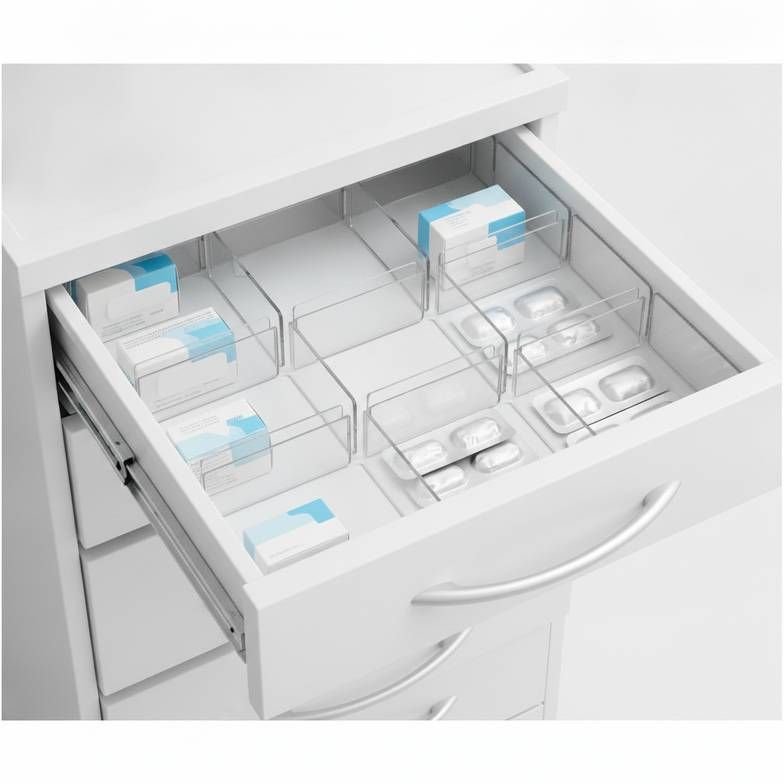
Many buyers focus on the number of drawers, assuming more drawers mean better organization. In practice, the opposite can be true. The key to efficient medication organization is not the drawer count, but the flexibility of the internal divider system.
A cart with six small, empty drawers can quickly become a mess of sliding boxes and bottles. A cart with four drawers that include adjustable dividers is far more effective.
Before you decide, check the following:
- Adjustable Dividers: Confirm if the cart comes with dividers that can be reconfigured. Ask the supplier if they are included in the price or are an optional extra.
- Internal Drawer Height: Check the height of the drawers to make sure they can accommodate the medication packaging you use most, such as taller bottles or vials.
- Medication Formats: Think about what you need to store. Are you managing mostly uniform blister packs, or a mix of bottles, boxes, and vials? The answer will tell you how important a flexible divider system is.
A good quotation should clarify if dividers are included. If it doesn't, the comparison is incomplete.
Checklist: Key Specifications for Your Medication Cart RFQ
Using a checklist to prepare your Request for Quotation (RFQ) is a practical way to get clear, comparable proposals from suppliers. It focuses the conversation on specifications, not just a product name and price.
Use this table to define your needs before contacting suppliers.
| Specification Area | Key Questions to Answer for Your Ward | What to Confirm with Supplier |
|---|---|---|
| 1. Ward Profile | What type of ward? (e.g., Surgical, ICU, Long-Term Care) | N/A - For your internal context |
| 2. Locking System | How are keys/codes managed? Is lost key a frequent issue? | Type: Central Key, Electronic Keypad, or Individual? |
| 3. Drawer Layout | What medication sizes do we store? (bottles, blister packs) | Are adjustable dividers included? What is the internal drawer height? |
| 4. Casters & Mobility | What is our flooring? Is noise a major concern? | Caster Diameter (e.g., 125mm), Material (e.g., Silent TPR), and Brakes (e.g., 2 locking). |
| 5. Materials | What cleaning agents do we use? Is cart weight a factor? | Body Material (e.g., Steel), Top Surface (e.g., ABS). |
| 6. Dimensions | Any constraints on hallway width or storage space? | Overall Dimensions (L x W x H), including accessories. |
| 7. Accessories | What tasks happen at the cart? (waste, notes, sharps) | List required items (waste bin, sharps holder, etc.) and confirm if included or optional. |
| 8. Packing/Delivery | How does shipping volume affect our budget? | Shipped Assembled or Flat-Packed? Final Packed CBM & Gross Weight. |
How to Prepare Your Inquiry for a Clear and Comparable Quote
Once you have filled out your specification checklist, you are ready to contact suppliers. A detailed inquiry allows a supplier to act as an advisor, helping you confirm the details and avoid common pitfalls.
For example, a low price might hide standard, noisy casters. For a quiet ward, confirming "silent TPR casters" is an important detail, even if it adds slightly to the cost. Likewise, a quote that doesn't mention shipping CBM is incomplete. A fully assembled cart can have a much larger shipping volume and higher freight cost than a flat-packed one.
A helpful supplier will use your detailed inquiry to provide a quotation that is transparent and easy to compare.
When you're ready to request a quotation, use the checklist you've prepared. Sending these details to your potential supplier helps them give you a precise and relevant proposal. Be sure to include:
- Your ward type and the quantity needed
- Your preferred locking system
- Drawer and divider requirements
- The caster type that suits your environment
- Any dimension or material constraints
- A list of necessary accessories
This level of detail makes the quoting process smoother and helps you get a cart that truly fits your ward's needs.
Written by
CareFurnex Team
CareFurnex Team shares practical knowledge about hospital beds, patient room furniture, medical trolleys, clinic furniture, and healthcare facility procurement for international B2B buyers.
Related Products

Ward Furniture
Complete ward furniture options for patient rooms and hospital care areas.
View product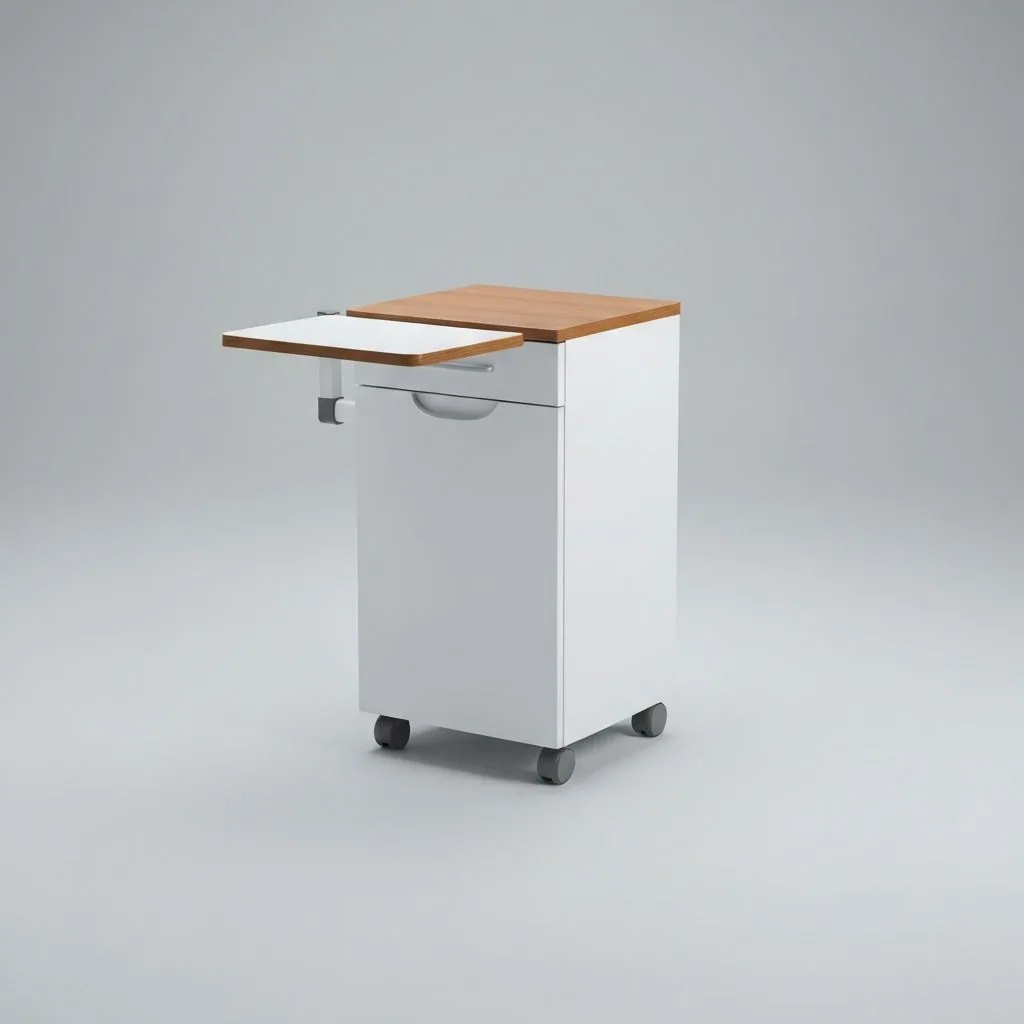
Hospital Bedside Cabinets
Bedside cabinets with drawers, storage, dining board options, and easy-clean materials.
View product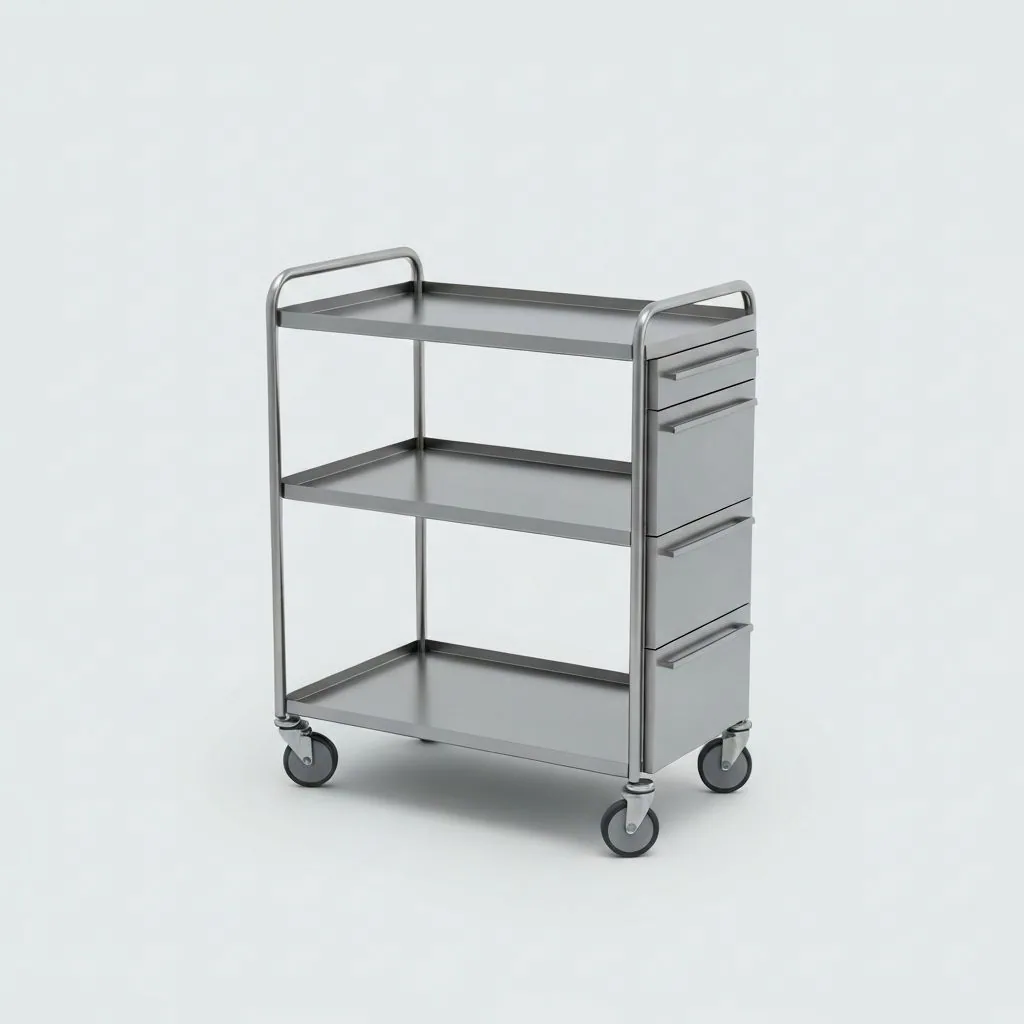
Medical Trolleys
Mobile carts for nursing rounds, treatment supplies, medicines, and clinical tools.
View product