
A buyer compares two quotes for 50 hospital beds. Supplier A's product price is $2,000 lower. It seems like an easy decision, until the final freight bill arrives and it's $5,000 higher than budgeted. The mistake was not in the freight quote; it was made before the order was ever placed, by focusing only on the unit price.
For bulky items like medical furniture, the most important cost question is not "What is your FOB price?" It is "What is the total CBM of my order?" A supplier who cannot answer the second question makes it impossible for you to budget for the first one accurately.
To ship hospital beds and medical furniture from China effectively, focus on getting the final packing method, total cubic meters (CBM), and total gross weight from your supplier first. These details, not just the product price, are what allow you to calculate your true landed cost and prevent unexpected freight charges.
A supplier who understands export for healthcare projects knows that their job includes providing the data you need to control shipping costs. The packing method and final CBM are as much a part of the product specification as its material or function.
Why Is the Supplier's Packing Data More Important Than the FOB Price?
Ocean freight is billed primarily by volume, measured in cubic meters (CBM). The supplier's packing method directly determines this volume. A lower FOB price can be paired with bulky, inefficient packing. The true cost comparison must include the shipping volume for each option.
Consider this realistic buyer scenario:
A project buyer needs 50 electric beds.
- Supplier A quotes an FOB price of $750/bed but ships them fully assembled. The total volume is 75 CBM.
- Supplier B quotes an FOB price of $780/bed but ships them Semi-Knocked-Down (SKD). The total volume is 55 CBM.
The buyer, initially favoring Supplier A for the lower product price, gets freight quotes. The shipping cost for Supplier A's 75 CBM is thousands of dollars more than for Supplier B's 55 CBM. The "more expensive" supplier is actually the cheaper option once the total landed cost is calculated.
The cheaper FOB quote is not automatically wrong. The problem is that many buyers compare prices before confirming whether both suppliers are quoting the same packing efficiency and CBM.
How Does the Assembly State (CKD/SKD) Affect My Shipping Bill?
The way a piece of furniture is assembled for shipping is a choice with major financial consequences. A supplier should be able to discuss these options with you.
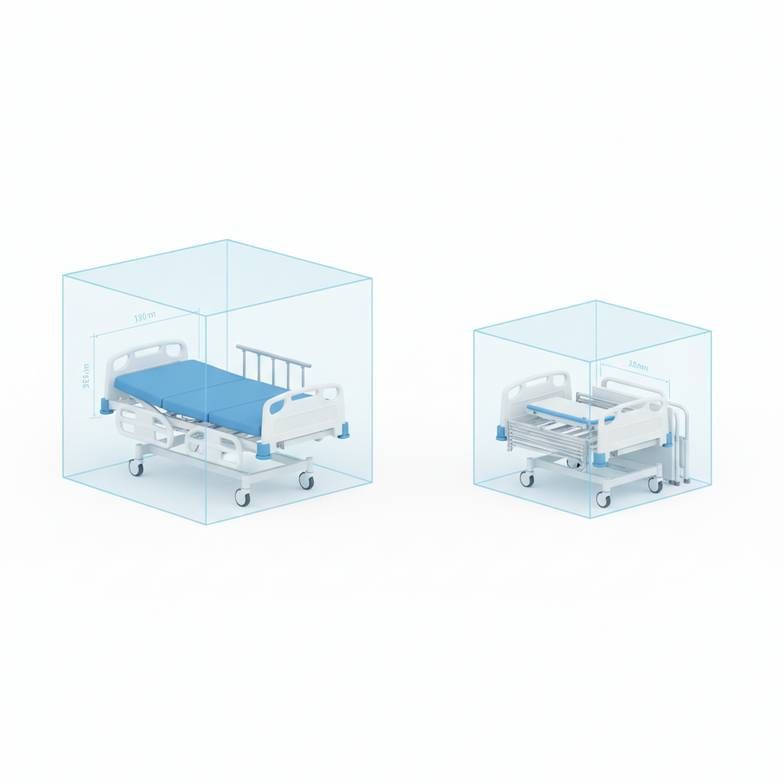
- Fully Assembled: The product is ready to use out of the box. This offers maximum convenience but has the highest CBM and highest freight cost.
- Semi-Knocked-Down (SKD): The main body is assembled, but parts like side rails, head/foot boards, or legs are packed separately. This can reduce shipping volume significantly, in some cases by 25-40%, and usually requires only simple on-site assembly.
- Completely-Knocked-Down (CKD): The product is shipped as a flat-pack of individual components. This offers the lowest CBM but requires full assembly at the destination.
For hospital beds, the question is not only the FOB price. The trade-off is between a fully assembled bed (high CBM, no on-site work) and an SKD one (lower CBM, simple assembly required), because this choice directly impacts your freight bill. If a supplier cannot offer an SKD option for bulky items, you should ask why.
What Information Do I Need from My Supplier for a Reliable Freight Quote?
A freight forwarder cannot give you an accurate quote from a simple product list. They need verifiable data. A supplier's quotation is incomplete if it does not contain the information needed to calculate shipping costs.
Before contacting a freight forwarder, ask your supplier for a Proforma Invoice (PI) and Packing List with these details:
- Total Number of Cartons/Cases
- Dimensions of Each Carton (L x W x H)
- Total Gross Weight (GW)
- Total Cubic Meters (CBM)
- Shipping Term (e.g., FOB Shanghai)
- Port of Loading
A supplier who gives you a CIF price before confirming the total CBM is giving you an estimate, not a quote. The final freight cost will be based on the actual measured volume. If the supplier cannot provide final data at the quotation stage, ask for the estimated dimensions and the packing assumptions they used.
What Costs Should I Expect at the Destination Port (That CIF Doesn't Cover)?
A common mistake is assuming a CIF (Cost, Insurance, and Freight) price covers all costs to your warehouse. It does not. CIF covers transport only to the destination port. The buyer is responsible for all subsequent "on-shore" costs.
Treat a CIF quote as covering the ocean journey only. Always create a separate budget for these typical destination charges:
- Terminal Handling Charges (THC): Fees charged by the port for handling the container.
- Customs Clearance Fees: The fee paid to your customs broker to process the import declaration.
- Import Duties & Taxes: Calculated by your customs authority based on the product's value and HS code.
- Drayage / Inland Trucking: The cost of transporting the container from the port to your final warehouse.
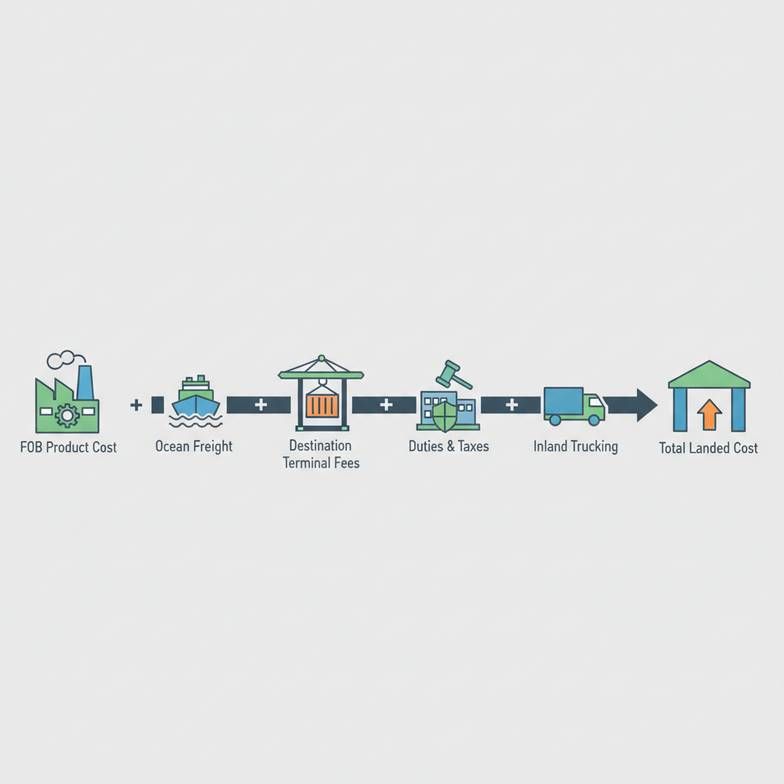
This checklist helps you track every component of your final landed cost.
Final Landed Cost Checklist
| Cost Component | Buyer Check |
|---|---|
| Product Cost (FOB) | Confirm this is on the supplier's Proforma Invoice (PI). |
| Origin Charges | Ask your freight forwarder if these are included in their quote. |
| Ocean/Air Freight | Get a binding quote from your forwarder using the supplier's final CBM and weight data. |
| Insurance | Confirm if this is included in your freight quote or if you need to arrange it separately. |
| Destination Port/Terminal Fees | Ask your forwarder for an estimate of these fees (e.g., THC). They are not included in a CIF price. |
| Customs Clearance Fee | Get a quote from your customs broker for their service. |
| Import Duties & Taxes | Ask your customs broker to estimate this based on the product's value and HS code. |
| Inland Trucking | Get a quote for transport from the port to your final warehouse. |
How to Prepare Your Inquiry to Control Shipping Costs
A simple inquiry like "price for 100 beds" forces a supplier to guess at your needs. To get a quotation that helps you control your total landed cost, provide more detail upfront. A supplier who receives a detailed inquiry sees a serious buyer and will provide a more useful quotation.
Before you ask for a price, prepare this information:
1. Your Detailed Product List: Include model names or numbers and quantities (e.g., 50 electric beds model X, 50 bedside cabinets model Y). 2. Your Destination Port: This is needed for any shipping calculation. 3. Your Preferred Assembly State: Mention if you are open to SKD packing to save on freight costs. 4. Any Project Deadlines: This helps the supplier quote realistic production and shipping timelines.
In your inquiry, specifically ask the supplier to provide a quote that includes the packing method, estimated carton dimensions, total CBM, and total gross weight for your order.
With these details, the supplier can stop treating the request as a simple product price and start discussing the actual landed cost. That is when a quotation becomes worth comparing.
Written by
CareFurnex Team
CareFurnex Team shares practical knowledge about hospital beds, patient room furniture, medical trolleys, clinic furniture, and healthcare facility procurement for international B2B buyers.
Related Products
Hospital Beds
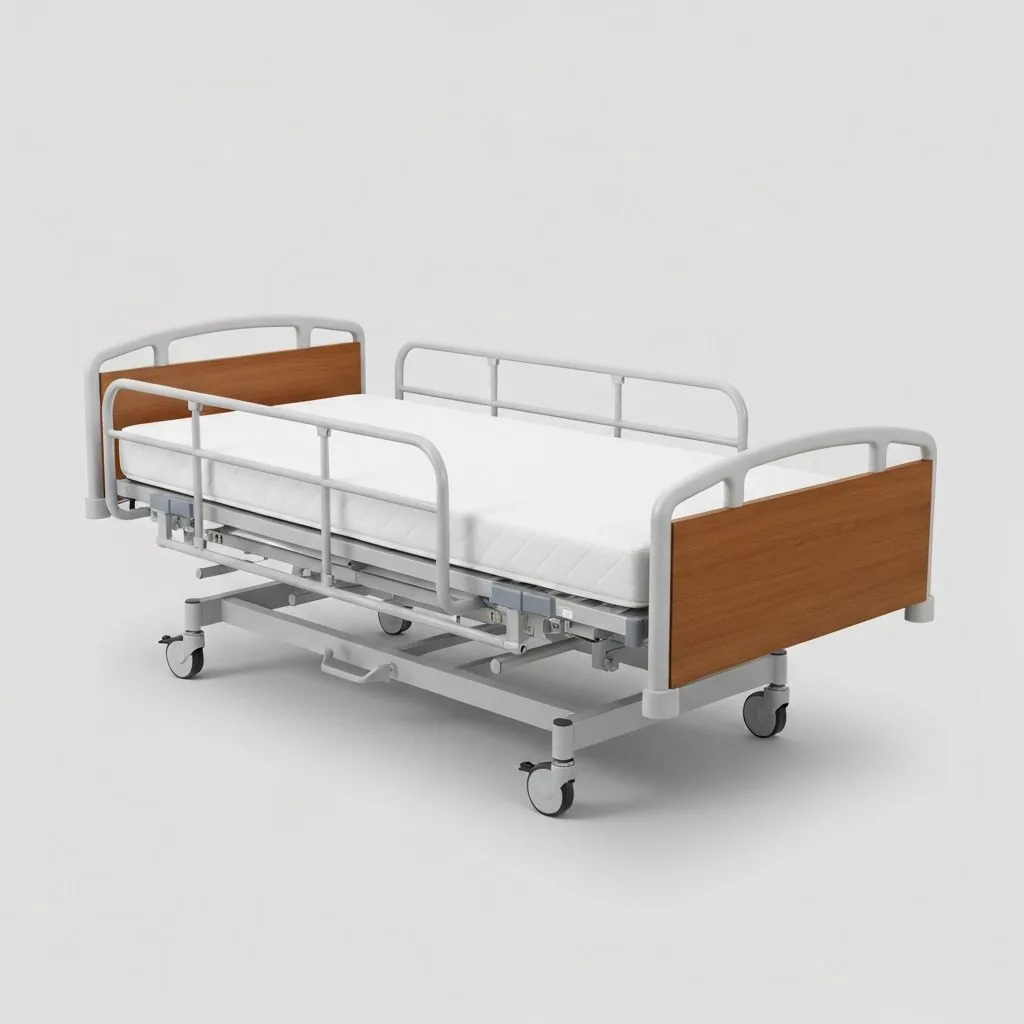
General-purpose patient beds for inpatient wards and standard hospital rooms.
View productElectric Hospital Beds
Motorized multi-function beds with electric height, backrest, and leg adjustment options.
View product
Ward Furniture
Complete ward furniture options for patient rooms and hospital care areas.
View product