
You send the same hospital furniture product list to three suppliers. The replies look complete, but the prices are far apart. One supplier quotes a “3-function electric bed” at $450, another at $600, and another at $750.
The first question is usually: “Which supplier has the best price?”
That is the wrong first question. At this stage, you may not be comparing the same bed, the same accessories, the same packing method, or the same delivery responsibility.
A professional hospital furniture product list must define the required specifications, included accessories, packing method, carton data, trade term, and lead time basis for each item before prices can be compared. A simple list of product names and quantities is not a safe quotation basis.
A low quotation may only mean the supplier quoted a different configuration. A product photo may show the style, but it cannot confirm side rails, mattress compatibility, caster quality, drawer layout, lock method, packing volume, or spare parts plan. The safer task is to turn the product list into a clear RFQ that forces every supplier to quote on the same basis. For bed rail safety context, buyers can review the FDA bed rail safety activities.

Why Can a Low Unit Price Lead to a Higher Total Project Cost?
Do not compare the FOB unit price alone. A lower unit price can be cancelled out by higher CBM, weaker export packing, missing accessories, extra assembly work, or unclear shipment responsibility.
FOB price is only one part of the project cost. For hospital furniture orders, the packing method and shipping volume can change the final landed cost more than the buyer expects.
A supplier may quote a lower bed price but ship the bed fully assembled. That may reduce work at the factory, but it increases carton size and container space. Another supplier may quote a slightly higher unit price but use a knocked-down or partially assembled packing method that reduces total CBM. The second quotation can become cheaper after freight is calculated.
The same logic applies to trolleys, bedside cabinets, wardrobes, stainless steel tables, and storage cabinets. If the product is bulky, assembled, or poorly packed, the freight cost and damage risk become part of the real price.
The table below uses simplified illustrative numbers only. The purpose is to show the comparison logic, not fixed market pricing.
| Detail | Supplier A | Supplier B |
|---|---|---|
| Product | 3-function electric bed | 3-function electric bed |
| FOB unit price | $450 | $480 |
| Packing method | Fully assembled | Knocked-down / partial assembly |
| CBM per unit | 2.5 CBM | 1.2 CBM |
| Quantity | 50 units | 50 units |
| Total CBM | 125 CBM | 60 CBM |
| Estimated freight | $8,000 | $4,000 |
| Estimated total cost | $30,500 | $28,000 |
Supplier A looks cheaper at the unit-price level. Supplier B becomes cheaper after packing volume is included. Before calling a quotation cheaper, ask for carton size, gross weight, net weight, total CBM, packing method, and loading information.
A serious quotation should not hide these details until the order is confirmed. If the supplier cannot provide estimated packing data at quotation stage, treat the price as incomplete.
What Critical Details Are Missing from a Product Name or Photo?
A product name or photo cannot confirm the real quotation basis. It does not show the material, component level, accessory scope, drawer layout, lock method, caster and brake quality, packing method, or whether the shown items are included in the price.
“Medical trolley” is not a complete specification. It may mean a simple dressing trolley, a medication trolley, an emergency crash cart, a treatment trolley, or a stainless steel service trolley. Each version can have a different material, drawer structure, lock system, accessory set, caster design, and department use.
A hospital bed photo can create the same problem. The photo may show a mattress, IV pole, side rails, overbed table, and patient controls. In B2B procurement, some of these items may be optional. If the quotation says only “hospital bed,” the buyer still does not know whether the mattress, IV pole, side rails, casters, brakes, remote controller, spare parts, or packing method are included.
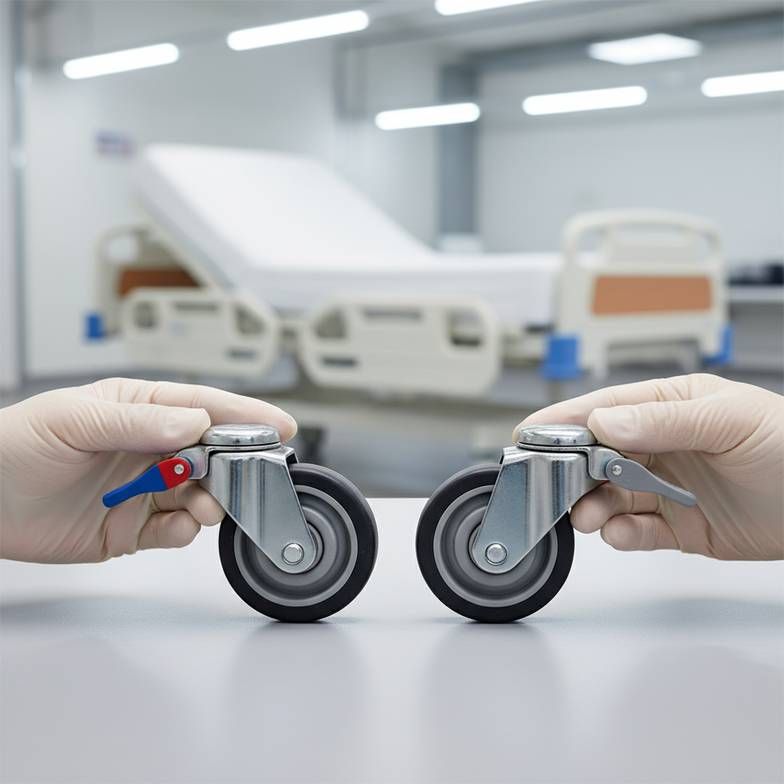
The same photo can hide different cost levels:
| Product Category | Buyer Assumption | Detail That Must Be Confirmed |
|---|---|---|
| Hospital beds | Same bed photo means same bed | Manual or electric function, side rails, casters, brakes, mattress compatibility, controller, accessory scope |
| Ward furniture | Bedside cabinet is a simple item | Material, storage layout, towel rail, shelf design, casters, cleaning surface, packing method |
| Overbed tables | All overbed tables work the same | Height adjustment, base design, tabletop material, stability, carton size |
| Medical trolleys | Trolley price can be compared by photo | Department use, drawer layout, lock method, bins, baskets, IV pole, caster and brake type |
| Storage cabinets | Cabinet size is enough | Material, shelf layout, lock requirement, labeling method, cleaning surface |
| Stainless steel / CSSD furniture | Stainless steel item is standard | Material requirement if specified, welding, surface finish, cleaning workflow, packing protection |
| Clinic furniture | Examination room furniture is general | Patient flow, surface cleaning, storage needs, mobility or installation requirement |
| Elderly care furniture | Furniture only needs to look comfortable | Stability, mobility support, easy-clean surface, safety-related configuration, room use |
A product list should not only say what the item is called. It should say where it will be used and what function it must perform. Without department use and configuration details, the supplier either guesses or quotes the most basic version to keep the price low.
That low price may later become a project problem: missing accessories, wrong trolley type, unsuitable storage layout, weak casters, oversized packing, or products that do not match the room function.
How Should I Structure My Product List to Get Comparable Quotes?
Prepare the product list as a quotation-control document, not only as a shopping list. Each line should tell the supplier the department, quantity, required configuration, included items, optional items, packing requirement, carton data request, trade term, and lead time basis.
A supplier cannot responsibly quote a hospital furniture project from a list that says only “bed,” “cabinet,” and “trolley.” The room function changes the product. A general ward bed, elderly care bed, ICU-related bed, and clinic examination item can require different functions and accessories. A trolley for medication use is not the same as a trolley for emergency use or cleaning use.
The safer structure is to organize the list by department or room first, then define each product line by configuration. This helps suppliers quote the same basis and helps the buyer see where prices differ.
Product Specification Checklist for RFQ
Use this table to define the product before asking for price. Keep the wording practical and leave space for the supplier to confirm details.
| Item | What to Confirm | Options / Notes |
|---|---|---|
| Hospital bed | Bed type and function | Manual / 2-function electric / 3-function electric / other project requirement |
| Hospital bed | Side rails | Split rails / full-length rails / supplier standard, specify |
| Hospital bed | Casters and brakes | Diameter, brake type, central brake if required |
| Hospital bed | Mattress compatibility | Mattress included or not, mattress size if required |
| Hospital bed | Accessories | IV pole, dining board, remote, spare parts, other items to list separately |
| Ward furniture | Bedside cabinet | Material, drawer or shelf layout, towel rail, casters, cleaning surface |
| Ward furniture | Overbed table | Height adjustment, base design, tabletop material, packing size |
| Ward furniture | Chairs and wardrobes | Frame material, surface finish, cleaning needs, room layout |
| Medical trolley | Department use | Emergency, medication, treatment, dressing, cleaning, other |
| Medical trolley | Drawer layout | Number of drawers, divider system, label holder if needed |
| Medical trolley | Lock method | Key lock, central lock, seal lock, no lock, other requirement |
| Medical trolley | Accessories | Bins, baskets, IV pole, defibrillator shelf, oxygen holder, cardiac board |
| Storage cabinet | Storage purpose | Medicine, linen, instruments, general storage, department storage |
| Storage cabinet | Structure | Shelf layout, lock requirement, labeling method, door type |
| Stainless steel / CSSD furniture | Use area and workflow | Cleaning area, storage area, transfer use, packing protection |
| Clinic furniture | Room function | Examination, consultation, treatment, storage, patient waiting |
| Elderly care furniture | User scenario | Stability, easy cleaning, mobility support, comfort-related configuration |
This checklist prevents the supplier from quoting a product category instead of a product specification. If two quotations still differ after this table is completed, the buyer can ask what configuration difference caused the price gap.
Quotation-Control Columns to Add to Your Product List
After the specification is clear, add commercial and packing-control columns. These columns are what turn a product list into a quotation-ready RFQ.
| Column | Why It Matters | Supplier Must Confirm |
|---|---|---|
| Item No. | Keeps quotation lines traceable | Same item number in quotation |
| Department / Room | Confirms use scenario | Ward, ICU, clinic, CSSD, storage, nursing home, etc. |
| Product category | Avoids vague product names | Bed, trolley, cabinet, chair, table, stainless steel item |
| Product name / model | Identifies quoted item | Supplier model or proposed equivalent |
| Quantity | Controls project volume | Quantity per room or total quantity |
| Required configuration | Fixes the quotation basis | Function, material, size, drawers, locks, casters, accessories |
| Included accessories | Prevents missing items | Items included in unit price |
| Optional accessories | Separates extra cost | Items quoted separately with unit price |
| Packing method | Controls freight and assembly risk | Assembled / KD / partial assembly |
| Carton data | Supports freight calculation | Carton size, G.W., N.W., CBM |
| Trade term | Avoids commercial misunderstanding | FOB / CIF / EXW / other agreed term |
| Lead time basis | Prevents schedule confusion | Start point and estimated ready date |
| Supplier remarks | Captures exceptions | Substitutions, unavailable options, special packing notes |
A quotation without included and optional items separated is not complete. A quotation without packing data is not ready for landed-cost comparison. A quotation without lead time basis may create schedule disputes after deposit payment.
A simple RFQ message can look like this:
```text Please quote the attached hospital furniture product list based on the following requirements:
- Quote by department and item number.
- Confirm product configuration for each item.
- Separate included accessories and optional accessories.
- Provide packing method for each item: assembled / KD / partial assembly.
- Provide carton size, gross weight, net weight, and estimated CBM.
- State the trade term used for the quotation.
- Confirm when lead time starts and the estimated ready date.
- List any substitutions or assumptions clearly in the remarks column.
Please do not quote only by product name or photo. ```
This wording reduces hidden assumptions. It also gives serious suppliers enough information to provide a practical quotation instead of guessing the buyer’s real requirement.
What Questions Should I Ask Suppliers About Packaging, Shipping, and Lead Time?
Ask for written answers on packing protection, carton data, total CBM, loading logic, lead time start point, inspection timing, and spare parts availability before order confirmation. Vague answers such as “strong packing” or “normal lead time” are not enough for a project order.
Packing and lead time are often treated as secondary details during price negotiation. That is risky for hospital furniture because many products are bulky, heavy, partially assembled, or easily damaged if corners, handles, casters, rails, drawers, and stainless steel surfaces are not protected.
A supplier who understands export orders should be able to explain the packing method clearly. The buyer does not need decorative wording; the buyer needs data that can be checked by the freight forwarder, warehouse team, and project schedule.
Packaging Questions
| Item | What to Ask | Why It Matters |
|---|---|---|
| Packing method | Is the item shipped assembled, KD, or partially assembled? | Affects CBM, assembly work, and freight cost |
| Carton strength | What carton type or reinforced packing is used? | Helps assess protection for export handling |
| Inner protection | Are corners, casters, rails, shelves, handles, and surfaces protected? | Reduces transit damage risk |
| Hardware packing | Are screws, tools, and small parts packed separately and labeled? | Prevents missing parts during installation |
| Packing photos | Can packing photos be provided before shipment? | Helps confirm actual packing method |
| Labeling | Are cartons labeled by item number, room, or project list if required? | Helps warehouse sorting and installation planning |
Shipping Data Questions
| Item | What to Ask | Why It Matters |
|---|---|---|
| Carton size | What are the L x W x H dimensions? | Needed for CBM calculation |
| Gross weight | What is the gross weight per carton? | Needed for handling and freight planning |
| Net weight | What is the net weight where available? | Helps check product and packing difference |
| Total CBM | What is the total CBM for the full order? | Needed before comparing freight cost |
| Loading plan | How many containers may be required? | Prevents late freight surprises |
| Mixed loading | Can bulky and small items be loaded together safely? | Reduces unused container space and damage risk |
Lead Time and Order Process Questions
| Item | What to Ask | Why It Matters |
|---|---|---|
| Lead time start point | Does lead time start after deposit, specification confirmation, or drawing approval? | Prevents schedule misunderstanding |
| Approval documents | Are samples, drawings, specification sheets, or packing details needed before production? | Clarifies buyer approval responsibility |
| Production milestone | When can pre-shipment inspection be arranged? | Supports project timeline planning |
| Spare parts | Can common spare parts be listed with part names and estimated replacement cost where available? | Helps maintenance planning |
| Replacement parts supply | What common wear parts can be supplied later, and what is the normal ordering process? | Avoids uncertainty after delivery |
The phrase “45-day lead time” is not enough by itself. For many project orders, the clock may start only after deposit payment and final approval of specifications, drawings, color, accessories, or packing method. If the buyer assumes the lead time starts from the first quotation date, the project schedule can slip before production even begins.
The Final Check Before You Send Your RFQ
Before sending the RFQ or confirming an order, check whether the quotation basis is complete in writing. The lowest price should not be treated as the best option until product configuration, accessories, packing data, trade term, lead time, and approval responsibility are clear.
A hospital furniture product list becomes useful only when it removes guesswork. The buyer should be able to point to each line and know what the supplier is quoting, what is included, what is optional, how it will be packed, and what data is still missing.
Use this final confirmation table before sending your RFQ to suppliers or before approving the final quotation.
| Checkpoint | Confirmed? | Notes |
|---|---|---|
| Product name and supplier model are listed | Yes / No | Avoid quoting by generic name only |
| Department or room use is defined | Yes / No | Ward, clinic, CSSD, storage, nursing home, etc. |
| Quantity is confirmed by item and department | Yes / No | Prevents room-by-room shortage |
| Required configuration is written clearly | Yes / No | Function, size, material, drawers, locks, casters, rails |
| Included accessories are separated | Yes / No | Mattress, IV pole, baskets, shelves, bins, holders, etc. |
| Optional accessories are priced separately | Yes / No | Avoids hidden cost after approval |
| Material and cleaning surface are confirmed | Yes / No | Especially for ward, clinic, storage, and stainless steel items |
| Packing method is confirmed | Yes / No | Assembled, KD, or partial assembly |
| Carton size and gross weight are requested | Yes / No | Needed for freight calculation |
| Total CBM is requested | Yes / No | Needed before landed-cost comparison |
| Trade term is stated | Yes / No | FOB, CIF, EXW, or other agreed term |
| Lead time start point is written | Yes / No | Deposit, drawing approval, specification approval, etc. |
| Inspection timing is agreed | Yes / No | Before shipment or other agreed stage |
| Spare parts list is requested where relevant | Yes / No | Motors, remotes, casters, locks, drawer parts, rails |
| Supplier assumptions are listed in remarks | Yes / No | Prevents hidden substitutions |
If several boxes are still “No,” the quotation is not ready for comparison. The buyer may still collect prices, but those prices are based on assumptions. That is where most hidden cost starts.
At CareFurnex, a project list is reviewed by department, product category, configuration, accessory scope, packing method, carton data, and quotation basis before it is treated as final. If you are preparing a hospital furniture RFQ, send the room list, quantities, required configurations, packing expectations, spare parts needs, trade term, and project schedule first. A clearer product list helps suppliers quote the same scope before price comparison, sample approval, production, packing, and shipment.
Written by
CareFurnex Team
CareFurnex Team shares practical knowledge about hospital beds, patient room furniture, medical trolleys, clinic furniture, and healthcare facility procurement for international B2B buyers.
Related Products
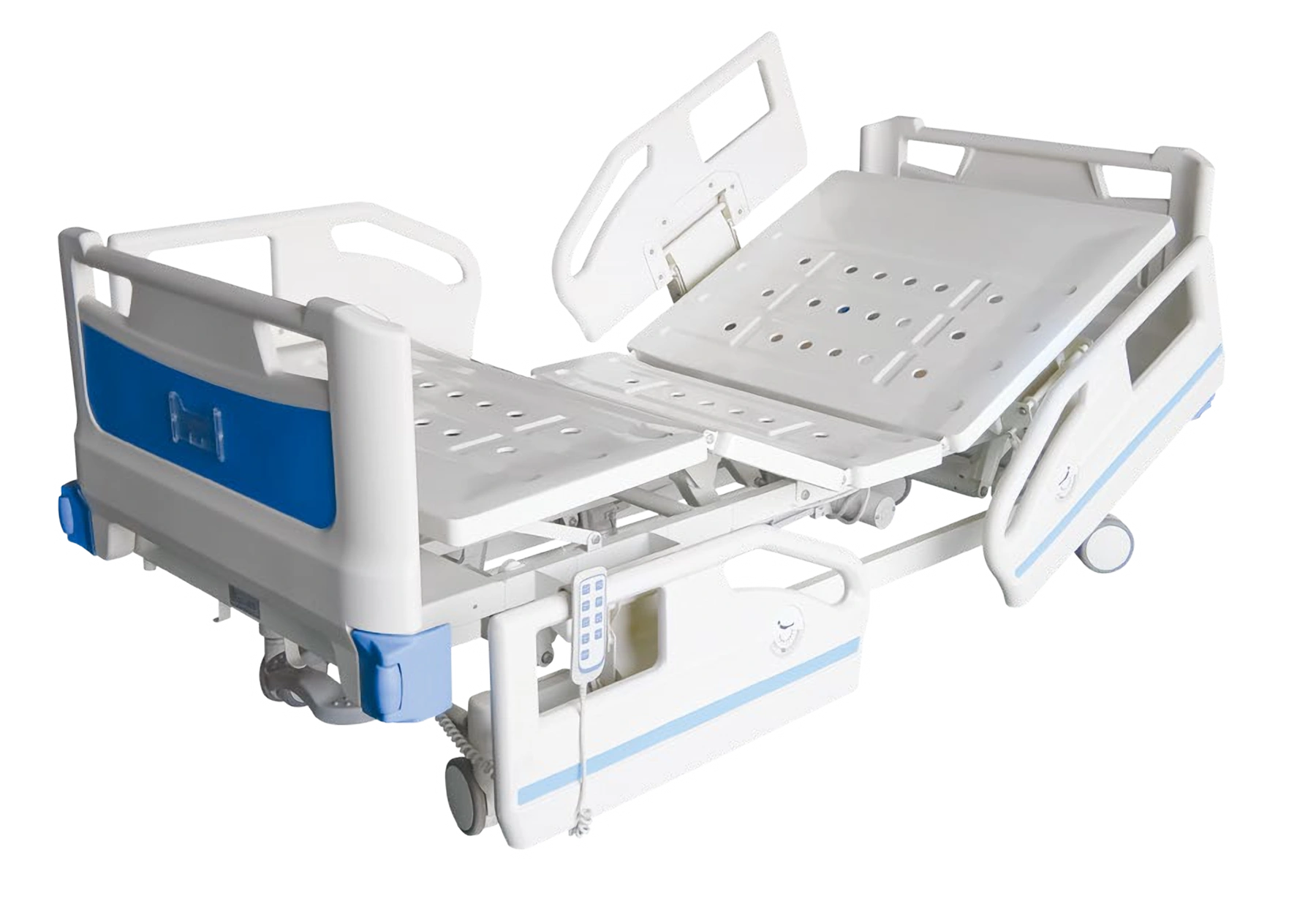
Hospital Beds
General-purpose patient beds for inpatient wards and standard hospital rooms.
View product
Ward Furniture
Complete ward furniture options for patient rooms and hospital care areas.
View product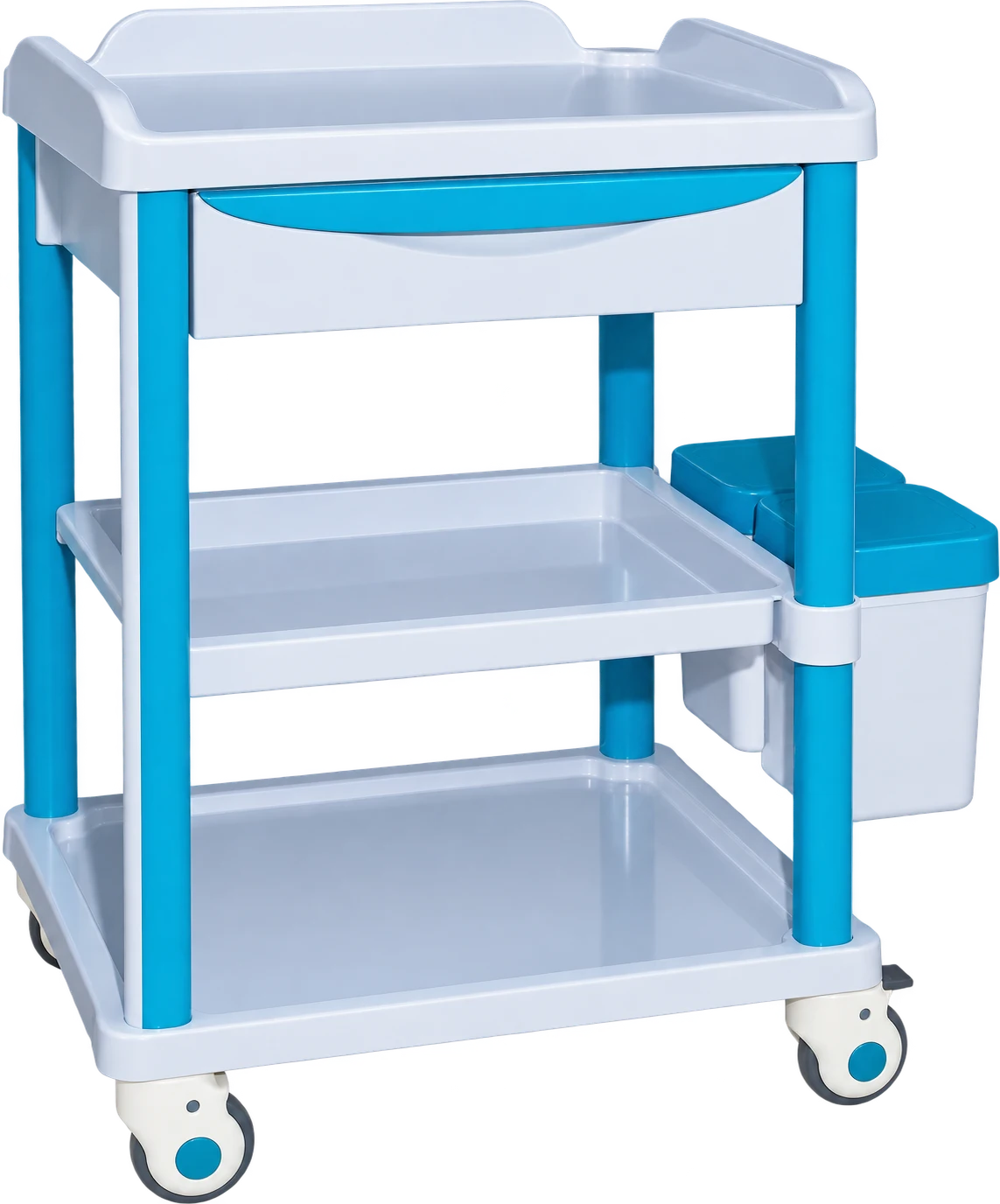
Medical Trolleys
Mobile carts for nursing rounds, treatment supplies, medicines, and clinical tools.
View product