A supplier quoting a "45-day lead time" for your hospital furniture project tells you a number, but not what that number includes. It doesn't reveal whether the project's mix of stainless steel trolleys, wooden cabinets, and electric beds has been scheduled across different workshops, or if the time for sourcing custom materials has been factored in.
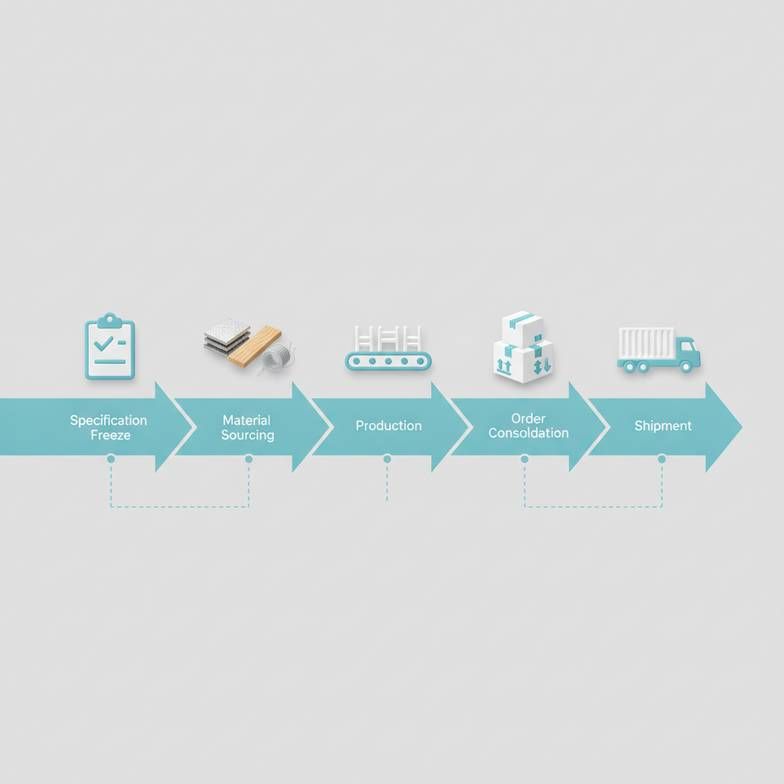
Most importantly, that 45-day quote doesn't say when the clock starts. For a project, the clock doesn't begin with your purchase order; it begins after every technical drawing, color sample, and configuration detail is confirmed and signed off. Without clarity on this "specification freeze" date, material sourcing, multi-line production scheduling, and final order consolidation, a simple lead time number is a guess, not a schedule you can plan a facility opening around.
A hospital furniture lead time is primarily affected by four factors: the complexity of your product mix (e.g., mixing stainless steel, wood, and electronic items), the final confirmation date for all specifications and drawings, the sourcing time for any custom materials or components, and the time needed for order consolidation before shipment.
Understanding these phases is the key to moving from a vague timeline to a reliable project schedule. It allows you to ask better questions and provide the right information to prevent common delays.
When Does the Lead Time for a Hospital Furniture Project Actually Begin?
A common misunderstanding is that the production clock starts the moment a purchase order is sent. For a complex healthcare project, this is rarely the case.
A purchase order tells a supplier you have approved the price, but it does not mean production can start immediately. Production begins after the "specification freeze" date—the point at which every detail is finalized, approved in writing, and locked. This includes:
- Final confirmation of all technical drawings and dimensions.
- Sign-off on all materials, finishes, and colors (e.g., laminate samples, fabric swatches).
- Agreement on all product configurations, such as drawer layouts for trolleys or side rail types for beds.
The time spent between the PO and the specification freeze is often the source of un-budgeted delays. A supplier who asks many questions during this phase is not making the order complicated; they are working to establish a clear, production-ready order to prevent errors and build a timeline you can trust.
How Does My Order's Product Mix Affect the Total Production Time?
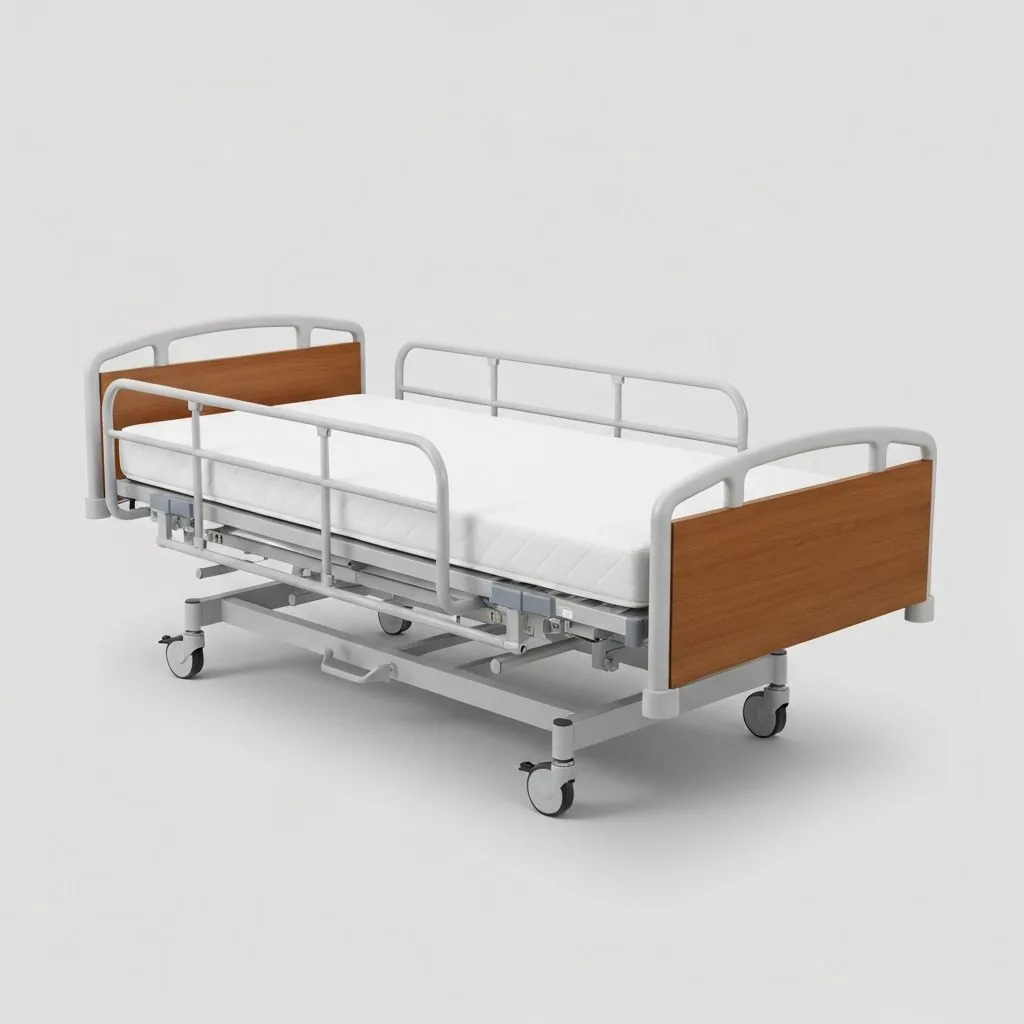
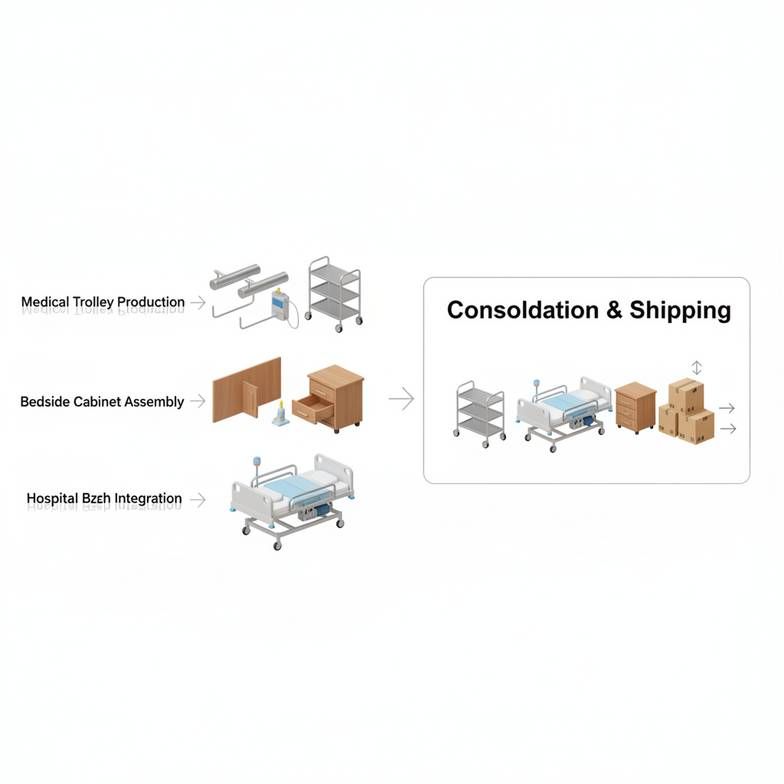
A project list containing hospital beds, stainless steel trolleys, and wooden cabinets is not one order; it is three production schedules that must be synchronized. Each category is often produced in a separate workshop with different processes and timelines.
- Stainless Steel Furniture: Involves cutting, bending, welding, and polishing.
- Wood/Laminate Furniture: Requires panel cutting, edge banding, assembly, and hardware fitting.
- Hospital Beds: Involve frame fabrication, powder coating, and final assembly with electronic components like motors and actuators.
A project list with this mix tells a supplier the items you need, but not how to schedule these parallel production lines to meet a single shipping date. The total production time is governed by the item that takes the longest to make. For example, if beds take 40 days and trolleys take 25 days, the production phase of the schedule is at least 40 days long.
A supplier who gives you a fast lead time without analyzing your product mix is likely giving you the timeline for their simplest item, not a realistic schedule for your entire project.
What Is "Order Consolidation" and How Does It Impact the Ship Date?
"Production complete" does not mean "ready to ship." This is another important distinction for project procurement. When the hospital beds are finished, they are moved to a holding area to wait for the cabinets and trolleys.
This gathering phase is called order consolidation. It is the process where all items from all production lines for your project are brought to a central point to be:
1. Inspected Together: A final quality check is performed to confirm all items are correct and consistent with the project's requirements. 2. Counted and Verified: The quantities are checked against the final packing list. 3. Packed for Shipment: The entire order is packed, labeled, and prepared for container loading.
This consolidation phase can easily add a week or more to the schedule after the last item has been manufactured. It is a necessary step to organize a complete and correct final shipment. A quotation's timeline is incomplete if it only covers production and ignores consolidation.
Which Customizations Are Most Likely to Extend My Project Timeline?
Customizations that rely on external suppliers are the most common cause of timeline extensions. The lead time for sourcing a specific component is often added before your furniture production can even begin.
Key examples include:
- Custom Laminates or Fabrics: If your project requires a specific, non-standard color or material for cabinets or chairs, the supplier must order it. The lead time from that material manufacturer can be several weeks. For bedside cabinets, the question is not only whether the supplier can produce them in 30 days. The harder part is managing the sourcing time for a custom laminate, because that external lead time can be longer than the furniture fabrication itself.
- Specific-Brand Components: If you specify a particular brand of motor for your electric beds or a certain type of caster for your medical carts, the supplier is subject to that component manufacturer's stock levels and lead times.
If your project has a tight deadline, ask the supplier about the lead times for any custom items. If a custom material's lead time is too long, ask them to show you their closest in-stock alternatives and explain the functional or aesthetic differences to help you decide on a practical trade-off.
What Information Should I Provide to Get a Dependable Lead Time Estimate?
To move from a rough guess to a reliable schedule, a supplier needs a clear view of your project's scope. A supplier who asks for these details is building a timeline you can actually use for planning. Before requesting a lead time, prepare the following information.
Project Timeline Confirmation Checklist
- [ ] Full Product List: Provide a complete list of all required items.
- [ ] Breakdown by Room or Department: Organizing the list by room (e.g., ICU Room, General Ward) or department helps the supplier understand the project's structure.
- [ ] Material & Configuration Details: Note any known requirements, such as "stainless steel" for CSSD items, "wood laminate" for cabinets, or specific functions for beds.
- [ ] Custom Requirements: Clearly state any requests for custom colors, non-standard materials, or specific-brand components.
- [ ] Desired Delivery Schedule: Do you need everything in one consolidated shipment, or does your project require phased deliveries to match construction progress?
- [ ] Preliminary Packing Data: Ask the supplier for an estimated total CBM (cubic meters) based on your list. This allows you to start logistics planning early. If the final packed CBM is not available, ask the supplier for a preliminary estimate so you can start talks with your freight forwarder.
By understanding the phases of specification, material sourcing, multi-line production, and consolidation, you can shift the conversation from a simple number to a calculated schedule. This allows you to ask better questions, provide the right information, and work with your supplier to de-risk your project timeline.
To get a reliable lead time estimate for your hospital furniture project, prepare a brief that includes:
- Your full product list.
- A breakdown by material type if known (e.g., stainless steel, wood, electronics).
- Any known custom requirements, like colors, components, or dimensions.
- Your desired delivery schedule (single shipment or phased).
- Your project's location or destination port.
Sending this information allows a supplier to calculate a realistic schedule based on your project's unique needs, not just give you a guess.
Written by
CareFurnex Team
CareFurnex Team shares practical knowledge about hospital beds, patient room furniture, medical trolleys, clinic furniture, and healthcare facility procurement for international B2B buyers.