
Struggling to compare the reliability of a hospital bed battery backup system between different suppliers? It's a common problem where focusing on a single, simple metric like "battery life" can lead to unexpected operational failures, higher long-term maintenance costs, and disruptions to patient care. By asking for specific performance data and verifiable documentation, you can confidently select an electric hospital bed that meets your facility's real-world demands.
To properly evaluate a hospital bed battery backup, buyers should confirm specifications beyond basic capacity. The most critical details are the battery's chemistry (e.g., Sealed Lead-Acid vs. Lithium-ion), its certified cycle life (the number of charge/discharge cycles it can endure), its self-discharge rate, and its compliance with medical safety standards like IEC 60601-1. You should also request the specific number of functions (e.g., height adjustments) it can perform on a single charge.
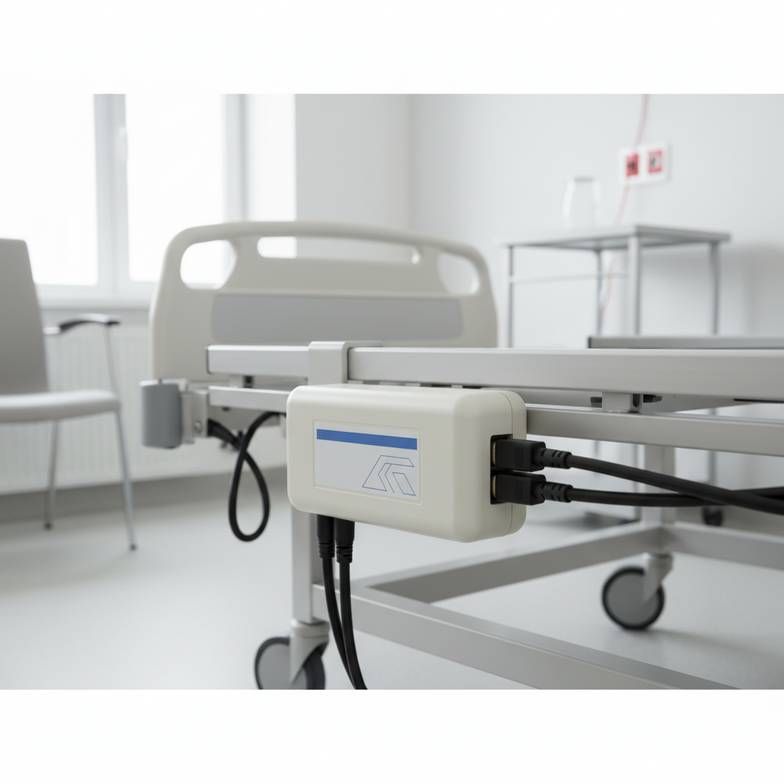
But what do these technical terms actually mean for your daily nursing workflows and your long-term budget? Understanding the practical impact of each specification is the key to moving beyond a simple price comparison. Let's break down the critical details you need to verify before finalizing your procurement decision.
Why "How Long Does the Battery Last?" Is the Wrong Question?
You need a straightforward number for your tender comparison sheet, but when you ask about battery duration, suppliers often give vague answers. This makes an apples-to-apples comparison feel impossible and introduces risk into your decision. The reality is, a better question will get you a better, more useful answer.
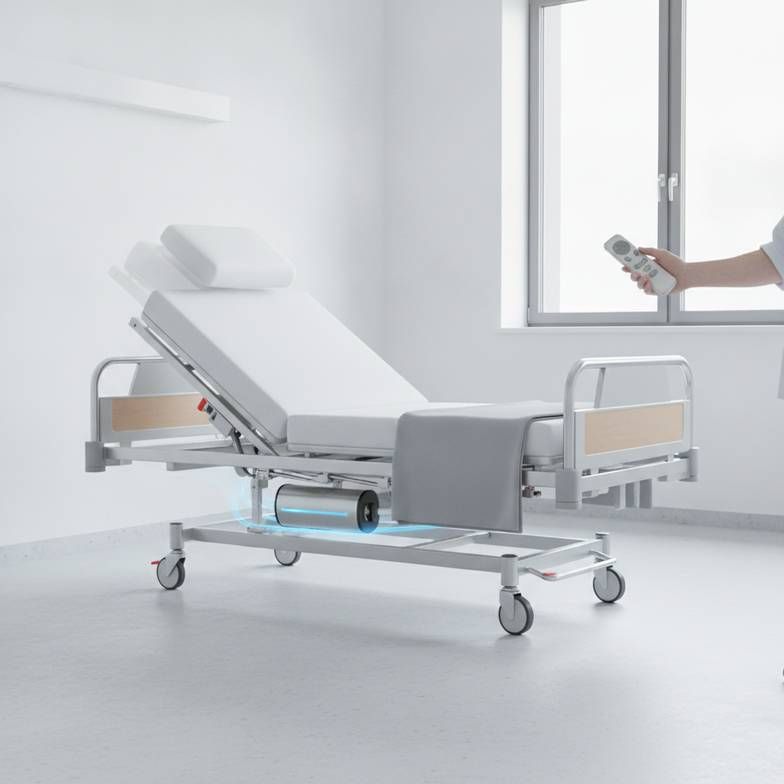
Instead of asking about an abstract duration in hours, ask how many specific, high-load functions the bed can perform on a single charge. This provides a measurable, workflow-based performance metric that is far more valuable for real-world hospital operations.
Dive Deeper: From Vague Time to Concrete Cycles
The question "How long does it last?" is flawed because the answer is always, "It depends." It depends on:
- How frequently the bed is adjusted.
- The weight of the patient.
- The age and health of the battery.
- The ambient temperature.
A battery might last for 8 hours with an idle patient but only 1 hour under constant repositioning in an ICU. This variability makes "duration" a poor metric for a binding technical specification. A much more effective approach is to define performance in terms of work cycles.
A Better Metric: Quantifying Performance in Cycles
Shift your inquiry from time to work. Ask suppliers to confirm performance with a question like this:
> "On a single, full charge, how many complete cycles of the following functions can the bed perform with a 120 kg load: > Full-range height adjustment (from lowest to highest and back)? > Full-range backrest adjustment (from flat to most upright and back)?"
This question forces the supplier to provide a specific, quantifiable, and verifiable performance guarantee. An answer like "The bed can perform 25 height adjustment cycles and 40 backrest adjustment cycles" is something you can build into your procurement contract. It's a clear benchmark that removes ambiguity.
Translating Technical Specs into Operational Scenarios
In our experience consulting with project contractors, the most successful tenders are those that define battery performance in terms of operational needs. Consider the different demands across your facility:
- Intensive Care Unit (ICU): Patients may need frequent repositioning for respiratory support and pressure injury prevention. Here, a high cycle count per charge is critical for patient safety during a power failure.
- General Ward: Adjustments may be less frequent, but the battery must remain ready to operate during patient transport or an unexpected outage.
- Emergency Department: Beds need to be ready for immediate height adjustments to facilitate patient transfers from stretchers.
Framing your specification around these scenarios helps ensure the product you buy is fit for purpose. It moves the conversation from a generic feature to a solution for a specific workflow challenge.
Beyond Amp-Hours: Which Hospital Bed Battery Backup Specs Really Matter?
Your specification sheet likely lists the battery's capacity in Amp-hours (Ah), but you notice that a cheaper alternative has the same Ah rating. This is a classic procurement trap. How do you determine which option offers better long-term value and reliability?
The critical specifications beyond raw capacity are the battery's chemistry, its certified cycle life, and its self-discharge rate. These three factors are the true determinants of a battery's performance, lifespan, and, ultimately, its total cost of ownership.
Dive Deeper: The Details That Define Total Cost of Ownership
Focusing only on Amp-hours is like judging a car's engine by its size alone, without considering its fuel efficiency, reliability, or maintenance costs. Two batteries with the same 5Ah capacity can have vastly different performance profiles and lifespans.
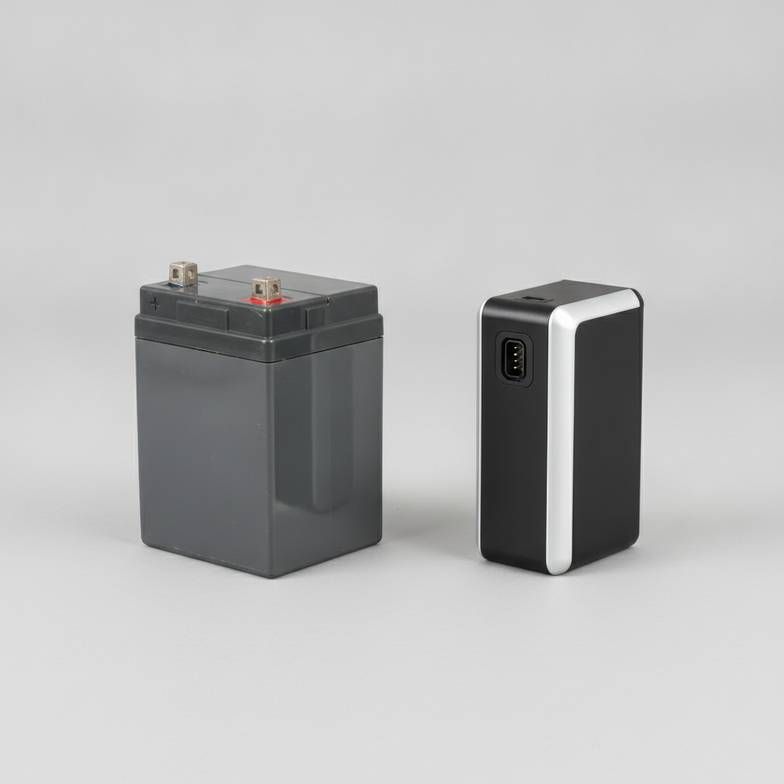
Battery Chemistry: Sealed Lead-Acid (SLA) vs. Lithium-ion (Li-ion)
The most common chemistries in hospital beds are SLA and Li-ion. Each has distinct trade-offs that impact cost and performance.
| Feature | Sealed Lead-Acid (SLA) | Lithium-ion (Li-ion) |
|---|---|---|
| Initial Cost | Lower | Higher |
| Lifespan (Cycles) | 200–400 cycles | 500–1,000+ cycles |
| Weight | Heavier | Lighter (up to 50% less) |
| Maintenance | Regular replacement | Less frequent replacement |
| Self-Discharge | Higher (loses charge faster) | Lower (holds charge longer) |
| Total Cost | Higher over 5-10 years | Lower over 5-10 years |
While an SLA-powered bed may be cheaper upfront, its shorter lifespan means more frequent battery replacements. We often guide distributors to calculate the total cost of ownership (TCO). A bed that is $100 cheaper but requires a $60 battery replacement every two years is actually more expensive over the typical 7-10 year lifespan of a hospital bed.
The Importance of Certified Cycle Life
Cycle life is the number of charge-discharge cycles a battery can complete before its capacity falls to a specified percentage of its original rating (typically 80%). This is the single most important metric for predicting a battery's longevity.
A battery rated for 250 cycles will need to be replaced twice as often as one rated for 500 cycles. When comparing two beds, always ask the supplier for the guaranteed cycle life of the battery component. A vague answer is a red flag. A reputable supplier should be able to provide this data from the battery manufacturer.
Self-Discharge Rate: The Hidden Performance Drain
Self-discharge is the rate at which a battery loses its charge when not connected to a load. This is crucial for beds that may be stored for periods or used in low-acuity wards where adjustments are infrequent. A battery with a high self-discharge rate might not have enough power when it's suddenly needed in an emergency, even if it was fully charged a month ago. Lithium-ion batteries generally have a much lower self-discharge rate (1-3% per month) compared to SLA batteries (4-6% per month), making them more reliable for standby applications.
How Can You Verify a Supplier's Claims About Their Hospital Bed Battery Backup?
A supplier's brochure promises "long-lasting" and "reliable" battery performance, but you know from experience that marketing claims don't always translate to reality. How do you get objective proof, not just a sales pitch?
To truly verify a supplier's claims, you must request three key pieces of documentation: the specific battery datasheet, relevant safety and performance certifications, and the explicit warranty policy for the battery component itself, which is often different from the bed's warranty.
Dive Deeper: Demanding Proof, Not Promises
Verifying these details is a standard part of due diligence for any serious medical equipment buyer. It protects your investment, ensures patient safety, and prevents future operational headaches.
Insist on the Battery Datasheet
The bed supplier does not manufacture the battery cells; they source them from a specialized battery manufacturer. You should ask for the original technical datasheet for the exact battery model used in the bed. This document provides unbiased, third-party data.
On the datasheet, look for:
- Manufacturer and Model Number: Confirms you are getting what was quoted.
- Chemistry: Verifies if it's SLA, Li-ion, or another type.
- Nominal Voltage (V) and Capacity (Ah): The basic power specs.
- Cycle Life Data: Often shown as a graph or chart, indicating capacity degradation over hundreds of cycles.
- Operating Temperature Range: Ensures the battery is suitable for your hospital's climate.
- Self-Discharge Rate: Usually given as a percentage per month at a specific temperature.
This datasheet moves the discussion from the bed supplier's claims to the battery maker's certified specifications.
Check for Medical-Grade Certifications
For patient and staff safety, the entire electrical system of the bed, including the battery backup, must comply with relevant standards. The most important one is IEC 60601-1, the global benchmark for medical electrical equipment safety. Compliance ensures the system is protected against electrical shocks, fire hazards, and other potential failures. Ask the supplier for a certificate of conformity. If the battery is lithium-ion, it should also have certifications for safe transport, such as UN38.3.
Scrutinize the Warranty Policy
A common point of confusion during tender comparison is the warranty. A bed frame might have a 5-year warranty, but the moving parts and electronics, especially the battery, often have a much shorter coverage period.
Ask these direct questions:
- "What is the exact warranty period for the battery component, in months?" (It's often only 6-12 months).
- "Does the warranty cover gradual capacity loss, or only complete failure?"
- "What is the process for a warranty claim, and who covers the cost of shipping and labor for replacement?"
Clarifying these points upfront prevents budget surprises and disputes down the line. It ensures you have a clear understanding of the supplier's long-term support commitment.
Frequently Asked Questions
What's a typical cycle life for a hospital bed battery?
It varies significantly by chemistry and quality. A standard Sealed Lead-Acid (SLA) battery might offer 200-400 cycles. In contrast, a good quality Lithium-ion (Li-ion) battery can provide 500 to over 1,000 cycles, offering a much longer service life and better long-term value.
Can a hospital bed battery be replaced easily?
This depends entirely on the bed's design. Some beds feature user-swappable battery packs that can be changed by hospital maintenance staff in minutes. Others may require a certified technician to disassemble part of the bed frame. Ask suppliers if the battery is a "field-replaceable unit" to clarify future maintenance requirements.
Is a bigger battery (more Ah) always better?
Not necessarily. A large-capacity but poor-quality battery with a short cycle life can be less reliable and more expensive over time than a smaller-capacity, high-quality battery. It's more important to focus on the combination of cycle life, chemistry, and certified performance than on Amp-hours alone.
How does patient weight affect battery performance?
Lifting a heavier patient requires more electrical current from the motors, which drains the battery faster. This means a bed will perform fewer adjustment cycles per charge when used by a bariatric patient compared to a pediatric one. This is why specifying performance based on a standard load (e.g., 120 kg) is a good practice for accurate comparison.
Conclusion
Choosing the right hospital bed battery backup goes far beyond a single line item on a spec sheet. It's a critical risk management decision that impacts patient safety, nursing efficiency, and your long-term budget. By shifting your questions from vague concepts like "duration" to concrete metrics like performance cycles, you can make a more informed choice. Always remember to look past the initial Amp-hour rating and dig into the crucial details of battery chemistry, certified cycle life, and self-discharge rates. Finally, validate every claim by demanding the battery datasheet, safety certifications, and a clear, specific warranty policy. This diligence ensures the bed you procure will perform reliably when you need it most.
If you're preparing a tender or need to compare hospital bed options for your project, contact CareFurnex. We can help you build a clear specification list and evaluate supplier proposals to ensure you get the reliability and value your facility deserves.
Written by
CareFurnex Team
CareFurnex Team shares practical knowledge about hospital beds, patient room furniture, medical trolleys, clinic furniture, and healthcare facility procurement for international B2B buyers.
Related Products
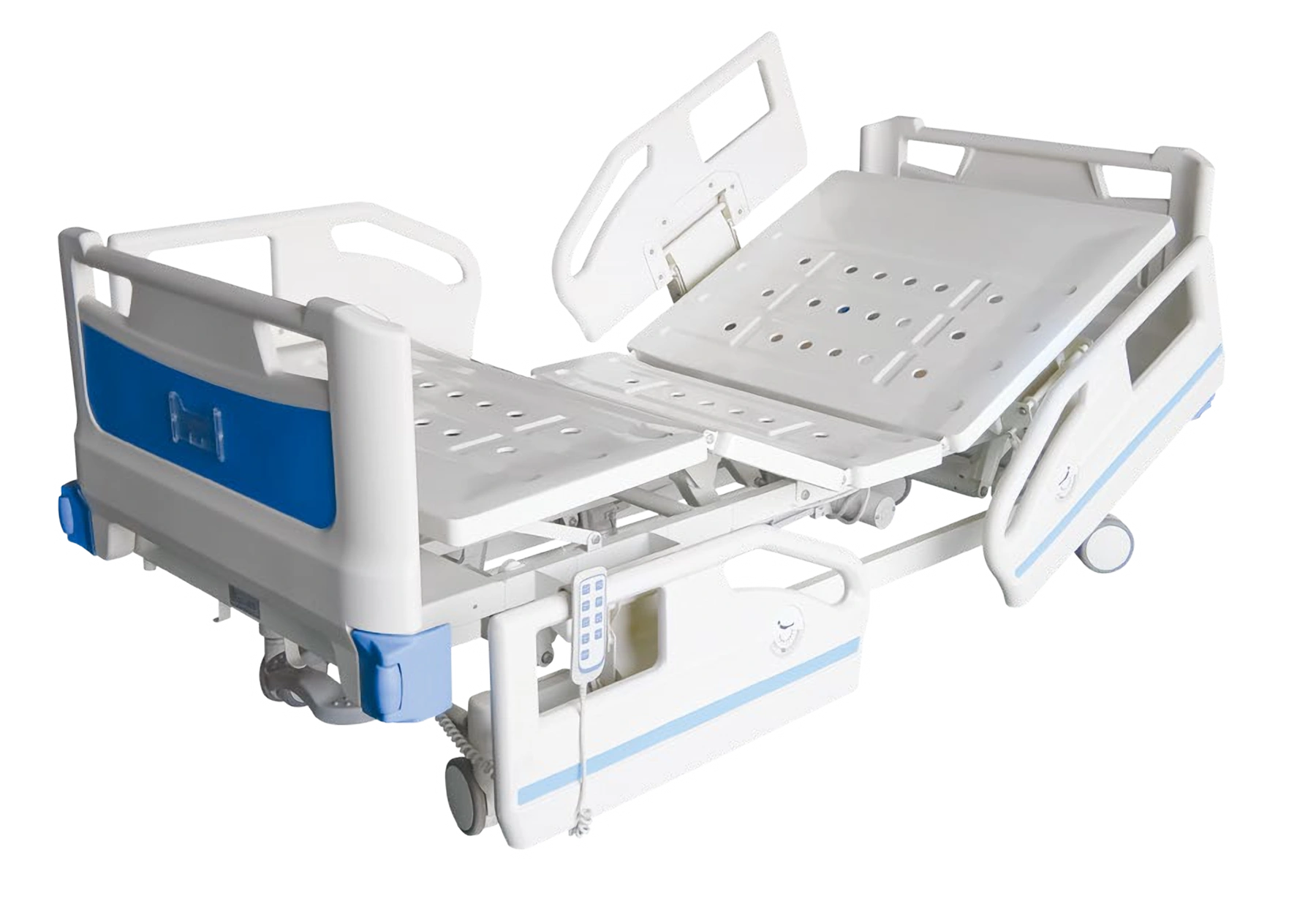
Hospital Beds
General-purpose patient beds for inpatient wards and standard hospital rooms.
View product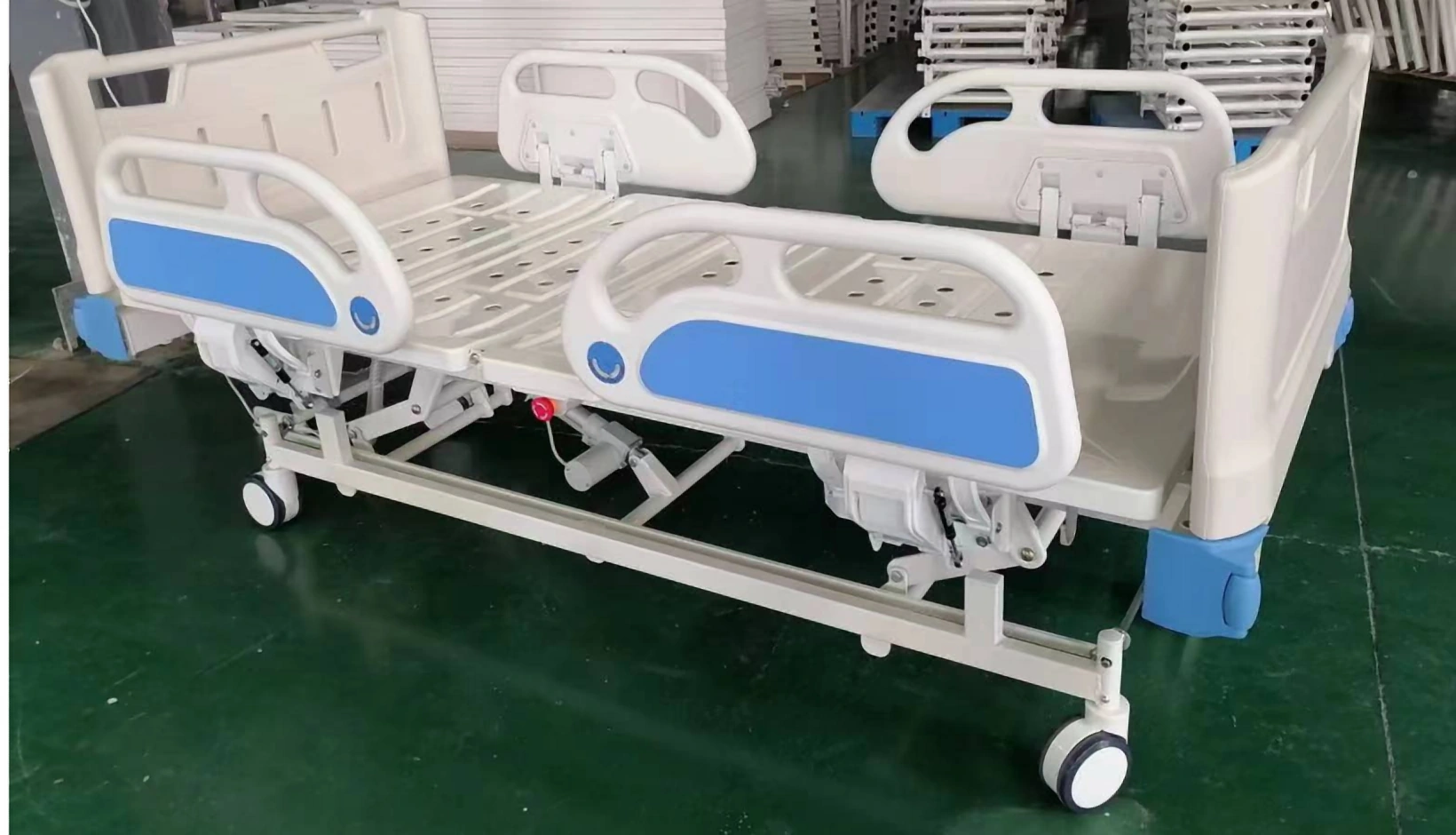
Electric Hospital Beds
Motorized multi-function beds with electric height, backrest, and leg adjustment options.
View product
Ward Furniture
Complete ward furniture options for patient rooms and hospital care areas.
View product