
A request to furnish a blood collection room often starts with a product list: a phlebotomy chair, a trolley, and a cabinet. This tells a supplier the basic items needed, but not the room's dimensions, the door location, the expected patient volume, or the daily path of the phlebotomist and samples. Without knowing this workflow, any proposed layout is just a guess.
This guesswork is why procurement managers often receive three quotations that are impossible to compare. One supplier might quote a basic manual chair, another a more robust electric model, and a third an integrated station. The price differences are not just about the products; they reflect different assumptions about how your room will function. A quotation is only comparable when it's based on a shared understanding of the room's operational plan.
Effective blood collection room planning involves first analyzing patient and staff workflow, then selecting furniture categories like chairs, trolleys, and storage to support that flow. Finalizing a basic layout and confirming key specifications, such as material cleanability and chair load capacity, is a reliable way to get relevant and comparable supplier quotations.
An experienced healthcare project supplier uses a practical, workflow-first planning process. This approach moves beyond a simple product list to develop a functional and efficient room plan that you can use to get clear, actionable quotes.
Why Shouldn't My Plan Start with Choosing the Phlebotomy Chair?
The phlebotomy chair is the centerpiece of the room, so it feels like the logical starting point. However, choosing the chair in isolation often leads to an inefficient and frustrating workspace. The chair's position and features are dictated by the workflow, not the other way around.
A request for a "phlebotomy chair" tells a supplier the main item, but not whether you need to accommodate bariatric patients, how many procedures are done per day, or how the phlebotomist needs to access supplies. For a low-volume clinic, a simple manual recline chair may be practical. For a busy hospital floor that sees many patients, the time and ergonomic strain saved by an electric recline chair may be a more important consideration than the initial cost.
Starting with the workflow first-how people and items move through the space-determines where the chair should be placed for optimal access and efficiency. This decision then informs which chair specifications are truly necessary.
How Does Mapping the Workflow Improve the Room's Layout?
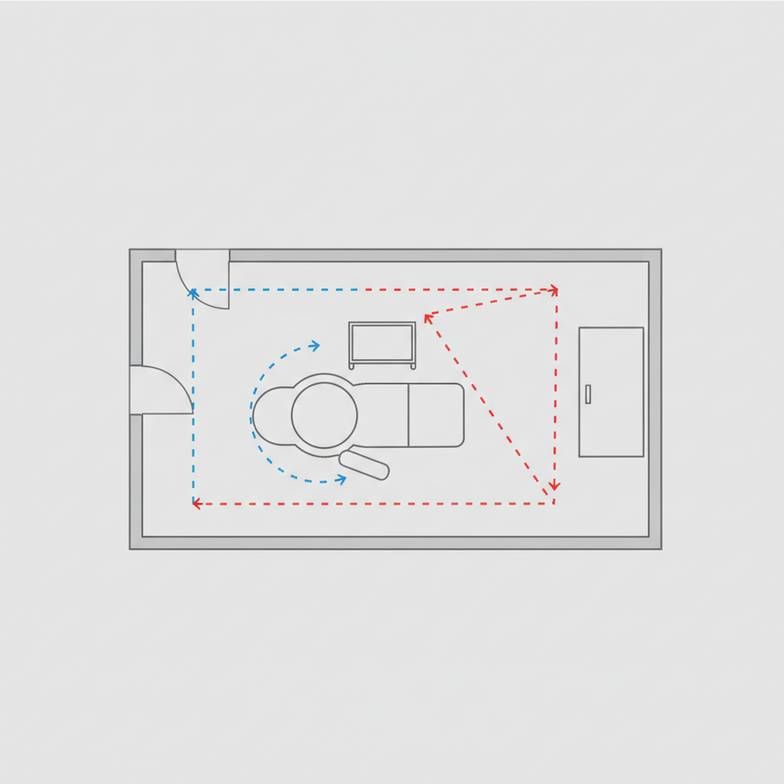
A good layout is not about fitting the most furniture into a space; it's about arranging furniture to support a process. The most effective way to do this is to map the physical paths of the patient, the phlebotomist, and the samples.
Think in terms of "zones" based on this flow:
1. Patient Zone: Where does the patient enter, wait, and exit? This area should be clear and accessible. 2. Clinical Zone: This is the core workspace, including the chair and the phlebotomy trolley. The layout should provide enough clearance for the phlebotomist to work comfortably and for emergency access if needed. 3. Supply & Documentation Zone: Where are clean supplies stored, and where does the phlebotomist handle documentation or sample labeling? This should be organized to minimize steps and help reduce the risk of cross-contamination.
A room's dimensions tell a supplier the available space, but not the location of the door, windows, or fixed sinks. These elements dictate the entire workflow. If a professional CAD drawing is not available, a simple, hand-drawn sketch showing these fixed points and the intended paths is one of the most useful documents you can provide a supplier.
What Furniture Categories Are Needed for a Functional Blood Collection Room?
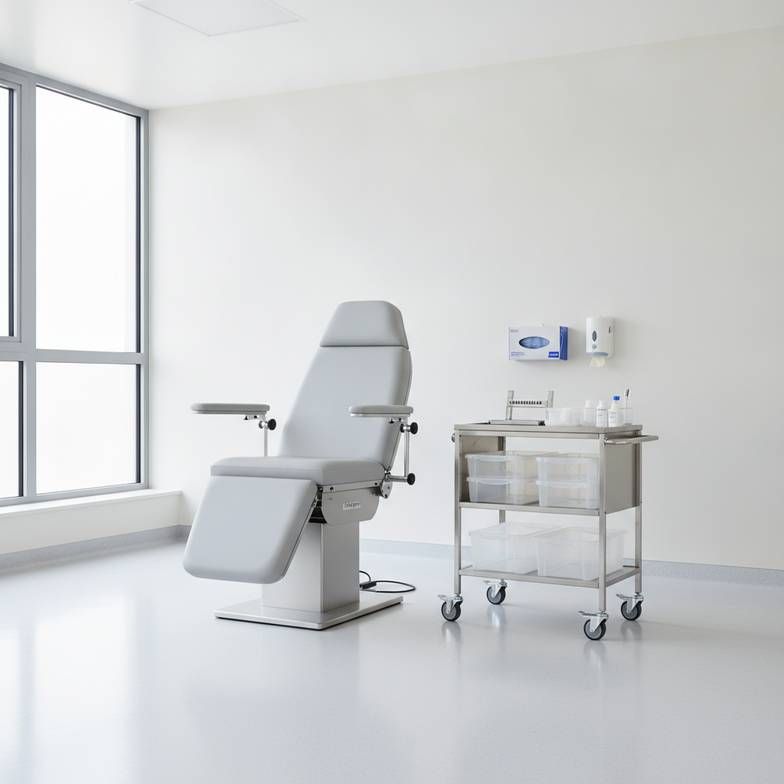
Once you have a sense of your workflow and zones, you can select the furniture categories needed to support them. A typical blood collection room includes:
- Phlebotomy Chair: The central item, specified based on patient volume, demographics, and recline needs.
- Phlebotomy Trolley/Cart: A mobile unit that keeps essential supplies (needles, tubes, gauze, sanitizers) within the phlebotomist's reach. The right trolley has a drawer configuration and accessories that match your specific supply list.
- Supply Storage: Cabinets or shelving for bulk supplies. This is often placed in the Supply Zone, away from the immediate clinical area.
- Writing Surface: A small desk, wall-mounted shelf, or integrated surface on a cabinet for documentation.
- Waste & Sharps Disposal: Appropriately placed bins for different types of waste, often integrated with the trolley or placed near the clinical zone.
A request for a "medical trolley" is a product name, not a specification. A supplier needs to know if it requires lockable drawers or a sharps container holder to provide a relevant quote.
Which Specifications for Chairs and Trolleys Affect Daily Use and Safety?
Vague terms like "high quality" or "durable" are not useful in a specification. Instead, focus on the functional details that impact safety, hygiene, and efficiency. A supplier who asks about these points is not making the process complicated; they are trying to provide a quotation that is actually useful.
This checklist helps you define the key actions and specifications for your RFQ. It turns your plan into a document that suppliers can use to provide clear, comparable answers.
Planning Checklist for Your Blood Collection Room RFQ
| Planning Stage | Key Action | What to Confirm for Your RFQ |
|---|---|---|
| 1. Workflow Analysis | Draw simple lines on your floor plan showing the path of the patient, the phlebotomist, and the samples. | Include a simplified diagram of this workflow for the supplier's reference. |
| 2. Room Zoning | Based on the workflow, mark out functional zones: Patient Entry, Clinical Zone (chair & trolley), and Supply/Waste Zone. | Show these zones on your layout sketch to explain why furniture is placed where it is. |
| 3. Furniture Selection | List the furniture categories needed for each zone (e.g., Phlebotomy Chair, Phlebotomy Trolley, Supply Cabinet). | Provide a clear list of required items with quantities for each room. |
| 4. Specification Definition | For each item, identify 2-3 key requirements. | Add key specs to your list (e.g., "Phlebotomy Chair: min. 200kg capacity, seamless upholstery"; "Trolley: with lockable drawers"). |
For the phlebotomy chair, confirm:
- Load Capacity: Does it support your entire patient population, including bariatric patients if applicable? Ask for the chair's specified load capacity.
- Upholstery: Is the upholstery seamless and made from a non-porous material? This detail is important for effective cleaning and supporting your facility's infection control procedures. If you are unsure of your facility's exact cleaning chemicals, ask for a material sample to test.
- Mechanism: Is a manual or electric recline/height adjustment more suitable for your patient volume and budget?
For the phlebotomy trolley, confirm:
- Drawer Configuration: Does the layout suit the specific tubes, forms, and supplies your staff uses?
- Accessories: Does the quotation include necessary accessories like a sharps container holder, waste bin, and glove box holder? Confirm if these are included or optional.
- Mobility: Are the casters high quality, with reliable locks, and suitable for your flooring?
How Do I Turn My Plan Into a Request for Quotation (RFQ) That Gets Clear Answers?
With a workflow, zoned layout, and key specifications defined, you are ready to contact suppliers. A strong RFQ prevents the back-and-forth of incomplete inquiries and forces all suppliers to quote on the same functional basis. It allows them to provide a quotation that reflects a real solution for your space-not just a list of disconnected products.
To get a relevant and comparable project quotation for your blood collection room, please prepare and send the following information:
- A simple floor plan or sketch of the room showing the door location and your intended workflow.
- A list of the furniture categories you require (e.g., phlebotomy chair, trolley, cabinet).
- The quantity needed for each item and for how many rooms.
- A list of 2-3 key specifications for your most critical items, such as the chair's load capacity or the trolley's required accessories.
This information will help us move beyond guessing and start a practical discussion about your project. It's the foundation for a clear plan and an accurate quotation.
Written by
CareFurnex Team
CareFurnex Team shares practical knowledge about hospital beds, patient room furniture, medical trolleys, clinic furniture, and healthcare facility procurement for international B2B buyers.
Related Products
Blood Collection Chairs
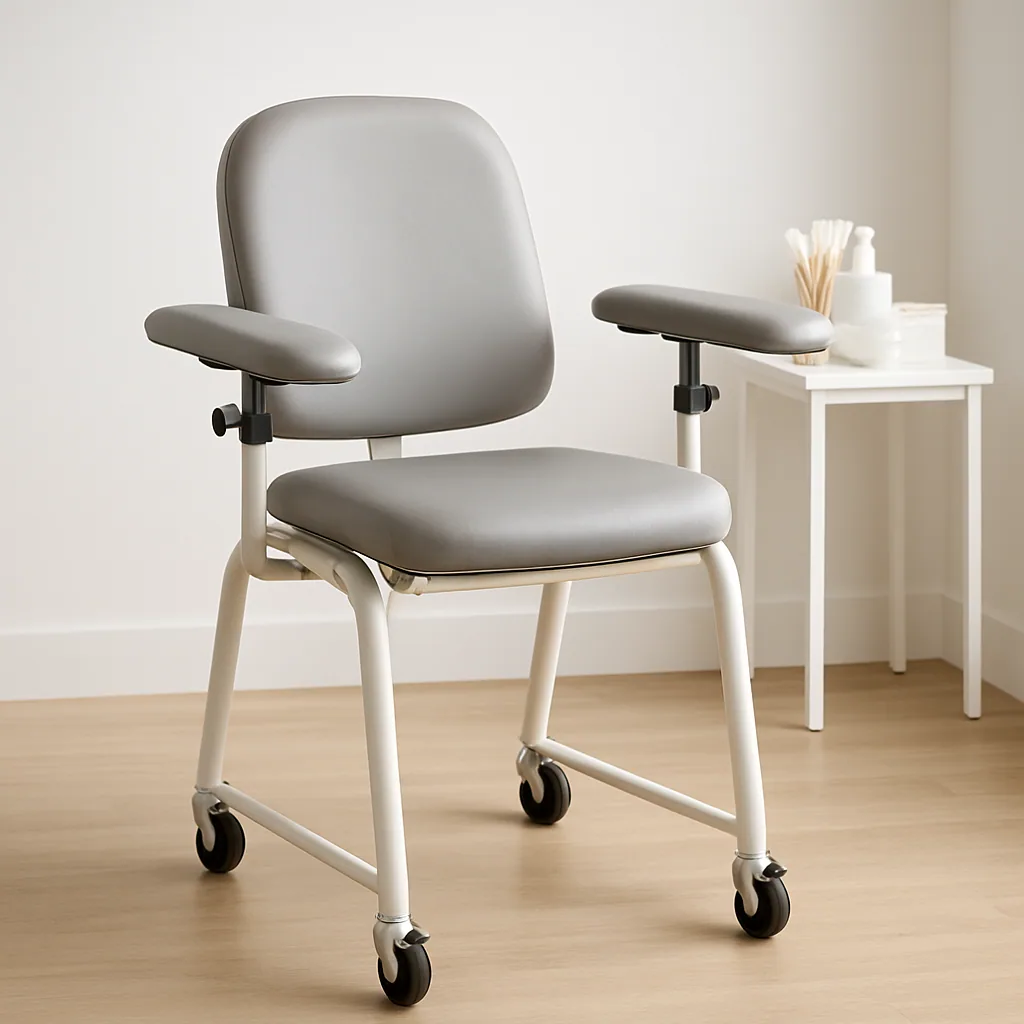
Phlebotomy chairs with arm support for clinics, laboratories, and outpatient areas.
View product
Hospital Beds
General-purpose patient beds for inpatient wards and standard hospital rooms.
View product
Ward Furniture
Complete ward furniture options for patient rooms and hospital care areas.
View product