
You’ve received three quotations for bedside cabinets for your hospital project. The photos look almost identical, but the prices are completely different. One is surprisingly low, another is in the middle, and the third is significantly higher. This is a common problem for B2B buyers, and making the wrong choice can lead to unfair supplier comparisons, project budget issues, or after-sales complaints.
The confusion often comes from treating “bedside cabinet” as a standard commodity. In reality, the material, structure, included accessories, and even the packing method can turn similar-looking cabinets into very different procurement items.
The best bedside cabinet material is not always the cheapest or the most expensive option. For healthcare projects, buyers should choose ABS, steel, stainless steel, or HPL according to room function, cleaning needs, appearance expectations, configuration, packing method, and total quotation basis.
This guide will walk you through these materials from a supplier-side perspective, explaining what to check before you compare prices, confirm a sample, or place a bulk order.
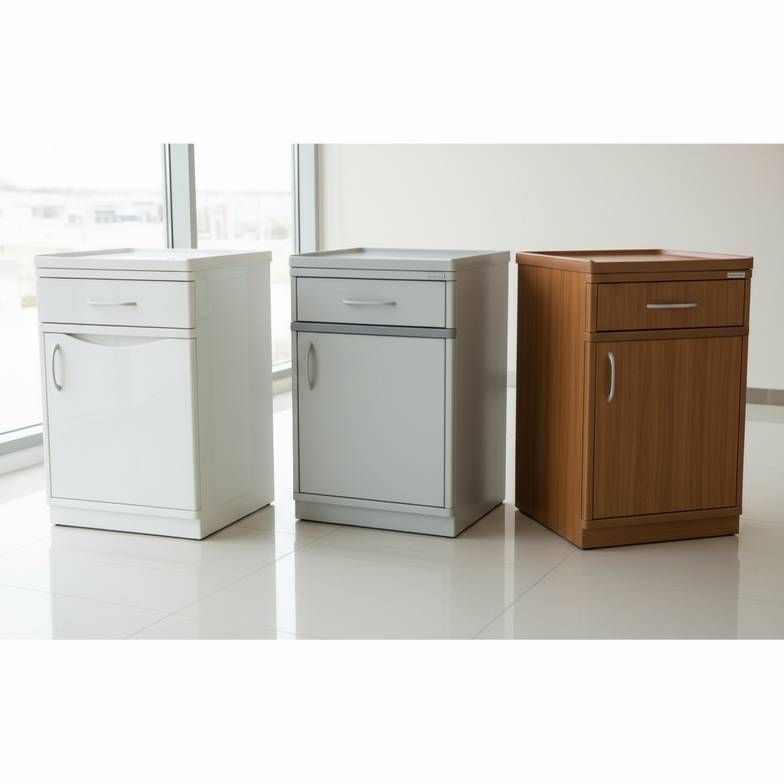
Why Do Similar Bedside Cabinet Photos Have Very Different Prices?
A product photo does not show the real material, internal structure, surface finish, drawer quality, or included accessories. In my experience as a supplier, many purchasing problems start when a buyer compares only photos and unit prices.
A vague quotation for a "hospital bedside cabinet" can hide major differences that directly affect cost and performance:
- Material: The cabinet could be made from ABS (a type of plastic), powder-coated steel, stainless steel, an HPL (high-pressure laminate) surface on a board, or a mix of these materials. Each has a different cost and is suited for different environments.
- Structure: Two cabinets may look the same, but one might have a more robust internal frame, better drawer runners, or stronger joints, affecting its stability and lifespan.
- Configuration: One price might include locks, shelves, towel hooks, and bottle holders, while a cheaper quote may only cover the basic cabinet body.
- Packing: The cost of protective export packing for a finished cabinet is not the same as simple domestic packaging. Weak packing increases the risk of scratches, dents, and damage during shipment.
The first practical action for any buyer is to stop comparing photos and start comparing written specifications. A low price is only a good price if it’s for the right product.
- Practical Buyer Action: Before comparing prices, ask every supplier to provide a detailed specification sheet that clearly states the main material, surface finish, dimensions, and a list of all included accessories.
- Supplier-Side Operational Detail: When we prepare a quotation, a product name like "bedside cabinet" is only a starting point. We need to confirm the material, drawer layout, lock requirements, and packing method to provide an accurate price. A quote without these details is just a rough estimate.
- Risk & Decision Point: The risk of relying on photos is choosing the wrong supplier. You might select a low quote for what you believe is a steel cabinet, only to find it's a different material that doesn't meet your project's cleaning or durability standards.
Which Bedside Cabinet Material Fits Your Room Function Best?
The right material depends on the specific room's function, cleaning frequency, and budget—not on a simple "good, better, best" scale. A mistake I often see is a buyer over-specifying an expensive material like stainless steel for every room, making their project less price-competitive. Another common error is choosing the cheapest option for a high-traffic area, leading to durability issues.
Here’s how to match the material to your project needs:
- ABS (Acrylonitrile Butadiene Styrene): Often a practical and cost-effective choice for general wards, clinics, and nursing homes. Modern ABS cabinets can be well-designed, easy to clean, and impact-resistant. Don't dismiss it as "just plastic"; instead, check the cabinet's overall stability, drawer construction, and surface finish.
- Powder-Coated Steel: A common "metal" option that offers durability and a clean look at a moderate cost. It's crucial to distinguish it from stainless steel. The quality of the powder coating affects its long-term appearance and resistance to chipping or rust.
- Stainless Steel: Best suited for environments with stringent cleaning protocols or high humidity, where its corrosion resistance and durability justify the higher cost. Using it for every standard patient room may be unnecessary and can inflate your project budget.
- HPL (High-Pressure Laminate): Often chosen for its wide range of colors and wood-grain finishes, creating a warmer, less clinical feel. This makes it popular for private rooms, VIP wards, or elderly care facilities. However, you must check the underlying board material and, most importantly, the quality of the edge treatment to prevent moisture damage.
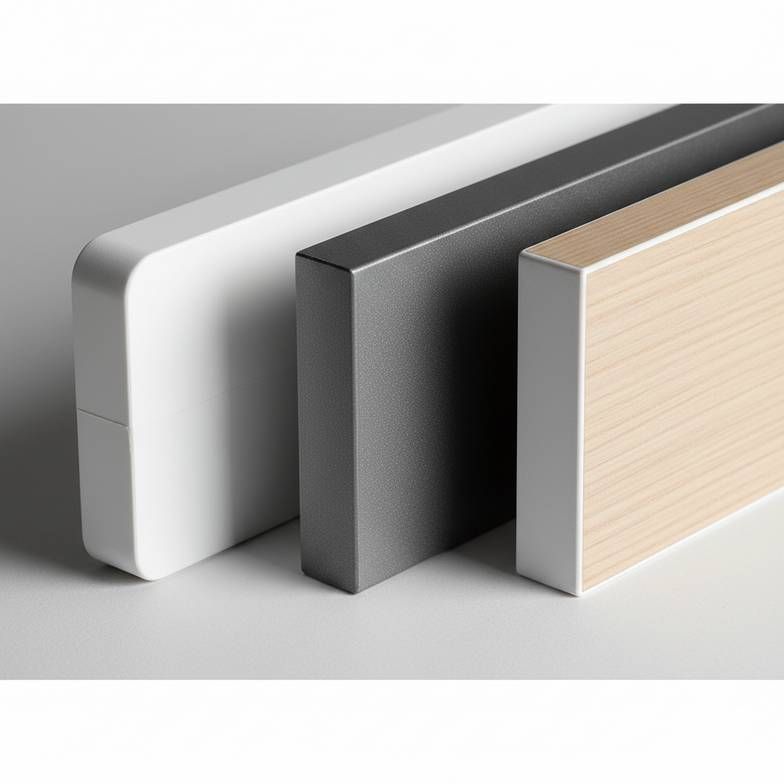
The table below breaks down these choices from a procurement perspective.
Bedside Cabinet Material Comparison for B2B Buyers
| Material Option | Practical Strengths | Points to Check Before Ordering | Suitable Project Considerations | Common Procurement Risk |
|---|---|---|---|---|
| ABS | Good balance of cost, impact resistance, and modern design. Easy to mold into smooth, easy-to-clean shapes. | Cabinet stability, drawer quality, surface finish, material thickness, and packing protection for corners. | General hospital wards, clinics, and cost-conscious healthcare projects. | Judging by material name alone without checking the actual product's structural integrity and design quality. |
| Powder-Coated Steel | Durable and sturdy feel. Offers a clean, professional appearance. Generally more cost-effective than stainless steel. | Quality of the powder coating, surface smoothness, welding points, and resistance to scratches. Confirm it's not being confused with stainless steel. | General wards, treatment rooms, and areas requiring a robust metal structure. | The quotation just says "metal cabinet" without specifying if it is powder-coated steel or stainless steel. |
| Stainless Steel | Excellent durability and corrosion resistance. Ideal for environments with frequent, harsh cleaning. | The specific wording in the quote (e.g., "stainless steel top," "full stainless steel body"), surface finish, and weld quality. | Areas with high hygiene requirements or where long-term durability is the top priority. | Over-specifying it for all rooms, which significantly increases the project cost and reduces price competitiveness. |
| HPL-Related Cabinet | Wide variety of decorative finishes (colors, wood grains). Creates a warm, non-clinical patient environment. | The quality of the edge banding (critical for moisture resistance), the underlying board material (e.g., MDF, particleboard), and overall structure. | Private patient rooms, VIP wards, senior living facilities, and clinics where aesthetics are important. | Choosing based on color/appearance while ignoring the edge treatment, which can lead to swelling or damage if exposed to moisture. |
After reviewing the table, you can see that the "best" material is the one that best fits the specific room's requirements and your project's budget.
- Practical Buyer Action: Create a room-by-room or department-based list for your project. Assign a material priority (e.g., "cost-effective & easy-clean" for general wards, "aesthetic & durable" for private rooms) before you request quotations.
- Supplier-Side Operational Detail: When a project buyer sends us a list, we first ask about the different room types. A general ward and a VIP suite have different needs. Recommending the right material for each area helps the buyer balance cost and quality across the entire project.
- Risk & Decision Point: The trade-off is between standardization and optimization. Using one cabinet type for all rooms is simpler to procure, but customizing materials by room function can deliver better value and performance.
How Do Cleaning, Surface Finish, and Daily Use Affect Material Choice?
A bedside cabinet that looks good in a catalog can become a problem if it’s difficult for staff to clean and maintain. In real healthcare facilities, these cabinets are touched constantly by patients, nurses, and cleaning crews. Their surfaces, corners, and handles must withstand daily use and cleaning routines.
Here’s what to consider:
- Surfaces and Joints: In practice, smooth, non-porous surfaces are generally easier to clean effectively. For steel and ABS, check that there are no hard-to-reach crevices.
- Edges on HPL: This is a critical point. From the supplier side, I can tell you that poorly sealed edges on HPL or laminate boards are a common failure point. If moisture gets in, the underlying board can swell and the laminate can peel. Insist on high-quality, fully sealed edge banding.
- Handles and Drawers: Are the handles easy to grip and clean around? Do the drawers slide smoothly, and can they be easily removed for deep cleaning if needed?
- Material Wording: When a quote says "steel" or "stainless steel," ask for more detail on the surface finish (e.g., brushed, polished, powder-coated). This affects both appearance and cleaning.
- Practical Buyer Action: When you receive a sample, don't just look at it. Wipe it down with a cloth. Open and close the drawers. Check the feel of the handles and the finish on the edges. Imagine it being used and cleaned every day.
- Supplier-Side Operational Detail: Complaints about furniture often appear months after installation, and they frequently relate to cleaning and maintenance. That's why we confirm the intended use environment. A cabinet for a dry patient room has different requirements than one for a utility area.
- Risk & Decision Point: The risk is prioritizing initial aesthetics over long-term function. A cabinet with a beautiful wood-grain HPL finish might be the wrong choice for a utility area with frequent spills, while a simple, durable ABS cabinet might be perfect.
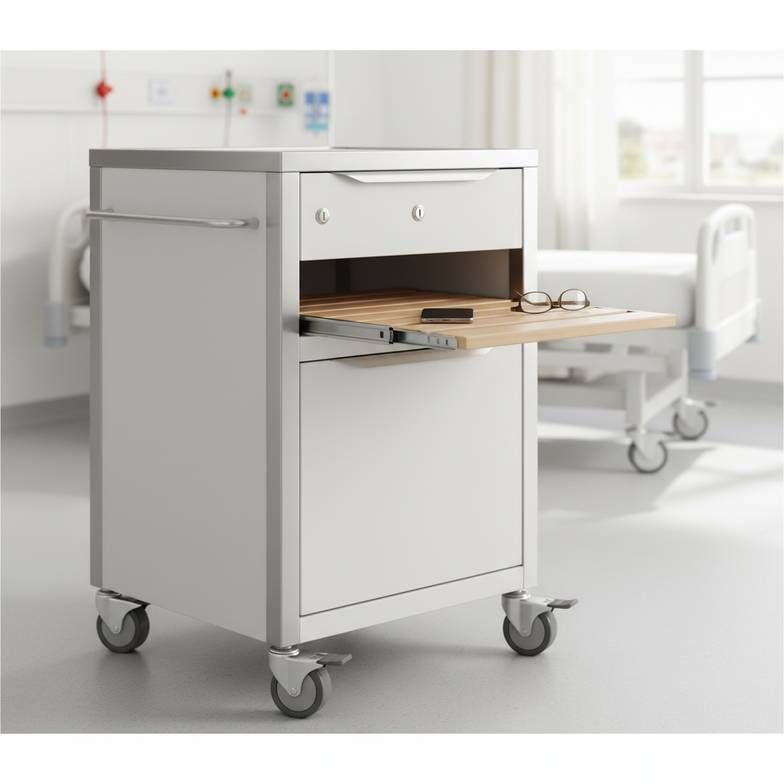
What Configuration Details Should Buyers Confirm Before Comparing Quotations?
A lower price often means fewer included features. To compare quotations fairly, you must ensure you are comparing the exact same product configuration.
I often see buyers comparing two quotes where one includes a full set of accessories and the other is for a bare-bones cabinet. The price difference isn't about supplier margin; it's about what's actually in the box. Before you decide, get written confirmation on these points:
- Drawers and Shelves: How many? Is the layout fixed or adjustable?
- Locks: Are locks included on drawers or doors? If so, on how many? Is it a single key for all cabinets or a unique key for each?
- Handles, Hooks, and Holders: Are towel hooks, water bottle holders, or other specific accessories part of the standard model or optional add-ons?
- Casters or Feet: Does the cabinet come with feet, or does it have casters for mobility? If it has casters, do they have brakes?
- Dimensions: Confirm the height, width, and depth to ensure it fits the intended space next to the hospital bed.
Quotation Comparison Checklist for Bedside Cabinets
Use this checklist to level the playing field when you review supplier quotes.
| Item to Confirm | Supplier A | Supplier B | Buyer Notes / Risk |
|---|---|---|---|
| Main Material Clearly Stated | Risk of comparing different products. | ||
| "Metal" Wording Clarified | Is it powder-coated steel or stainless steel? | ||
| Surface Finish Described | |||
| Cabinet Size (H x W x D) | Does it fit the room layout? | ||
| Drawer Layout Confirmed | |||
| Lock Included or Optional | Hidden cost if optional. | ||
| Shelves Included or Optional | |||
| Handles/Hooks/Holders Included | |||
| Feet or Casters (with brakes?) | |||
| Packing Method Stated | |||
| Carton Dimensions Provided | Needed to calculate freight. | ||
| Gross/Net Weight Provided | |||
| Total CBM for Order Provided | Critical for total landed cost. | ||
| Trade Term (EXW, FOB, CIF?) | Affects final cost and responsibility. | ||
| Lead Time Basis Confirmed | Does it start after deposit or spec approval? |
This checklist helps you see beyond the unit price and understand the total value and risk associated with each offer.
- Practical Buyer Action: Send this checklist to your potential suppliers and ask them to fill it out. This forces clarity and makes your comparison direct and fair.
- Supplier-Side Operational Detail: When we build a proforma invoice (PI), we list all included and optional items. This protects both the buyer and the supplier, ensuring there are no misunderstandings about the final product that will be delivered.
- Risk & Decision Point: The risk of not confirming configuration is facing unexpected costs to add missing features or receiving a product that doesn't meet the end-user's needs, leading to project disputes.
How Can Packing, Weight, and CBM Change the Real Cost of a Bedside Cabinet Order?
For any import order, the real cost is the final landed cost, not the factory unit price. One of the biggest mistakes I see importers make is checking the unit price first and only asking for carton size and CBM (cubic meters) after confirming the order.
Material and construction directly impact logistics:
- Weight: Steel and stainless steel cabinets are typically heavier than ABS cabinets, which can affect handling and shipping costs.
- Packing Volume (CBM): Bedside cabinets are bulky. A few extra centimeters on each carton can significantly increase the total CBM of a project order, meaning you might need more container space than anticipated.
- Packing Strength: The material itself needs protection. HPL edges can chip, steel can be dented, and ABS can crack under impact if not packed properly. Good export packing includes corner protectors, foam or EPE wrapping, and a strong outer carton.
A supplier offering a very low unit price might be saving money on packing. This is a huge risk. A damaged product that arrives at your port is no bargain.
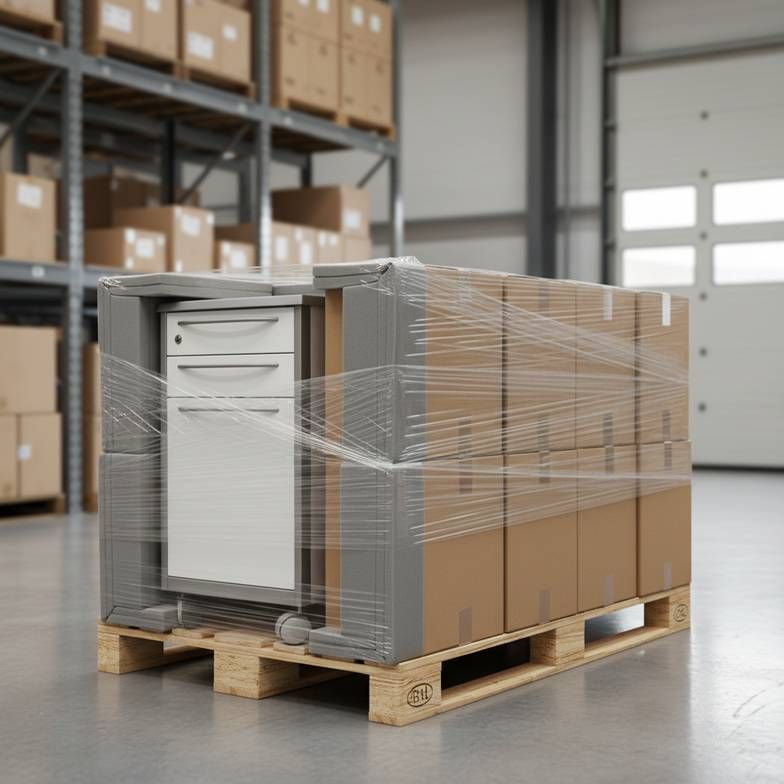
- Practical Buyer Action: Before finalizing your order, request the following for your total order quantity: carton dimensions, gross weight, net weight, and total CBM. Use this data to get an accurate freight quote.
- Supplier-Side Operational Detail: When we prepare an export order, we calculate the total CBM and provide a packing list. This information is essential for the buyer to book container space and for customs clearance. We often provide packing photos so the buyer can see how the products are protected.
- Risk & Decision Point: The trade-off is between unit price and landed cost. A slightly more expensive cabinet with efficient, protective packing may have a lower total landed cost and lower risk of damage than a cheaper cabinet in a bulky, weak carton.
What Should You Ask a Supplier Before Confirming an Order?
A good supplier helps you avoid problems before they happen. Their communication should be a source of clarity, not just a fast price. Before you commit to a bulk order of ABS, steel, stainless steel, or HPL cabinets, a reliable partner should be able to answer these questions clearly.
Here are the final checks to make:
1. Is the material and configuration clearly stated in the Proforma Invoice? Avoid vague terms. The document should specify "ABS bedside cabinet" or "Powder-coated steel bedside cabinet with lock," not just "Model X." 2. What is the basis for the lead time? Does the clock start after the deposit is paid, or after all specifications and samples are approved? For project orders, delays in confirming details can push back your delivery date. 3. Can you confirm the packing method and provide packing data? A supplier who can readily provide carton dimensions, CBM, and photos understands the needs of an export buyer. 4. How will you ensure consistency for a large project order? Ask how they control for color, finish, and configuration consistency between the approved sample and the full production run.
A supplier who asks you about your project—like where the cabinets will be used and what your cleaning protocols are—is a supplier who is thinking ahead.
- Practical Buyer Action: Use your findings from the comparison checklist to have a final, detailed confirmation call or email exchange with your chosen supplier. Get everything in writing before you send payment.
- Supplier-Side Operational Detail: For us, an order is not confirmed until the specification sheet is signed and approved by the buyer. This document becomes the final reference for our production team, our QC team, and the buyer's inspection agent. It is the single source of truth for the order.
- Risk & Decision Point: The final decision is not just about choosing a product, but choosing a supplier. The risk of working with a supplier who provides vague answers is that you, the buyer, are left to manage any problems that arise from that ambiguity.
Conclusion: Match the Material to the Mission
Choosing the right bedside cabinet material is not a simple matter of comparing price tags. It’s a procurement decision that balances cost, durability, hygiene, and logistics.
The key is to move beyond photos and unit prices. The most successful B2B buyers I work with follow a clear process:
1. Define the Need: Start with the room function, cleaning requirements, and project budget. 2. Specify the Product: Confirm the material, configuration, and all included accessories. 3. Verify the Logistics: Request packing data and total CBM to calculate the true landed cost. 4. Confirm in Writing: Ensure all details are documented in the final quotation and proforma invoice before confirming the order.
By matching the material to the mission of the room and confirming every detail, you can source bedside cabinets that meet your project's standards, budget, and long-term performance needs.
At CareFurnex, we specialize in helping healthcare project buyers, distributors, and procurement teams navigate these decisions. If you are planning a ward furniture project, send us your requirements—including room types, quantity, and any specific material or configuration needs. We can help you review the options and build a quotation based on a clear, practical, and complete specification.
Written by
CareFurnex Team
CareFurnex Team shares practical knowledge about hospital beds, patient room furniture, medical trolleys, clinic furniture, and healthcare facility procurement for international B2B buyers.
Related Products
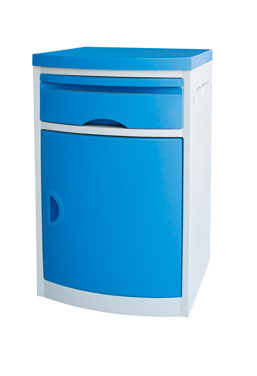
Hospital Bedside Cabinets
This ABS hospital bedside cabinet has a blue top, an upper drawer and a lower door within a light-colored body. Its stated size is 480 × 480 × 760 mm, giving buyers a defined overall footprint for ward furniture planning.
View product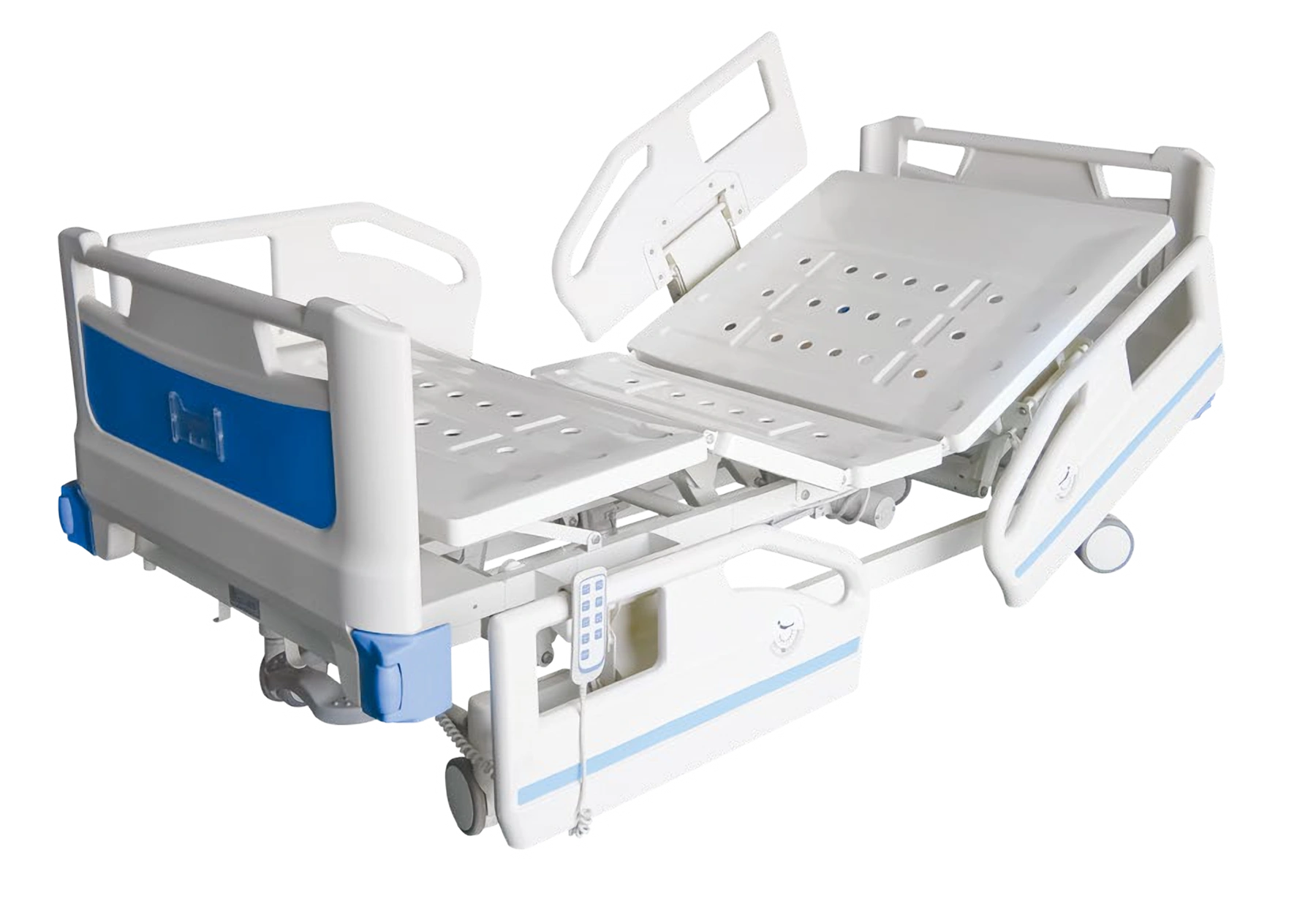
Hospital Beds
General-purpose patient beds for inpatient wards and standard hospital rooms.
View product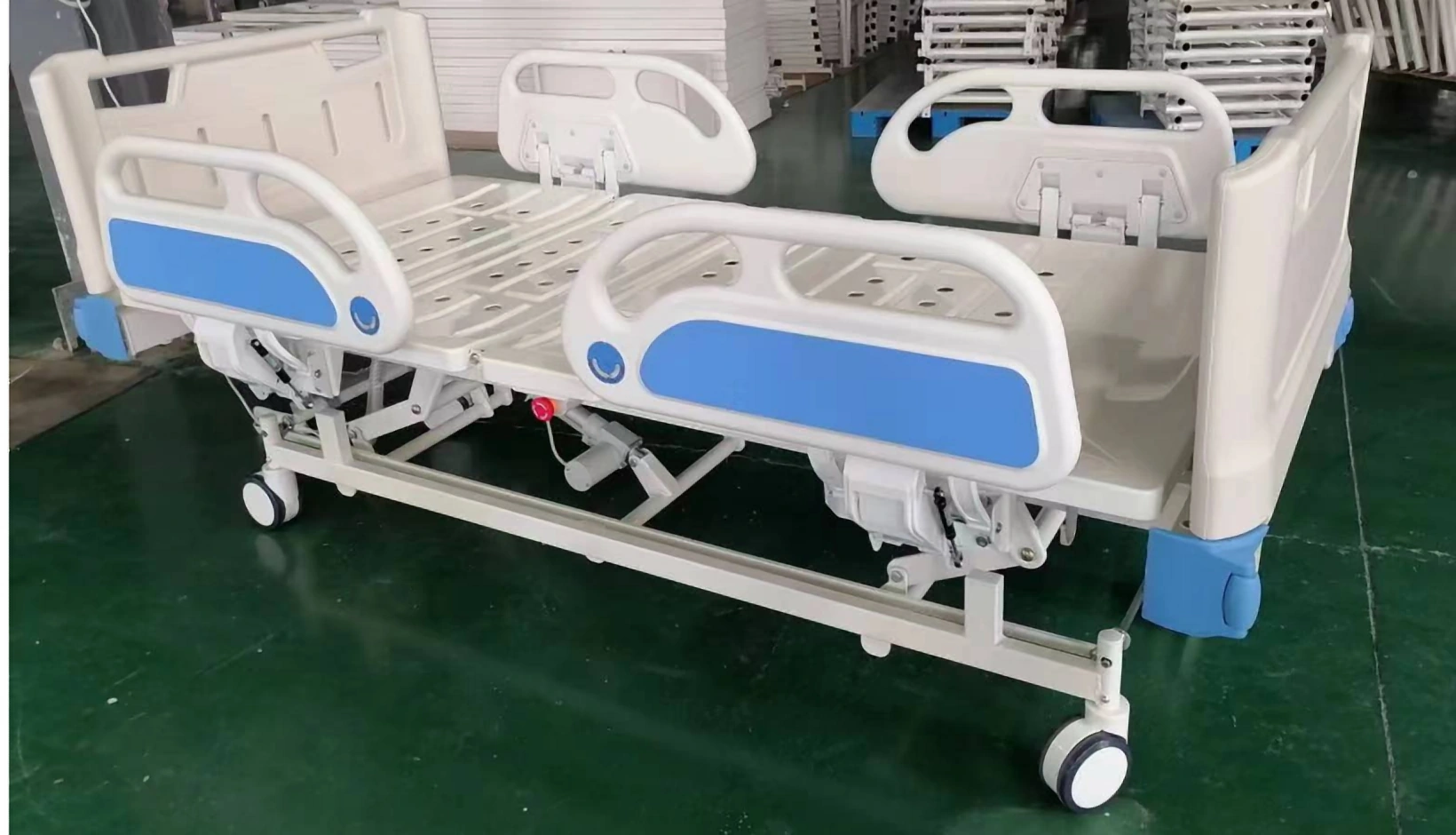
Electric Hospital Beds
Motorized multi-function beds with electric height, backrest, and leg adjustment options.
View product