
Choosing between an anesthesia cart and an emergency cart seems straightforward until you realize their core designs serve opposite goals. One is built to secure and organize; the other is built to be opened and emptied as fast as possible by a team.
In a catalog, they can look nearly identical: a set of drawers on wheels. This visual similarity hides key differences and can lead to a common and preventable procurement mistake-ordering a cart that looks right but frustrates clinical staff and compromises workflow.
The key difference is their intended workflow: anesthesia carts are designed for the organized, secure needs of planned procedures, while emergency carts are built for the rapid, immediate access required during a crisis. Your choice should depend on the cart's primary function, the required locking system for either security or speed, and the specific accessories needed to support the clinical team.
As a supplier, when a buyer asks for a quote on a "5-drawer medical cart with a central lock," our first question is always about its intended use. Is it for an operating room or for responding to a "code blue"? The answer changes the entire configuration. Clarifying this upfront prevents you from buying a cart that is unfit for its purpose.
How is an anesthesia cart configured for a planned surgical procedure?
An anesthesia cart is an organizer's tool, designed for the meticulous, sequential work of an anesthesiologist. Its configuration prioritizes the orderly arrangement and secure storage of a wide variety of medications, including controlled substances.
The drawer layout reflects this. You will typically find multiple shallow drawers, often equipped with configurable dividers. This allows staff to neatly arrange hundreds of small vials, ampules, and syringes, so the correct drug can be found quickly during a procedure.
For security, these carts are almost always fitted with a key lock or an electronic keypad lock. This is not just for general security; it's a feature that helps support hospital pharmacy protocols for tracking and controlling access to narcotics.
When specifying an anesthesia cart, you should think about:
- Drawer Dividers: Does the quotation include divider kits? A cart without them is just an empty box.
- Locking System: Does your facility require a key lock, an electronic lock with an audit trail, or individually locking drawers for controlled substances?
- Work Surface: Is the top surface large and clear enough for preparing medications?
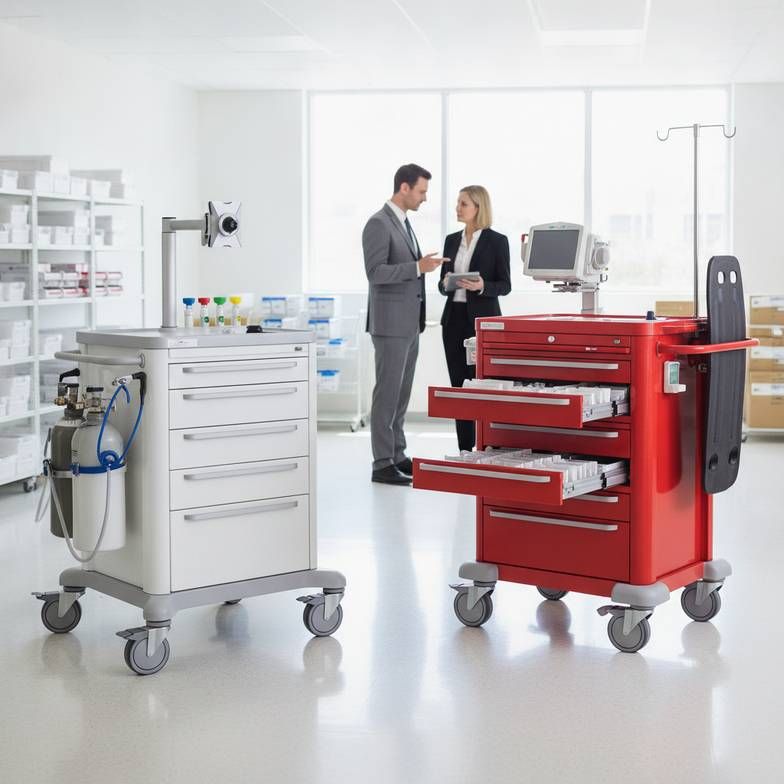
Why is an emergency cart built for speed and immediate access?
An emergency cart, or "crash cart," is a first responder's kit on wheels. Every feature is about removing barriers and saving seconds during a life-or-death event like a cardiac arrest. It is not for one person; it is for an entire response team accessing it simultaneously.
Unlike an anesthesia cart, an emergency cart needs a mix of shallow and deep drawers. Shallow drawers hold pre-packaged drugs, while deep drawers are useful for bulky items that must be grabbed instantly, such as Ambu bags, intubation kits, and intravenous fluids.
A significant difference is the lock. An emergency cart should not have a key lock. The time spent finding a key or person who has it is time a patient does not have. Instead, they use single-use plastic breakaway seals. This system shows at a glance if the cart has been opened, but allows any team member to break the seal instantly without a key or code.
Before ordering, review your hospital's "code blue" protocol to understand what the response team needs to access without delay.
What affects the choice between a security lock and a breakaway seal?
This is a decision that defines the cart's function, and it is a common point of confusion. A "lock" for an anesthesia cart and the "lock" for an emergency cart serve opposite purposes.
A security lock (key or electronic) on an anesthesia cart is designed to restrict access. Its purpose is to help track access to controlled substances and support security protocols against diversion.
A breakaway seal on an emergency cart is designed to enable access. Its purpose is to provide tamper evidence while allowing for instant, tool-free entry by any member of the response team. In this context, a key lock can become a liability by potentially slowing down care.
When you send an inquiry, specifying "central lock" is not enough. I would recommend you clearly state "key lock for security" or "breakaway seal for immediate access" to get a quotation for a cart that functions correctly in its intended environment.
Which accessories are specific to anesthesia versus emergency workflows?
The required accessories are not optional add-ons; they are integral to the cart's function. A bare cart is an incomplete tool, and a quote that excludes these items can be misleading.
Anesthesia cart accessories focus on organization and workflow efficiency within the operating room:
- Tilt-bin organizers for small items
- Waste containers for used supplies
- Sharps disposal brackets
- Glove box holders
Emergency cart accessories are focused on life support and must be mounted and ready:
- Defibrillator shelf or platform: Must be compatible with your facility's model.
- IV pole: For administering fluids and medications.
- Oxygen tank holder: Securely holds an O2 tank for resuscitation.
- Cardiac board: Slips under the patient's back to provide the firm surface needed for performing chest compressions.
- Suction unit holder
When comparing quotations, check if these essential accessories are listed as "included" or as separate, optional line items. A lower price often means you are being quoted a bare cart that is not ready for clinical use.
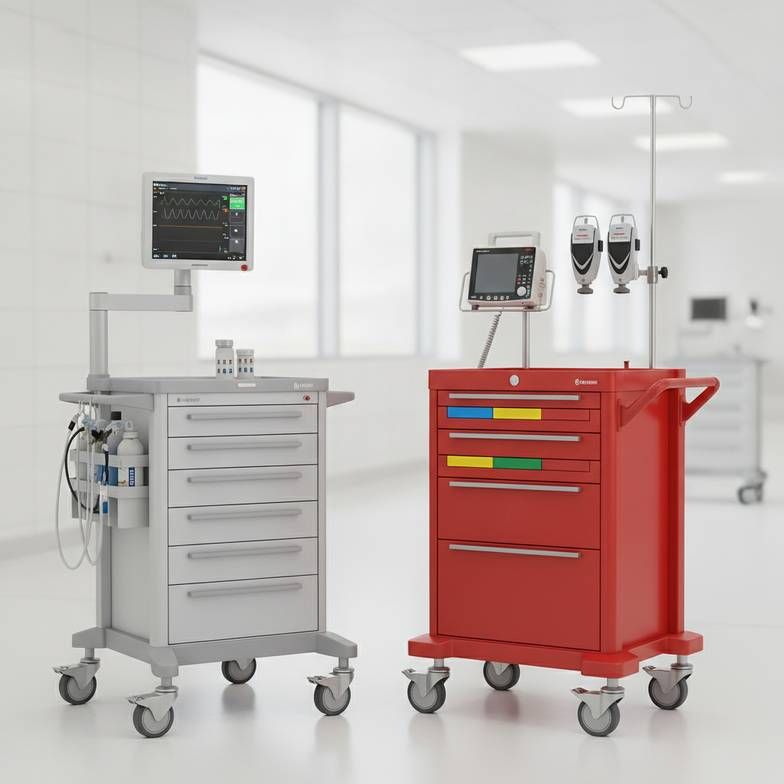
Anesthesia Cart vs. Emergency Cart: A Side-by-Side Comparison
Use this table to check that a supplier's quotation matches your department's actual needs. Comparing carts on price or drawer count alone can lead to a poor purchasing decision.
| Decision Factor | Anesthesia Cart (For Planned Procedures) | Emergency Cart (For Unplanned Crises) |
|---|---|---|
| Primary Workflow | Meticulous organization for a scheduled operation. Focus on security and inventory control. | Rapid, all-hands access for a "code blue" or medical emergency. Focus on speed. |
| Typical Drawer Layout | Multiple shallow, highly-divided drawers to organize small vials and syringes. | A mix of shallow drawers for drugs and deep drawers for bulky items (e.g., Ambu bags, intubation kits). |
| Locking System | Security-focused: Key lock or electronic keypad to control access to narcotics. | Access-focused: Single-use breakaway plastic seal that shows tampering but allows instant, tool-free entry. |
| Key Accessories | Tilt-bin organizers, waste containers, sharp-disposal brackets, large work surface. | Defibrillator shelf, IV pole, oxygen tank holder, cardiac board. |
| What to Confirm | Locking mechanism type, need for drawer dividers, and how the cart supports your pharmacy security rules. | List of required accessories, breakaway lock specification, and compatibility with existing equipment. |
What details should I confirm before requesting a cart quotation?
To get a quotation you can actually use for comparison, and to avoid hidden costs or delivery-day surprises, it helps to provide the right details upfront. A supplier who understands healthcare procurement will appreciate this clarity.
Before you contact suppliers, preparing a short list of requirements will make the process smoother. We recommend confirming the following for each type of cart you need:
- The cart's primary function: Anesthesia or Emergency Response.
- The required locking system: e.g., Key lock, electronic lock, or breakaway seal.
- The essential accessories: List them by name (e.g., IV pole, O2 tank holder, defibrillator shelf).
- Any specific drawer needs: e.g., "at least two deep drawers for bulky items" or "dividers for all shallow drawers."
- Quantity and destination port.
Sending these details with your inquiry helps us and other suppliers provide a practical quotation that meets your hospital's real-world needs, allowing you to make a true like-for-like comparison.
Written by
CareFurnex Team
CareFurnex Team shares practical knowledge about hospital beds, patient room furniture, medical trolleys, clinic furniture, and healthcare facility procurement for international B2B buyers.
Related Products
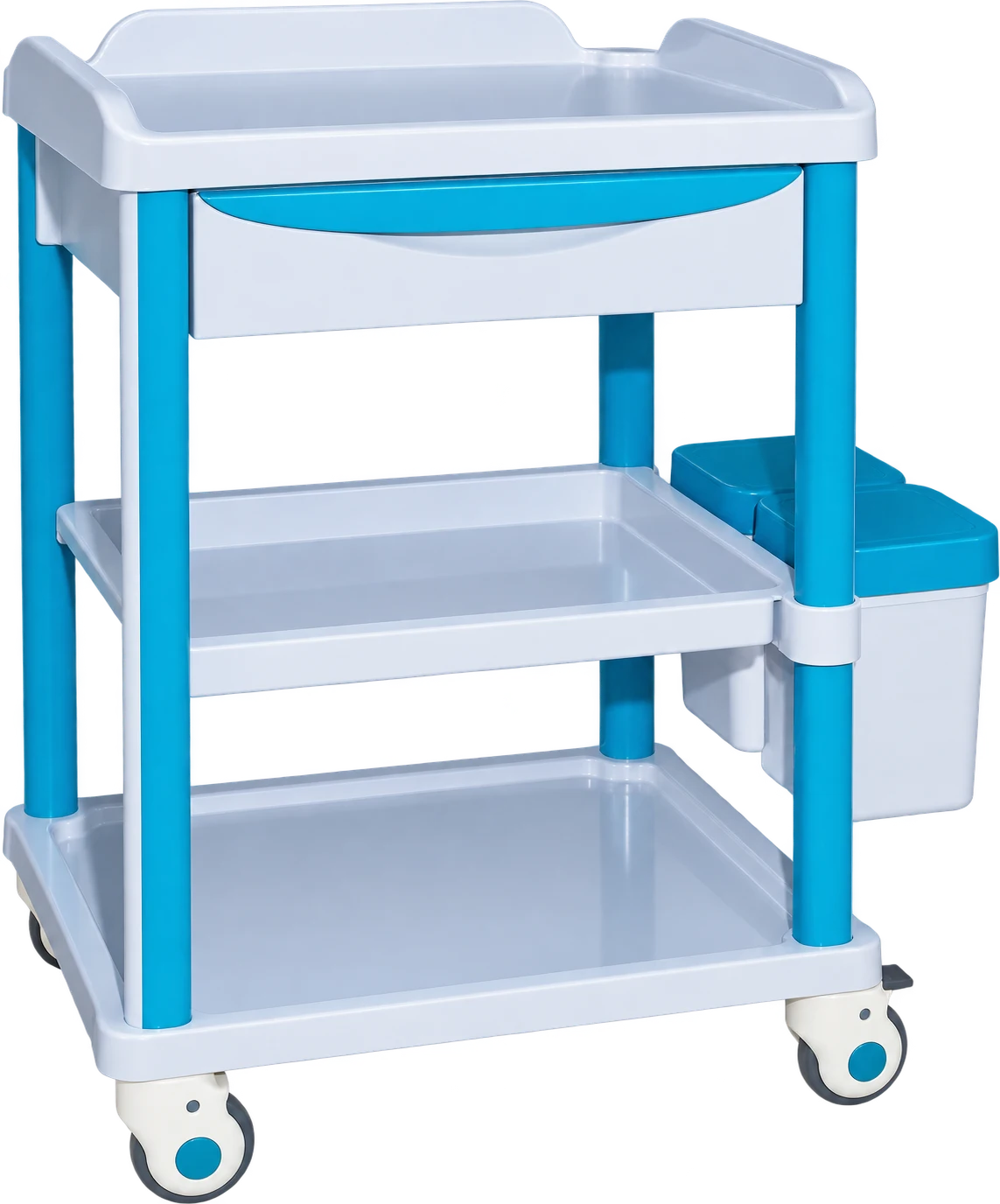
Medical Trolleys
Mobile carts for nursing rounds, treatment supplies, medicines, and clinical tools.
View productTreatment Carts
Compare treatment carts by model, stated dimensions and configuration.
View product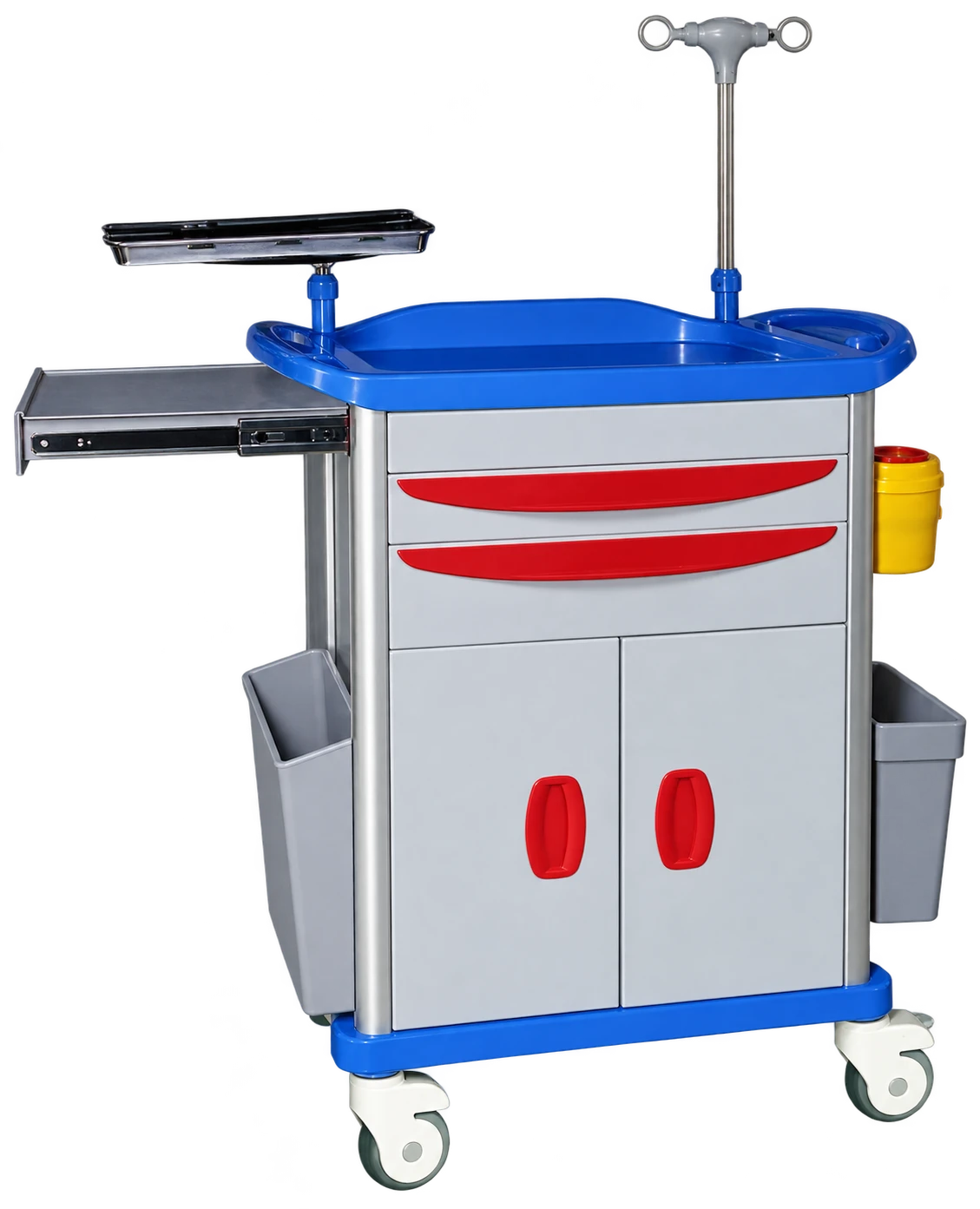
Emergency Carts
Crash carts with organized compartments for emergency rooms and urgent care areas.
View product